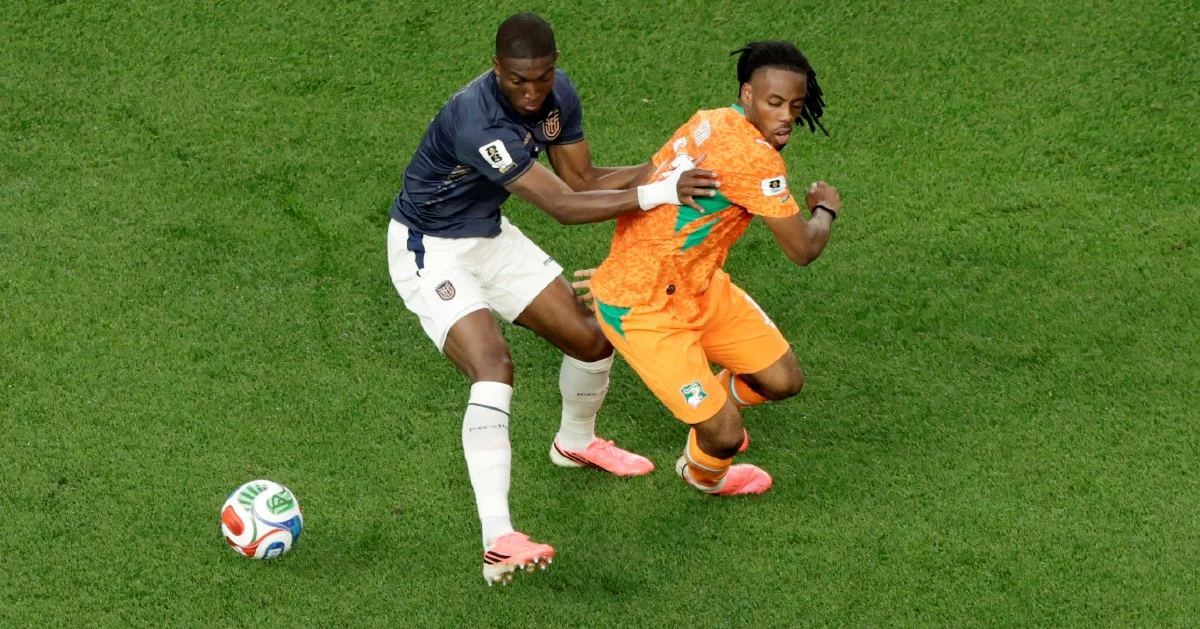
The Ivorian Football Federation made the unexpected decision on Thursday to withdraw forward Elye Wahi from the national team's upcoming World Cup encounter against Germany in Canada this weekend. The action came just one day after the player became entangled in an expanding investigation into alleged sports corruption within France's top-tier Ligue 1 competition, signalling the seriousness with which African football authorities are treating the matter.
Wahi's exclusion represents a significant moment in international football governance, demonstrating how match-fixing allegations can have immediate and far-reaching consequences for players at all levels of professional sport. The timing of the decision—announced on the eve of a crucial World Cup fixture—underscores the federation's commitment to maintaining the integrity of their national team and the tournament itself. Rather than allowing the controversy to shadow the squad's preparation, the Ivorian Football Federation chose to act decisively, preventing the player from travelling with the delegation to face the German side.
Match-fixing allegations within European football have become increasingly common, with investigations regularly implicating players across multiple leagues and nationalities. The French football ecosystem, despite its global prestige and resources, has not been immune to these challenges. When suspicions arise regarding the integrity of competition, governing bodies face difficult decisions about player participation, particularly in high-profile international tournaments where national pride and broadcasting expectations intersect.
The World Cup represents the pinnacle of international football competition, and any taint of impropriety threatens the credibility of the event itself. Tournament organisers and national federations understand that maintaining public confidence in the fairness of matches is essential to the long-term health of the sport. By immediately removing Wahi from consideration, the Ivorian Football Federation sent a clear message that integrity takes precedence over squad depth or individual player ambitions.
For Malaysian and Southeast Asian readers, this development carries broader implications for how regional football authorities might handle similar situations. The escalating sophistication of match-fixing schemes has touched Asian football at multiple levels, from domestic leagues to international competitions. The approach adopted by the Ivorian Football Federation—swift investigation-linked action rather than waiting for formal conclusions—reflects a growing global consensus that preventive measures and immediate accountability are more effective than delayed penalties.
The investigation itself appears to centre on events within the Ligue 1 competition, France's professional football league. This particular focus raises questions about how corruption networks operate within established, well-resourced football systems. Many observers note that match-fixing conspiracies often involve coordination between multiple parties including players, officials, and external interests, making comprehensive investigations essential for identifying the full scope of alleged misconduct.
Wahi's situation also highlights the vulnerability of young or mid-career players to involvement in corrupt schemes. The investigation's emergence during a World Cup cycle, when players are preparing for international duty, demonstrates how quickly allegations can disrupt career trajectories and team planning. Clubs, federations, and players themselves face mounting pressure to demonstrate transparency in their activities and associations.
The decision to exclude Wahi without waiting for formal charges or convictions reflects evolving standards in sports governance. Rather than applying the principle of innocence until proven guilty in criminal proceedings, sports organisations increasingly adopt a precautionary approach where any credible allegation of integrity violation warrants immediate protective action. This represents a shift in how federations balance individual player rights against institutional reputation and tournament credibility.
Germany, as Ivory Coast's opponent in the upcoming fixture, enters the match with clarity regarding their opponent's squad composition. The German national team can proceed with full knowledge of the available opposition players, though the disruption to Ivory Coast's preparation could potentially influence match dynamics in unpredictable ways. International football often sees squads adapt quickly to personnel changes, but the sudden removal of any player inevitably creates adjustment challenges.
The broader implications for African football extend beyond Ivory Coast's immediate circumstances. Continued vigilance against match-fixing and sports corruption demonstrates the commitment of African governing bodies to compete at the highest levels with integrity intact. The Ivorian Football Federation's action, while uncomfortable for the nation's preparation, reinforces that no player is above accountability or immune from investigation when questions arise about their involvement in potentially corrupt activities.
As investigations into suspected Ligue 1 match-fixing continue to unfold, other players, clubs, and national teams may face similar difficult decisions regarding participation in upcoming fixtures. The precedent established through Wahi's exclusion—that credible corruption allegations warrant immediate squad withdrawal—will likely influence how other federations respond to comparable situations. This evolving approach to integrity management reshapes expectations around transparency and accountability throughout international football.
For fans and stakeholders across Southeast Asia and beyond, this episode underscores the ongoing challenge facing world football: maintaining competitive integrity while protecting players' rights and ensuring fair investigation processes. The tension between these objectives remains unresolved, but the decisive action taken by the Ivorian Football Federation suggests that governing bodies worldwide increasingly prioritise trust in competition as a fundamental value requiring proactive defence.