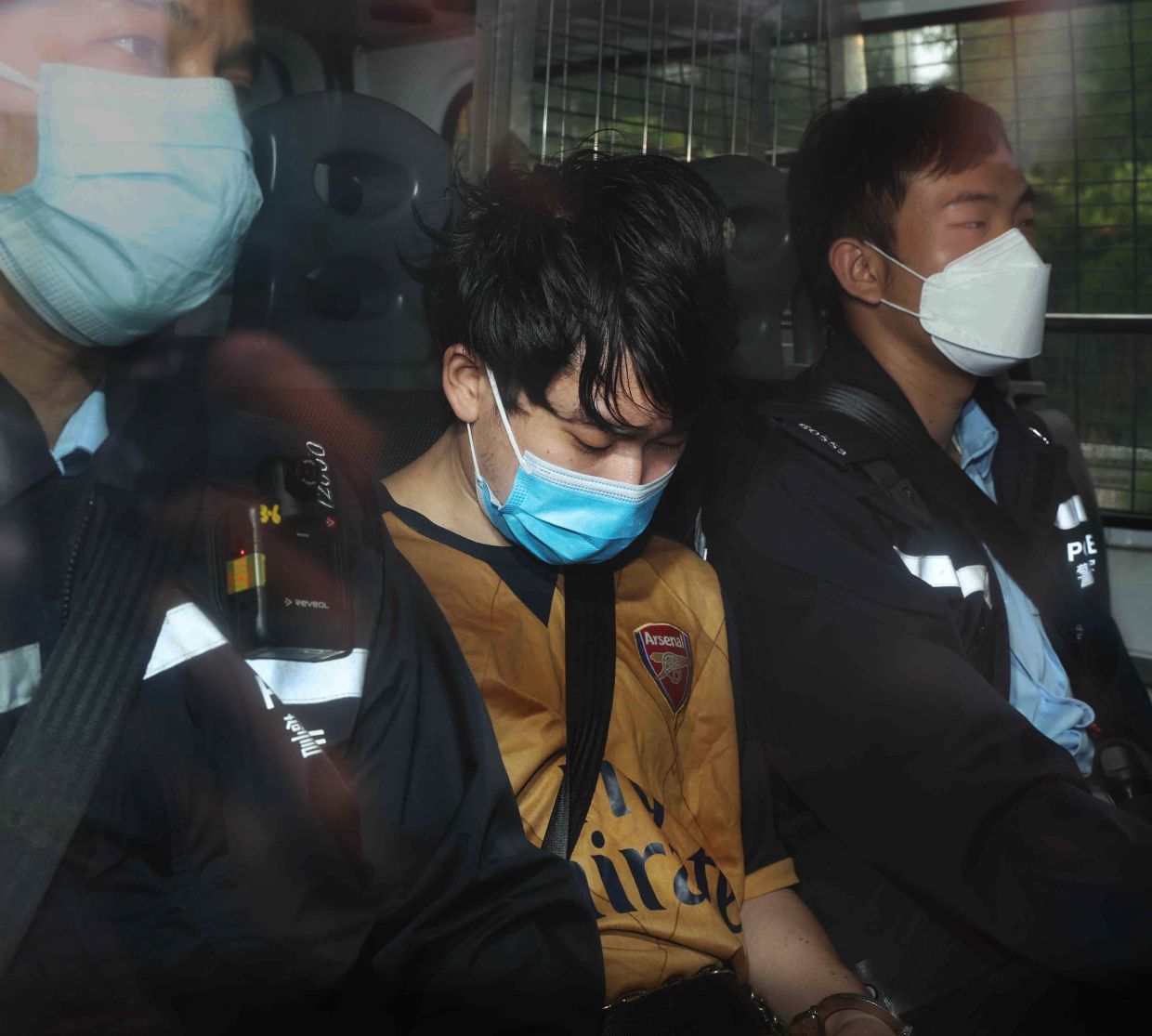
A 29-year-old jobless man from Hong Kong has offered a startling defence to murder charges, claiming he fatally beat his girlfriend in 2022 while attempting to assist her weight loss efforts by deliberately keeping her awake throughout the night. The case, which involves the death of Yip Tsz-ching, 30, in a 700 square foot flat in Galore Garden in Hung Shui Kiu between April 28 and 29, 2022, has brought into sharp focus questions about the nature of domestic violence and the credibility of explanations offered by those accused of serious harm within intimate relationships.
Ng Ka-sing is currently standing trial at the High Court for the murder of his partner, with prosecutors rejecting his offer to plead guilty to the lesser charge of manslaughter. The case centres on Yip's death and the subsequent discovery of her body being transported on a wheeled board along Tin Ha Road in the early morning hours of April 29, 2022. Ng also faces a separate charge related to the illegal disposal of the corpse. During opening arguments, Senior Public Prosecutor Audrey Parwani signalled that the prosecution would contest Ng's account, noting that he had provided multiple conflicting explanations to police regarding how Yip sustained her injuries, which included extensive corrosive chemical burns affecting 55 per cent of her body.
According to Ng's cautioned interview with police, his intention was to prevent Yip from sleeping during the night of April 27 in order to facilitate fat loss. To achieve this goal, he repeatedly struck her with a rod across multiple time periods: from 10pm on April 27 until 1:30am on April 28, and again between 3am and 5:30am on April 28. When he questioned whether he should cease the assault, his sworn sister—a family member who occupied the same flat—allegedly encouraged him to persist. Ng claimed he continued the beatings because Yip did not explicitly tell him to stop, a claim that legal and medical experts would likely find deeply questionable given the circumstances and her escalating condition.
The narrative that emerged during the trial proceedings becomes increasingly troubling as the timeline progresses. According to Ng's account, Yip herself poured drain cleaner onto her body, while he splashed the corrosive liquid on the floor purportedly to "stimulate" her feet. He further alleged that after slipping on the wet floor, she struck herself against a wall seven to eight times. By approximately 5am on April 28, Yip informed Ng that she was experiencing severe pain and feared she would not survive. She subsequently lost consciousness and spoke for the final time at 7:21am that same morning, eventually succumbing to her injuries.
The discovery of the body occurred when morning joggers observed a leg emerging from a rolled-up quilt loaded onto Ng's wheelboard at approximately 6am on April 29. Lau Kwok-yan, the jogger who reported the incident to authorities, testified that Ng remained at the scene and appeared remarkably composed while waiting for police to arrive, showing no visible signs of distress or panic. A street cleaner, Wong Ah-sum, recounted that when he questioned Ng about the deceased, the accused man simply identified the bundle as a "corpse" and claimed his intention was to transport it to a police station. Upon arrest at 6:36am, Ng made a brief statement: "This was my girlfriend. I hit her to death with a rod by mistake."
Forensic evidence presented by specialist Lo Man-hung revealed the meticulous manner in which the body had been prepared for disposal. Yip's corpse was bound to a toppled wooden chair using black rubbish bags and covered with a quilt. Her head was extensively wrapped with multiple layers of cling film and adhesive tape, indicating deliberate concealment efforts that contrast sharply with Ng's characterisation of events as accidental. Government pathologist Dr Foo Ka-chung estimated that death had occurred between 12 to 24 hours before the body's discovery, providing a clear temporal frame for the investigation.
The medical evidence paints a grimly comprehensive picture of the violence inflicted. Dr Foo identified multiple bruises, abrasions and lacerations distributed across Yip's head and various parts of her body, injuries consistent with blunt force trauma such as punching and kicking. Most significantly, the pathologist determined that Yip's cause of death was suffocation following head injuries, compounded by the extensive chemical burns covering her chest, abdomen and limbs. The combination of traumatic injuries and chemical exposure suggests a pattern of violence that extended well beyond any conceivable weight-loss intervention.
For Malaysian observers, this case resonates with ongoing concerns about domestic violence and the acceptance of implausible explanations within intimate relationships. The Hong Kong justice system's examination of Ng's claims reflects a wider Southeast Asian challenge: ensuring that victims of domestic abuse receive adequate protection and that perpetrators cannot evade accountability through implausible narratives. The prosecution's scepticism regarding Ng's various explanations—the shifting accounts provided to police, the improbable scenario of accidental death during a misguided health intervention, and the methodical disposal of the body—demonstrates the importance of rigorous forensic investigation and critical scrutiny of defendant testimony.
The trial, overseen by Mrs Justice Judianna Barnes with a seven-member jury, is expected to proceed for 18 days. The case raises fundamental questions about the intersection of intimate partner violence, mental health, and criminal responsibility in Hong Kong's legal system. The dismissal of Ng's manslaughter plea by prosecutors indicates their confidence in the evidence supporting the more serious murder charge, suggesting they believe the actions were deliberate rather than the result of tragic misadventure. As the trial progresses, the jury will need to weigh the defendant's extraordinary explanations against the physical evidence, witness testimony, and the broader context of the relationship dynamics that culminated in Yip's death.
The implications extend beyond the immediate case to broader questions about how societies respond to deaths occurring within domestic settings. In Malaysia and across the region, where domestic violence remains a persistent challenge, cases like this underscore the critical importance of thorough investigation, victim protection frameworks, and a legal system that does not accept implausible defences simply because they are offered by the accused. The detailed forensic evidence, the testimony of dispassionate witnesses, and the medical analysis all contribute to a narrative far more sinister than Ng's account suggests, reminding legal systems across Southeast Asia of the necessity for vigilance in protecting vulnerable individuals from intimate harm.
%22%2F%3E%3C%2Fpattern%3E%3C%2Fdefs%3E%3Crect%20width%3D%22100%25%22%20height%3D%22100%25%22%20fill%3D%22url(%23ph5y615g)%22%2F%3E%3Crect%20width%3D%22100%25%22%20height%3D%22100%25%22%20fill%3D%22url(%23ph5y615p)%22%2F%3E%3Ctext%20x%3D%2250%25%22%20y%3D%2250%25%22%20text-anchor%3D%22middle%22%20dominant-baseline%3D%22central%22%20fill%3D%22rgba(255%2C255%2C255%2C0.95)%22%20font-family%3D%22Georgia%2C%20'Times%20New%20Roman'%2C%20serif%22%20font-weight%3D%22700%22%20font-size%3D%22320%22%20letter-spacing%3D%22-0.02em%22%3ERim%3C%2Ftext%3E%3C%2Fsvg%3E)