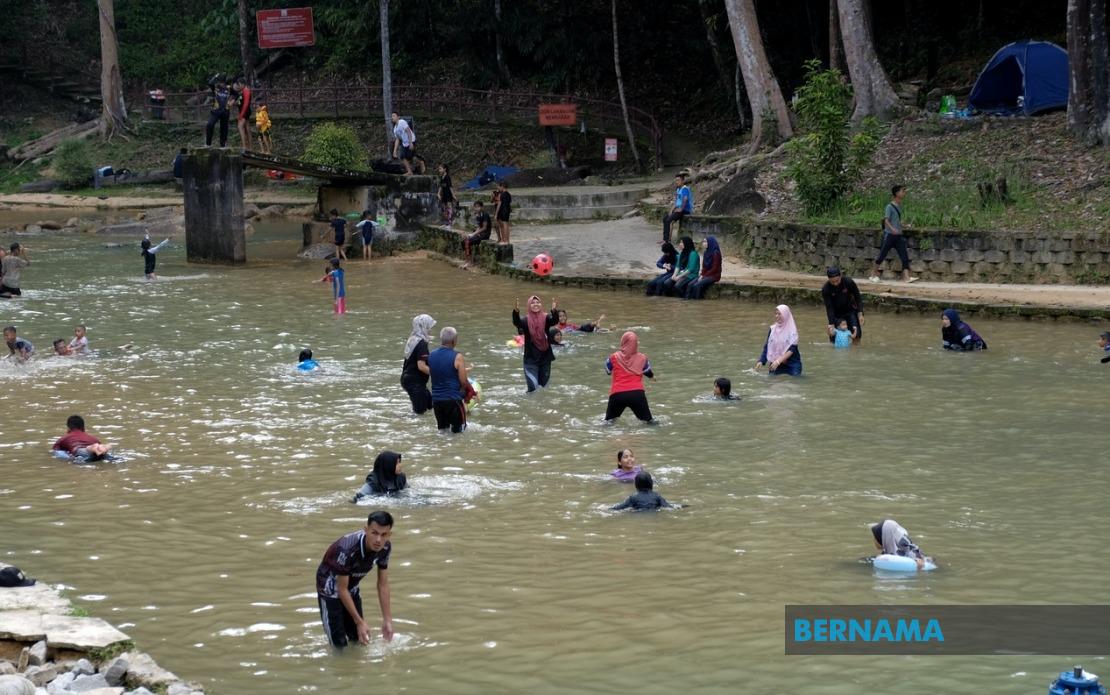
The Pahang State Health Department has launched a formal investigation into allegations that multiple visitors to a recreational area near Bentong contracted acute gastroenteritis after swimming in the river, prompted by reports of diarrhoea, vomiting and fever. The department's swift response reflects growing public health concerns about waterborne illnesses at popular tourist destinations across the region, where seasonal recreational activities attract both local and international visitors to natural water bodies that may face contamination risks.
Initial findings from the health authority's risk assessment have provided some reassurance to the public. Despite the complaints, the department has not received formal notifications through its standard disease surveillance systems indicating either confirmed food poisoning cases or any unusual clustering of acute gastroenteritis presentations at nearby medical facilities. This distinction is important, as it suggests the reported incidents may remain isolated or below the threshold typically required to trigger broader public health alerts. However, the absence of confirmed cases does not necessarily negate the experiences reported by affected individuals, who may have recovered or sought private medical care outside government surveillance networks.
Water sampling operations commenced on June 14 along Sungai Benus in Janda Baik, targeting multiple locations to ensure comprehensive microbiological assessment of the river system. Laboratory analysis of these samples remains pending, and results will prove crucial in determining whether bacterial, viral or parasitic pathogens are present in concentrations sufficient to pose health risks. The sampling strategy reflects standard epidemiological practice, where environmental testing can identify contamination sources even when clinical cases have not been formally confirmed or reported to authorities.
In response to the situation, health authorities have implemented a layered surveillance and investigation protocol designed to detect emerging patterns. Active case detection efforts are underway at surrounding government and private health facilities, significantly enhancing the existing passive surveillance system to capture any additional presentations that might indicate a cluster. Epidemiological investigators are simultaneously working to identify exposure sources and risk factors by interviewing affected individuals, reconstructing their activities and timelines, and determining whether common exposures exist beyond the river bathing incident.
Environmental risk assessments at the recreational site itself form another critical component of the response. These evaluations examine not only water quality but also sanitation infrastructure, sewage management systems and potential pollution sources in the watershed. Such assessments often reveal that recreational areas near populated regions face multiple contamination pathways, ranging from inadequate bathroom facilities to upstream agricultural runoff or animal waste. Understanding these environmental vulnerabilities is essential for implementing sustainable preventive measures.
Parallel to health investigations, the department is coordinating with partner agencies to assess water quality comprehensively and trace potential pollution origins. This interagency approach recognises that water contamination frequently stems from sources beyond the immediate recreational site, requiring investigation of the broader watershed and upstream activities. Identifying these sources is fundamental to recommending appropriate interventions, whether infrastructural improvements, operational changes or usage restrictions.
Public messaging from health authorities has emphasised the importance of prompt medical attention for individuals experiencing gastrointestinal symptoms following water-based recreation. Rather than delaying care or assuming symptoms will resolve spontaneously, the department urges anyone affected to present to the nearest health facility for proper examination and treatment. This proactive health-seeking behaviour benefits both individual patients and broader public health surveillance, as documented cases provide epidemiologists with crucial data for investigations and risk assessments.
Operators of recreational and accommodation facilities bear significant responsibility in preventing waterborne disease transmission, according to official guidance. The health department has reiterated requirements for adequate sanitation facilities, reliable clean water supplies and properly maintained sewage systems in accordance with public health standards. These infrastructure requirements demand regular maintenance and monitoring, as facilities deteriorate over time and may become ineffective during peak usage periods when recreational areas experience high visitor volumes. Non-compliance not only creates immediate health risks but may expose operators to regulatory action and liability concerns.
The incident highlights a broader challenge facing Southeast Asian countries as tourism and recreational activities expand at natural water sites. Many destinations have developed recreational areas in response to market demand without proportional investment in supporting sanitation infrastructure. Water quality monitoring at these sites often remains inadequate or sporadic, making early detection of contamination difficult. The Bentong situation underscores the importance of robust baseline environmental monitoring and rapid response protocols that can distinguish between isolated incidents and emerging public health threats.
Moving forward, the Ministry of Health indicated it will provide updated information as epidemiological investigations progress and laboratory results become available. The emphasis on obtaining information through official health ministry channels reflects awareness that unverified social media reports and speculation can generate unnecessary public concern or inappropriate avoidance of safe recreational activities. Transparent communication of investigation progress, whenever findings become available, will be essential for maintaining public confidence in both the investigation process and the safety assessments that ultimately guide any recommendations regarding site usage.
The investigation also carries implications for other recreational sites across Malaysia and the broader Southeast Asian region. Waterborne disease outbreaks at popular destinations often expose systemic vulnerabilities in environmental monitoring and facility management that may affect multiple locations. Lessons learned from the Bentong investigation could inform best practices for other regional recreational areas, leading to standardised water quality monitoring protocols and clearer accountability frameworks for facility operators. As Malaysian tourism continues to grow, establishing and maintaining these preventive standards becomes increasingly important for protecting both visitor health and the reputation of popular destinations.