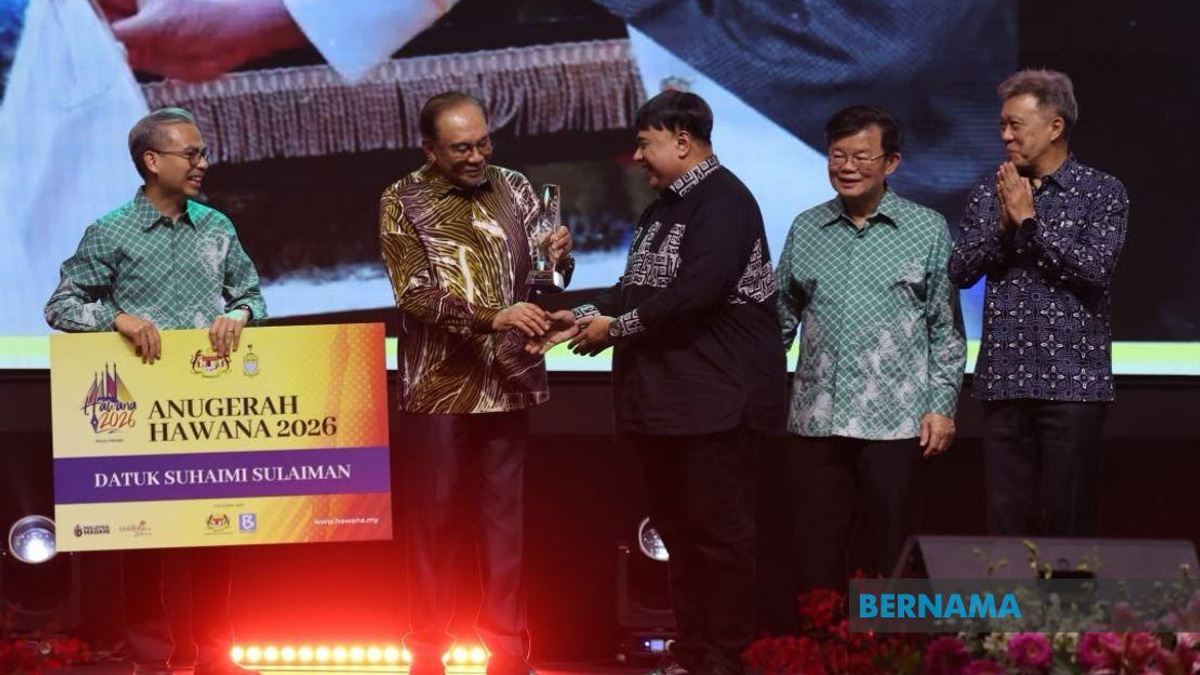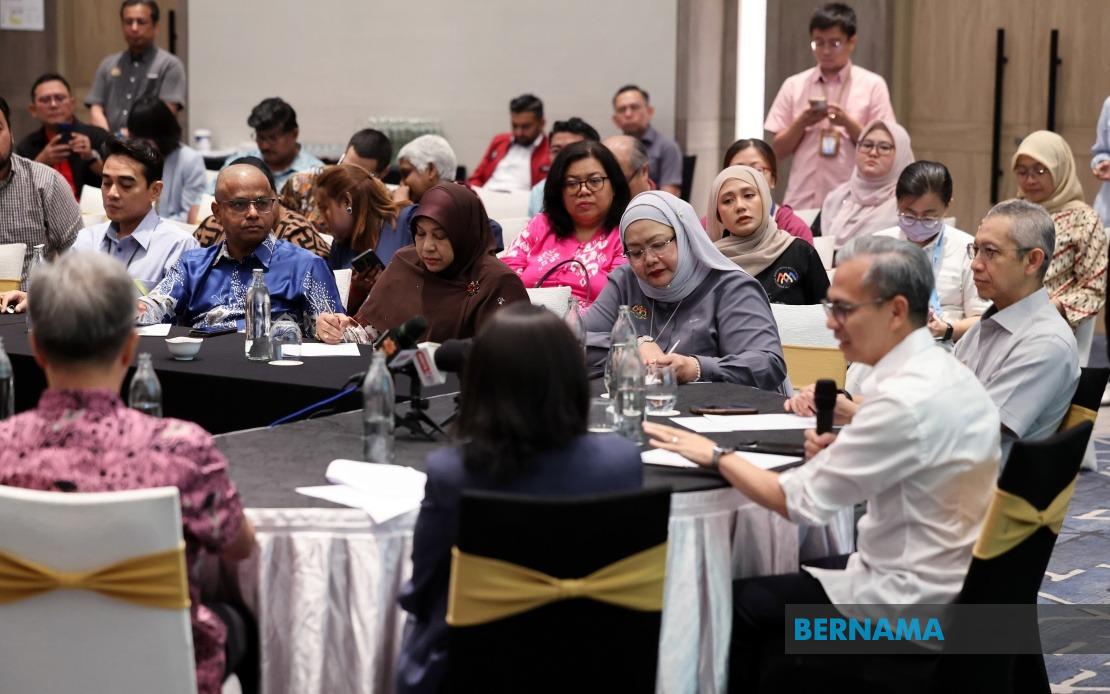
The corridors of PICCA@Arena Butterworth Convention Centre filled with purposeful activity on June 20 as media practitioners, dignitaries and strategic partners from across Malaysia and neighbouring ASEAN nations converged for the National Journalists' Day (HAWANA) 2026 Summit. The arrival of delegates signalled the commencement of what organisers have positioned as a defining moment for journalism in the region, with approximately 1,000 media professionals expected to participate in the two-day gathering.
Among the early arrivals, representatives moved through the convention centre foyer with evident enthusiasm, many pausing at exhibition booths showcasing innovations in news delivery, digital journalism platforms and media technology solutions relevant to Southeast Asia's evolving information landscape. A specially curated photo gallery offered visual documentation of journalism's impact across the region, creating informal spaces where colleagues from competing news organisations could exchange experiences and insights despite their demanding work schedules. These unstructured interactions often prove as valuable as formal sessions, fostering the cross-border professional networks essential to a healthy regional media ecosystem.
The ASEAN delegation's presence underscores a significant shift in how the region's journalism community views itself—not as isolated national institutions but as interconnected stakeholders in a shared mission to strengthen democratic discourse across Southeast Asia. This pan-regional approach reflects growing recognition that media challenges transcend borders. Misinformation campaigns, press freedom restrictions, and audience fragmentation affect journalists from Kuala Lumpur to Manila, Bangkok to Jakarta. By bringing together practitioners across member states, HAWANA creates a forum for collective problem-solving and the establishment of professional standards applicable across diverse political and media landscapes.
The summit's organising ministry, through Bernama (the Malaysian National News Agency), has deliberately positioned HAWANA 2026 around the theme 'Media Integrity Strengthens Credibility'. This framing directly addresses one of contemporary journalism's most pressing challenges: declining public trust. Across Malaysia and throughout Southeast Asia, surveys consistently reveal eroding confidence in media institutions, a phenomenon driven by a combination of genuine editorial failures, deliberate misinformation campaigns, and the broader information disorder that characterises digital-age politics. By placing integrity at the summit's conceptual centre, organisers signal that restoration of credibility is the profession's urgent priority.
Prime Minister Datuk Seri Anwar Ibrahim's scheduled officiation of the summit carries symbolic weight beyond the ceremonial. His presence represents government endorsement of media freedom and professional journalism at a moment when such support remains contested in various parts of Southeast Asia. Malaysia's media environment, while pluralistic by regional standards, has experienced periodic tensions between press freedom aspirations and regulatory constraints. The PM's participation suggests an institutional commitment to the principle that professional journalism serves national interests by maintaining information quality and democratic accountability.
Bernama's role as implementing agency reflects its evolution from a traditional state news agency into an institution attempting to model professional standards and technological innovation. The agency has increasingly positioned itself as a convener of the journalism profession rather than merely a news producer. This facilitating function becomes particularly important in Southeast Asia, where media fragmentation and the rise of digital platforms have dispersed the profession across countless outlets, many operating with minimal professional training or ethical frameworks. Summits like HAWANA provide rare opportunities to reassert shared professional norms across this fragmented landscape.
The Malaysian context itself offers important lessons for other ASEAN nations grappling with media development challenges. Malaysia's pluralistic media ecosystem includes significant vernacular press alongside major English-language outlets, a complexity that shapes how professional standards must be applied flexibly without abandoning core principles. The country's experience with managing media across multiple language communities and cultural contexts provides practical insights for journalists working in similarly diverse environments throughout the region.
For practitioners attending from other ASEAN nations, the summit represents a chance to benchmark their own professional practices against peers facing similar challenges. Whether addressing digital-first newsroom management, combating coordinated misinformation campaigns, or navigating the economic pressures facing traditional journalism, these are shared concerns that demand collective rather than isolated solutions. The informal networking opportunities—those exhibition booth conversations and corridor discussions—often prove more valuable than formal presentations in building the professional relationships that sustain regional journalism standards.
The timing of HAWANA 2026 coincides with a critical juncture for Southeast Asian media. Artificial intelligence is beginning to reshape news production and consumption, digital platforms continue fragmenting audiences, and authoritarian pressures persist in various jurisdictions. Against this backdrop, gatherings that reaffirm professional journalism's value and create spaces for practitioners to refocus on shared principles become genuinely essential. The summit's agenda addresses not nostalgic concerns about how journalism was practised, but forward-looking questions about how the profession adapts while maintaining integrity in technologically transformed and politically contested environments.
Bernama's explicit statement that it recruits staff only through official channels, issued during the summit's preliminary phase, reflects the institution's awareness that its credibility extends to operational transparency. As media practitioners gather to discuss integrity and credibility, the host organisation simultaneously models the professional standards it advocates—a recognition that the journalism profession's restoration of public trust begins with demonstrating trustworthiness in every institutional practice, from recruitment transparency to ethical news operations.
The arrival of these delegates and practitioners marks more than the commencement of a conference. It represents a deliberate regional investment in reinforcing journalism as a profession worthy of public confidence and professional dedication. In an era when journalism's role in democratic societies faces unprecedented challenges, these gatherings serve a vital function: reminding practitioners across Southeast Asia that they are part of a larger professional community united by shared values and common purpose.