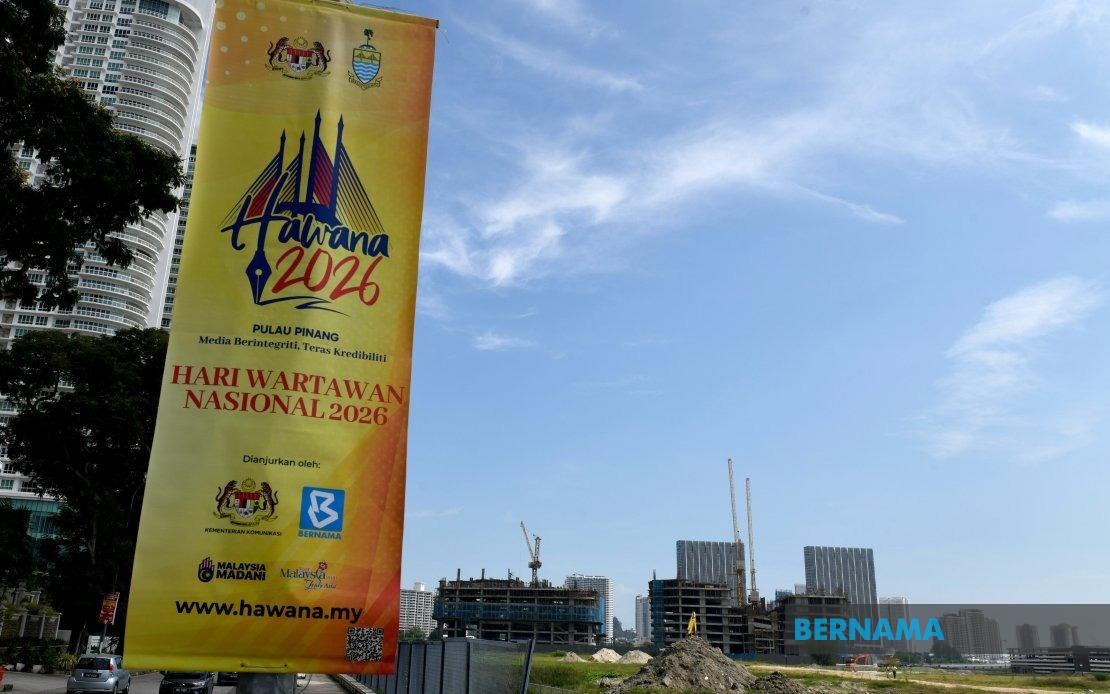
Penang's appointment as the inaugural host for the National Journalists' Day (HAWANA) 2026 celebration marks a significant vote of confidence in the state's capacity to stage major international events while simultaneously boosting its regional economic prospects. The principal gathering, slated for June 19-21, will see Prime Minister Datuk Seri Anwar Ibrahim officially opening proceedings on June 20 at the PICCA Convention Centre @ Butterworth Arena, convening approximately 1,000 media professionals from Malaysia and beyond. Wong Hon Wai, Penang's State Tourism and Creative Economy Committee chairman, underscores that the selection recognises not only the state's logistical competence but also its established credentials as a premier tourism destination commanding respect across Southeast Asia.
The economic implications of hosting HAWANA extend well beyond the ceremonial aspects of the event. Wong emphasises that the convergence of thousands of media representatives and visitors will generate substantial demand across multiple hospitality and service sectors, from accommodation and dining establishments to retail outlets and ground transportation. Tourism operators across Penang have already reported robust hotel reservations, while Seberang Perai, identified as the event's primary venue, possesses sufficient lodging capacity to comfortably accommodate the anticipated three-day influx. This surge in visitor numbers translates into direct revenue for the hospitality sector whilst simultaneously generating multiplier effects throughout the broader economy as attendees patronise local attractions, shopping districts, and entertainment venues.
Beyond immediate financial gains, the event offers Penang an unparalleled marketing opportunity on a regional platform. The concentrated presence of media outlets from across Malaysia and ASEAN countries ensures extensive, premium-quality coverage of the state's distinctive offerings. Wong articulates that this exposure will reinforce Penang's positioning as one of the nation's foremost tourist destinations, providing the type of editorial endorsement and visibility that traditional advertising struggles to achieve. The narrative-shaping potential of assembled journalists cannot be overstated; their subsequent reporting will reach millions of readers, viewers, and listeners throughout the region, subtly yet powerfully influencing perceptions of Penang as a destination worthy of visitation.
The event's thematic focus on media integrity and credibility carries additional significance for Penang's brand narrative. In an era characterised by information fragmentation and declining public trust in institutions, positioning the state as the venue for a celebration of journalistic professionalism and responsible reporting aligns Penang with contemporary values around truthfulness and accountability. This alignment enhances the state's appeal to discerning travellers and investors who increasingly factor governance quality and transparency into destination selection decisions. By associating itself with media excellence, Penang subtly communicates a broader message about institutional competence and democratic maturity.
The complementary RIUH Pi HAWANA Carnival component represents a strategic effort to democratise the event's benefits beyond the professional media cohort. Spanning three days at the convention centre with free admission, this public-facing festival is projected to draw some 30,000 visitors. The carnival infrastructure comprises over 24 local creative enterprises showcasing their work alongside 20 food vendors and 16 live performances from regional artists including Exists, Bunkface, Masdo, Sakura Band, Budak Nakal Hujung Simpang, and Chelsea Ng. This dual-track approach—simultaneously addressing industry professionals and grassroots audiences—maximises the event's reach and ensures that economic and promotional benefits distribute across the creative ecosystem rather than concentrating at elite levels.
Wong's characterisation of media as essential partners in tourism marketing and creative sector development reflects evolved thinking about destination promotion in Southeast Asia. Rather than viewing journalists as external observers, this framing positions them as collaborative stakeholders whose editorial choices fundamentally shape market dynamics. When media platforms amplify stories about local artists, innovative enterprises, and cultural experiences, they simultaneously build visitor confidence, educate potential consumers about available products, and create feedback loops that incentivise creative professionals to maintain quality standards. This symbiotic relationship—where responsible media coverage validates and promotes creative endeavours—underpins much of the region's successful tourism expansion over recent years.
The creative economy dimension deserves particular attention for Malaysian policymakers monitoring Penang's trajectory. The state has positioned itself as a creative hub, and HAWANA 2026 represents an opportunity to consolidate that reputation through international visibility. By featuring local creative brands prominently within the carnival programming and media coverage, Penang simultaneously develops domestic markets for these enterprises whilst signalling to international creative industries that the state provides a supportive environment. For emerging artists, designers, and cultural entrepreneurs, such visibility can catalyse business opportunities, attract investment interest, and facilitate network-building with peers across Malaysia and ASEAN.
The logistical dimensions of hosting HAWANA also warrant consideration. Wong's assertions about strong hotel bookings and adequate accommodation capacity suggest that Penang's tourism infrastructure has matured considerably, capable of absorbing rapid surges in visitor numbers without service degradation. This capacity becomes increasingly valuable as the state competes regionally for major conferences, festivals, and cultural events. Demonstrating organisational competence through successful HAWANA execution positions Penang advantageously for securing future marquee gatherings, creating a virtuous cycle of event procurement and enhanced reputation.
From a Southeast Asian perspective, Penang's hosting of a nationally significant journalism celebration carries subtle geopolitical undertones. The presence of media professionals from across ASEAN reinforces Malaysia's role as a regional communications hub and suggests Penang as a node within broader Southeast Asian information networks. This positioning aligns with Malaysia's strategic interests in projecting soft power and maintaining cultural influence throughout the region. As ASEAN economies increasingly compete for tourism revenue and creative industry prominence, demonstrating the capacity to host high-calibre international events conveys messages about institutional stability and cosmopolitan sophistication.
Wong's emphasis on media's role in building visitor confidence merits particular attention in the Malaysian context, where destination choices increasingly reflect digital discourse and social media narratives. Professional journalists retain credibility advantages over algorithm-driven content distribution, and their presence at HAWANA amplifies voices advocating for quality reporting about travel experiences, cultural encounters, and economic opportunities. This emphasis on journalistic integrity becomes especially important as misinformation and destination-damaging falsehoods proliferate through unregulated channels. By celebrating media professionalism, HAWANA indirectly reinforces broader commitments to information quality that benefit all tourism destinations competing in saturated regional markets.
The event's timing and scale position it as a potential inflection point for Penang's tourism trajectory. Whether HAWANA 2026 ultimately delivers on its projected benefits will depend partly on executing seamless logistics but equally on state government follow-through in translating media attention into sustained promotional campaigns. The carnival attendance figures and journalist coverage generated during June 19-21 represent only initial indicators; the real test lies in whether Penang leverages this moment to reposition itself more aggressively within regional and international tourism markets. Tourism boards across Southeast Asia will be monitoring this execution closely, as successful models often inspire replication and competitive adaptation elsewhere in the region.


