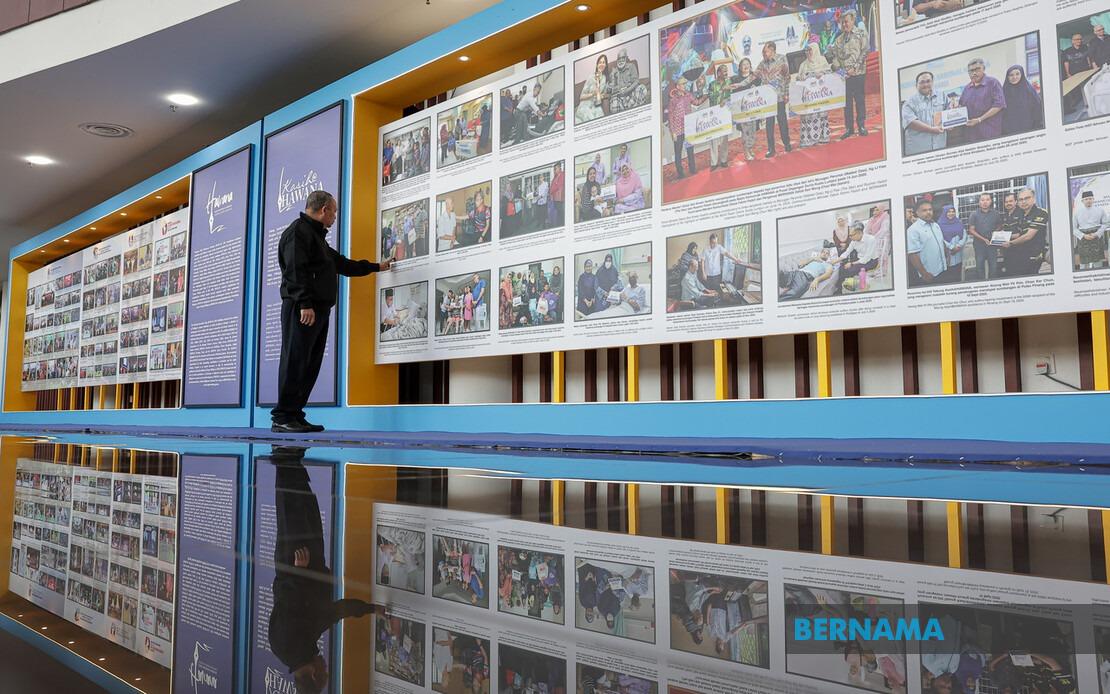
The Malaysian media industry is preparing to take stock of its present challenges and future trajectory as the National Journalists' Day (HAWANA) 2026 celebration unfolds in Penang, with a series of preparatory forums establishing the intellectual groundwork for discussions about where journalism stands in an age of rapid technological change. Held in Butterworth ahead of tomorrow's main ceremony, the collection of symposia and networking events reflects an industry determined to address the structural pressures reshaping how news is produced, distributed, and consumed across the nation. The convergence of media organisations and journalism bodies in the state signals recognition that Malaysia's fourth estate faces unprecedented questions about relevance, sustainability, and professional standards.
The Malaysian Federation of Media Clubs (GKMM) launched its Malaysia Media Retreat 2.0, bringing representatives from fifteen media clubs nationwide to reflect on the federation's development since its formal establishment in October 2022. GKMM president Mohamad Fauzi Ishak emphasised that the gathering served multiple purposes beyond networking, functioning as a checkpoint to evaluate institutional progress and prepare for the federation's third annual general meeting. The retreat, officiated by Communications Minister Datuk Fahmi Fadzil and attended by key figures including Bernama Chief Executive Officer Datin Paduka Nur-ul Afida Kamaludin and Editor-in-Chief Arul Rajoo Durar Raj, demonstrated commitment from government and major news organisations to support professional associations that bind the industry together. These gatherings have become increasingly vital as media clubs struggle to maintain engagement and relevance amid industry consolidation and economic pressures on traditional newsrooms.
The Malaysian Press Institute (MPI) structured its contribution around a provocative town hall session titled "2035: Will Journalists Still Exist?", hosted at Han Chiang University College of Communication. The framing of this question captures the existential anxiety permeating journalism globally, though with particular resonance in Malaysia where news consumption patterns have shifted dramatically toward social media and digital platforms while advertising revenue—traditionally the lifeblood of news operations—continues migrating online. The session assembled prominent editorial voices including MPI president Datuk Yong Soo Heong, New Straits Times Press deputy group managing editor Farrah Naz Abd Karim, and Media Prima's Azhari Muhidin, ensuring that perspectives from major players shaped the conversation. These discussions acknowledge that artificial intelligence and machine learning increasingly handle routine news gathering and production tasks, fundamentally disrupting the skills and workflows that defined twentieth-century journalism.
The rise of artificial intelligence in newsrooms has become unavoidable as a topic for Malaysian media organisations that previously focused discussions on digitisation and paywall strategies. Major newsrooms worldwide have already begun deploying AI systems for tasks ranging from initial story research to data analysis and even headline generation, raising questions about which journalistic functions remain distinctly human and valuable. For Malaysia's media industry, still recovering from disruptions to advertising models and audience fragmentation, AI represents simultaneous opportunity and threat—it could enhance productivity and enable leaner operations, but also threatens to displace entry-level positions that traditionally trained new journalists. The town hall format allows practitioners to voice concerns while exploring how professional journalism might differentiate itself in a market flooded with algorithmically-generated content and user-generated material.
Changing news consumption patterns among Malaysian audiences have accelerated the pressure on traditional media to reinvent themselves. Younger Malaysians increasingly bypass news websites and television broadcasts entirely, obtaining information through WhatsApp, TikTok, and YouTube, where professionally-produced content competes with unverified viral claims and algorithmic recommendations. This fragmentation presents particular challenges for a media ecosystem that has historically relied on several dominant players setting the news agenda. The economics of this transition favour platforms and aggregators over original news producers, creating a structural squeeze that independent and mid-sized news organisations feel acutely. HAWANA 2026 forums provide space for senior editors and media leaders to examine how Malaysian journalism might survive and thrive by developing distinctive forms of value that algorithms cannot easily replicate.
The Malaysian Media Council (MMC) has scheduled its own engagement session with practitioners, signalling that governance bodies see HAWANA 2026 as a moment for regulatory and professional bodies to reconnect with practitioners and address concerns directly. These introductory sessions between councils and working journalists often reveal gaps between aspirational professional standards and the practical constraints facing reporters and editors in competitive, cost-conscious newsrooms. For Malaysia, where questions about press freedom and editorial independence remain politically sensitive, such forums also provide opportunities for media practitioners to communicate concerns about working conditions and interference through official channels rather than public critique. The networking component specifically includes media professionals from the northern region, reflecting recognition that news production and professional development occur unevenly across the country, with concentration in Kuala Lumpur sometimes marginalising journalists operating in state capitals.
Tomorrow's main HAWANA 2026 celebration will see Prime Minister Datuk Seri Anwar Ibrahim officiate proceedings at PICCA @ Butterworth Arena, elevating the event through direct political engagement and signalling government recognition of media's importance. The expected attendance of approximately one thousand media practitioners from Malaysia and abroad transforms HAWANA from a domestic recognition event into an international platform where Malaysian journalism can benchmark itself against global standards and practices. The choice of Penang, Malaysia's second-largest media hub, rather than Kuala Lumpur, reflects deliberate effort to decentralise the profession's most important annual gathering and acknowledge journalism's role outside the capital. The PM's presence suggests government awareness that media resilience and professionalism serve national interests beyond the immediate political news cycle.
The thematic focus of HAWANA 2026—"Media Integrity, Foundation of Credibility"—directly addresses what many view as journalism's most valuable commodity in an attention economy saturated with misinformation and propaganda. Credibility represents the primary asset that distinguishes journalism produced by trained, accountable professionals from content produced by advertisers, political operatives, or anonymous accounts seeking to manipulate public opinion. In Malaysia's context, where deliberate disinformation campaigns have targeted elections, religious communities, and ethnic relations, professional journalism that identifies falsehoods and provides verified reporting offers genuine public value. The thematic choice implicitly rejects arguments that journalists have compromised integrity through sensationalism or political alignment, instead framing integrity as a professional discipline requiring constant maintenance and institutional investment.
The three-day RIUH @ HAWANA Carnival accompanying the main celebration indicates that HAWANA 2026 functions not merely as an industry conference but as a public-facing event designed to celebrate journalism and enhance appreciation for media practitioners among ordinary Malaysians. The carnival format, featuring exhibitions, demonstrations, and interactive elements, creates opportunities to present journalism as a living, evolving profession rather than an abstract institution. Public engagement through carnival activities may prove particularly valuable for younger audiences who might otherwise have limited exposure to what professional newswork involves and why journalistic values matter for democratic societies. The carnival also provides media organisations themselves with platforms to showcase their operations, introduce new products, and rebuild audience relationships damaged by years of conflict over paywalls, clickbait, and editorial controversies.
ORGANISED by the Communications Ministry with Bernama serving as implementing agency, HAWANA 2026 reflects institutional coordination at the highest level and recognition that journalism's professional development demands sustained government support. This structure ensures that discussions and resolutions emerging from HAWANA activities potentially carry weight in future media policy discussions, though it also requires careful navigation of perceptions regarding government influence over editorial independence. The involvement of Communications Minister Datuk Fahmi Fadzil, whose ministry oversees broadcasting and media regulation, suggests ongoing dialogue between industry and government about challenges ranging from digital tax policy to spectrum allocation for broadcast media. Malaysian media practitioners will observe carefully whether HAWANA 2026 produces concrete outcomes such as industry standards, professional certifications, or policy commitments that address persistent challenges facing newsrooms across the country.


