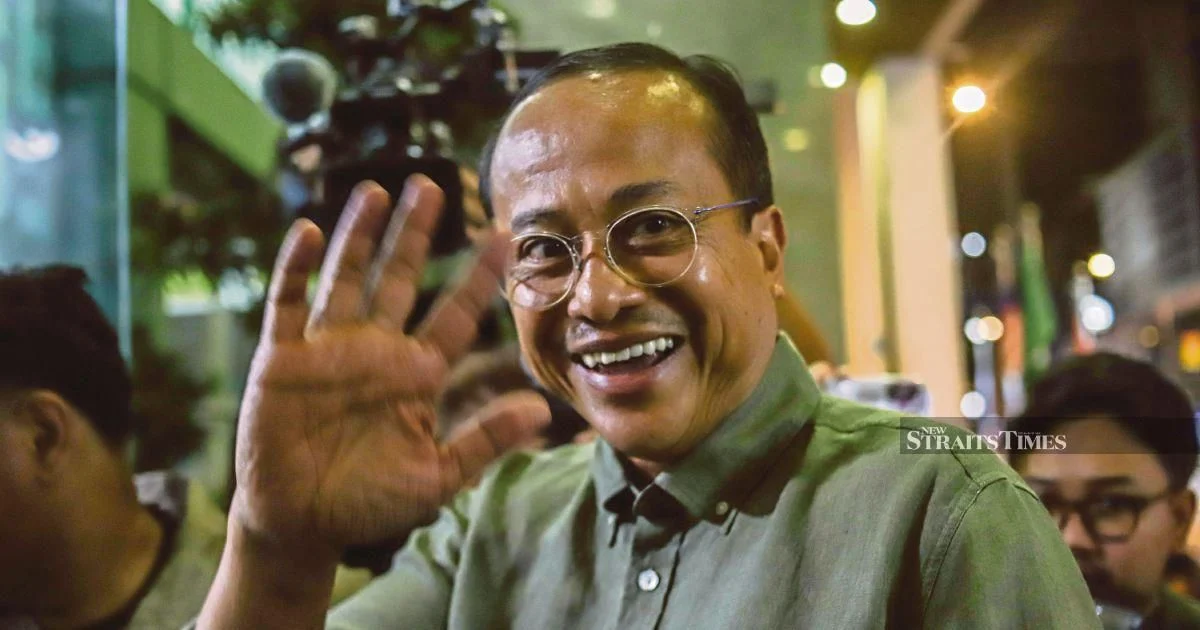
Datuk Seri Hamzah Zainudin, the Larut member of Parliament, continues in a state of institutional limbo as his reappointment to the position of Opposition Leader has not received formal acknowledgment through official channels. The Perikatan Nasional coalition, which he represents, has yet to issue the customary administrative notice that would place his designation on the parliamentary record and grant it full legitimacy within the legislative framework.
The absence of formal recognition raises questions about the procedural completeness of the appointment process. While Hamzah may be functioning in the role and exercising its responsibilities, the lack of documented notice creates potential complications for the smooth operation of parliamentary business. Opposition Leaders carry significant responsibilities in the Dewan Rakyat, including leading parliamentary debates, directing legislative scrutiny, and serving as the primary spokesperson for the coalition's parliamentary contingent. Without official endorsement, there exists a technical gap between the practical performance of these duties and their formal acknowledgment by the institution.
For Malaysian political observers, this situation reflects the continued institutional fragmentation that has characterised Parliament since the 2022 general election. The rise of multiple coalition arrangements and the fluid nature of parliamentary alignments have sometimes created scenarios where procedural formalities lag behind political realities. The Perikatan Nasional coalition, which emerged as a significant parliamentary force, has navigated several organizational challenges in establishing clear hierarchies and formal documentation of key positions.
Hamzah's tenure as Opposition Leader represents an important symbolic and practical role within the current political configuration. The Opposition Leader traditionally serves as Parliament's senior opposition figure, commanding respect from the government side and coordinating legislative strategy among opposition members. The institutional recognition of this position through formal notice is not merely bureaucratic procedure but rather a foundational element that legitimizes the holder's authority and clarifies parliamentary protocols for all members and observers.
The delay in issuing formal notice also affects parliamentary administration more broadly. The Speaker's Office, clerks, and parliamentary support staff rely on official notices to update records, manage seating arrangements, protocol matters, and procedural guidelines that affect how the Dewan Rakyat operates. When such notices are delayed, it can create administrative confusion and complicate the execution of parliamentary functions that depend on clear documentation of positions and responsibilities.
From a Southeast Asian perspective, Malaysia's parliamentary system stands out for its historical emphasis on formal procedure and Westminster-derived institutional conventions. The apparent gap between de facto performance and de jure recognition in this case suggests potential challenges in how contemporary Malaysian politics interacts with established parliamentary traditions. Other ASEAN democracies have encountered similar tensions between practical political arrangements and formal institutional requirements, yet Malaysia's experience offers particular insights given its institutional maturity.
The situation also carries implications for the stability and clarity of Malaysia's political landscape. Clear, documented arrangements regarding parliamentary leadership and coalition positions provide transparency that benefits not only elected representatives but also the Malaysian public and international observers monitoring the nation's governance. Ambiguity about official roles can contribute to broader perceptions of institutional uncertainty, even when the practical exercise of responsibilities proceeds normally.
For Perikatan Nasional specifically, the delayed formal recognition may reflect internal organizational processes or decisions about the precise timing and scope of such announcements. The coalition, which expanded significantly in the 2022 election to become Parliament's second-largest grouping, has been managing multiple structural decisions simultaneously. The administrative machinery required to formally document key appointments across a large and geographically dispersed coalition can sometimes move at a different pace than the political events themselves.
Looking forward, the resolution of this procedural matter remains important for the overall functioning of parliamentary democracy in Malaysia. Whether the formal notice is issued shortly or if the situation continues in its current state, it serves as a useful reminder of how institutional arrangements and formal procedures, while sometimes seeming peripheral to political substance, remain essential scaffolding for the effective operation of democratic institutions. The Dewan Rakyat's ability to function smoothly depends on clarity regarding roles, responsibilities, and the formal recognition of key positions within its structure.


