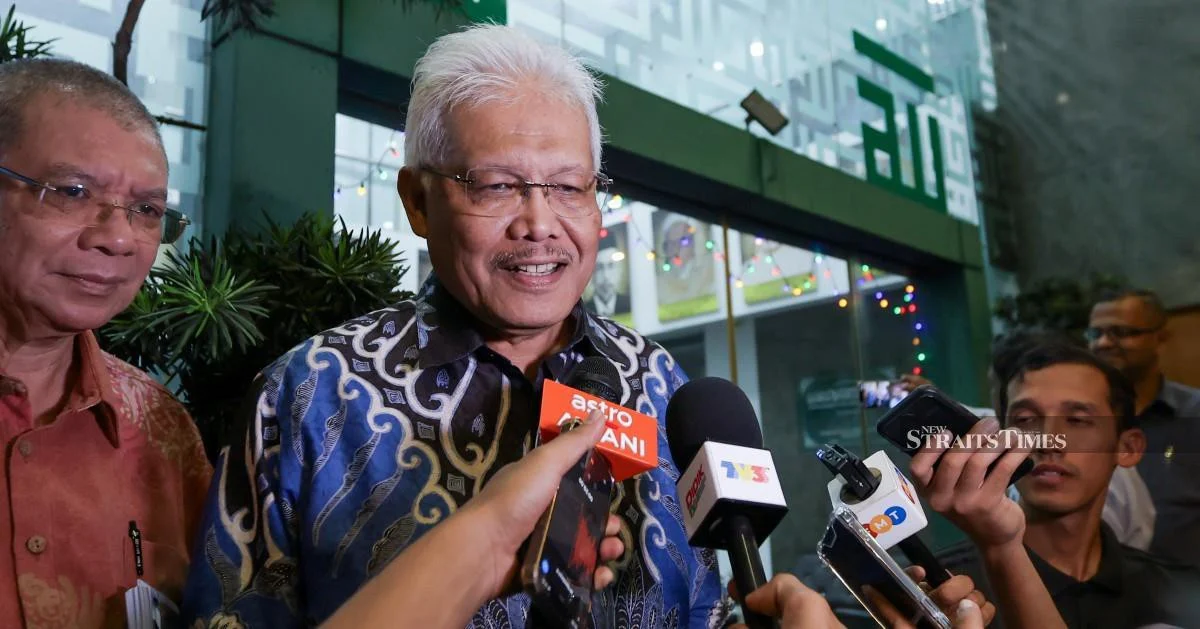
Datuk Seri Hamzah Zainudin is set to reclaim the opposition leader's position in the Dewan Rakyat when parliament reconvenes on Monday, according to the official seating arrangement released for the upcoming session. The shift will relegate Bersatu president Tan Sri Muhyiddin Yassin to a position further along the same bench, marking a concrete manifestation of ongoing realignments within Malaysia's opposition bloc.
The seating chart, typically a administrative formality, carries substantial symbolic weight in the Malaysian parliament. The opposition leader's seat—positioned prominently opposite the government benches—serves not merely as a physical location but as a visible representation of parliamentary authority and the legitimacy of those challenging executive power. Hamzah's return to this position after an interim period underscores significant developments within the Pakatan Harapan coalition and its allied partners.
Hamzah, who serves as chairman of Pakatan Harapan, brings considerable parliamentary experience and has previously held senior cabinet positions. His reinstatement as opposition leader reflects the coalition's assessment of internal dynamics and its strategy for the parliamentary term ahead. The timing of this move, formally announced through the seating chart rather than a dramatic political statement, suggests a managed transition within opposition ranks rather than a sudden rupture.
Muhyiddin's repositioning is noteworthy given his significant political trajectory. As former Prime Minister and current Bersatu president, his movement down the opposition bench represents a tangible demotion in parliamentary hierarchy, even if his party retains considerable influence within the opposition framework. Bersatu has occupied a complex position in recent Malaysian politics, oscillating between government and opposition coalitions, and this seating adjustment may signal clarifications about its current alignment and role.
The mechanics of parliamentary seating in Malaysia follow established conventions, with the opposition leader typically holding the front-row seat directly facing the government. This arrangement facilitates direct parliamentary engagement, enables immediate responses to government statements, and provides a platform for articulating opposition positions on matters of national importance. The allocation of seats is not arbitrary but reflects recognised leadership hierarchies within opposition groupings.
For Malaysian political observers, such administrative changes often precede or accompany broader strategic announcements. The seating chart effectively locks into place organisational decisions already made or in final stages of agreement among opposition leaders. Hamzah's return suggests that Pakatan Harapan has consolidated its position as the primary opposition force, with decisions made about the distribution of parliamentary roles and responsibilities across coalition partners.
This development carries implications for how parliament will function in the coming session. The opposition leader commands greater latitude in parliamentary procedures—from oral questions to thematic debate contributions—and their presence significantly shapes legislative dynamics. Hamzah's prominence in these proceedings will likely influence the tone and substance of opposition scrutiny of government policies, particularly on matters of economic management, governance, and institutional accountability.
The seating adjustment also reflects broader regional patterns in Southeast Asian politics. Malaysia's parliamentary system, inherited from Westminster traditions but adapted to local contexts, continues to evolve as political coalitions reconfigure. The fluidity within opposition ranks—evidenced by such shifts—demonstrates the pragmatic nature of Malaysian political alignment, where ideological consistency sometimes yields to strategic calculation and electoral mathematics.
Within the Dewan Rakyat, such changes ripple across various parliamentary structures, from committee assignments to speaking opportunities in formal debates. Opposition members positioned near their leader gain greater visibility and influence, while peripheral placement can marginalise even experienced parliamentarians. The redistribution of seats thus has consequences for individual legislators' effectiveness and their parties' capacity to amplify messages.
For Malaysian voters and stakeholders monitoring parliamentary governance, Hamzah's return as opposition leader signals renewed focus on legislative oversight and public accountability mechanisms. The opposition leader typically champions parliamentary questions, raises matters of public concern, and articulates alternative policy positions. His prominence in this role will shape parliamentary discourse and may influence public perception of opposition effectiveness.
The move also indicates confidence within the Pakatan Harapan coalition about its structural stability and parliamentary strategy. Leadership positions within opposition blocs reflect careful balancing of competing interests among constituent parties, and elevating Hamzah suggests consensus around his approach to coalition management and parliamentary engagement.
Looking forward, this seating arrangement will persist throughout the parliamentary session unless further changes occur, providing stability for legislative proceedings. For Malaysian policymakers and observers, Monday's parliamentary session will commence with this reconfigured opposition front bench—a visual reminder of Malaysia's continuing political evolution and the shifting dynamics that characterise contemporary parliamentary politics in Southeast Asia.


