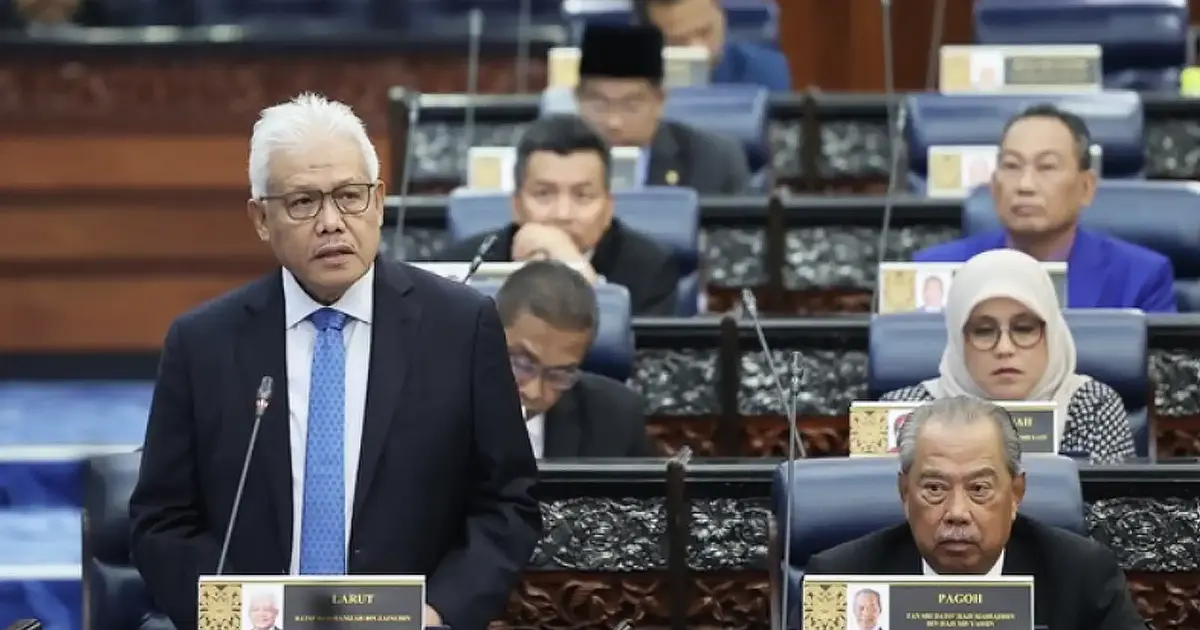
Hamzah Zainudin has reclaimed the prime position of opposition leader seated in the Dewan Rakyat, marking a significant realignment in Parliament's front-row configuration. The repositioning has left Bersatu president Muhyiddin Yassin noticeably demoted, dropped eight seats down from his previously prominent location beside the opposition leader's benchmark seat. This rearrangement signals shifting power dynamics within Malaysia's opposition bloc and carries implications for how dissent will be organized and projected during parliamentary proceedings.
The strategic importance of seating arrangements in the Dewan Rakyat extends beyond mere physical proximity. Front-row placement carries symbolic weight, offering greater visibility for speeches, strategic positioning for media coverage, and practical advantages during debate. Opposition leaders customarily occupy seats that command attention and establish authority within the chamber. Hamzah's return to this position consolidates his standing as the primary voice articulating opposition perspectives, while Muhyiddin's demotion reflects evolving factional equations within the broader anti-government coalition.
Muhyiddin Yassin, as Bersatu's president and a former Prime Minister, had maintained considerable parliamentary prominence during his tenure in the front-row opposition seating. His removal from this vantage point represents more than administrative shuffling—it reflects substantive changes in how opposition representation is being configured. The eight-seat gap between his former and current positions places him significantly further from the speaker's chair and reduces his immediate proximity to centre-stage parliamentary engagement. This physical distance mirrors potential political distance developing within opposition ranks.
The timing of this repositioning carries particular relevance given Malaysia's intricate political landscape, where coalitions remain fluid and opposition unity frequently faces strain. Hamzah's ascendancy as the designated opposition leader consolidates PKR's role as the dominant anti-government force, given that Hamzah represents the party's parliamentary leadership. This development may signal PKR's efforts to present a unified, centralized opposition front capable of mounting coherent challenges to government policy. By establishing clear hierarchical positioning through seating arrangements, parliamentary leadership seeks to project organizational discipline and decisiveness.
Bersatu's internal positioning becomes increasingly scrutinized through this adjustment. As a party that has navigated multiple coalition shifts and undergone significant structural transitions, Bersatu's reduced parliamentary visibility raises questions about its strategic direction. Muhyiddin's previous prominence reflected the party's aspiration to remain a key opposition pillar. His current positioning may indicate either a conscious tactical withdrawal or an unintended consequence of broader opposition recalibration. The party's subsequent response to this seating change will likely reveal whether it represents temporary adjustment or signals deeper marginalization within anti-government configurations.
Parliamentary seating positions historically hold considerable significance in Westminster-influenced systems like Malaysia's. The front row operates as a theater of political contestation where government and opposition leaders engage directly, with television cameras and press galleries capturing every gesture, interjection, and reaction. Proximity to the government frontbench allows opposition representatives to pose supplementary questions with greater immediacy and command better acoustics for their rhetoric. The distance between Muhyiddin's new position and his previous seat effectively reduces his ability to engage in these high-visibility exchanges.
The implications for Southeast Asian politics and Malaysia specifically warrant attention from observers tracking opposition dynamics. In a region where coalitions frequently dissolve and realign, seating arrangements often precede or reflect broader political shifts. Hamzah's restoration to the opposition leader's benchmark position may signal PKR's confidence in maintaining opposition cohesion, or alternatively, it might indicate efforts to tighten control as fissures threaten organizational unity. The parliamentary opposition's effectiveness depends partly on presenting unified messages and coordinated responses to government initiatives.
For Malaysian constituents, these parliamentary reconfigurations directly affect representation quality and engagement during legislative deliberation. Opposition members positioned closer to government respond more readily to ministerial statements and can exercise greater pressure during question time. Citizens monitoring parliamentary television broadcasts will observe Hamzah more prominently featured in camera angles that capture opposition leadership reactions. This visibility translates into political currency, allowing opposition leaders to establish themselves as viable alternatives or credible critics of government policy.
Muhyiddin's situational change merits consideration within the context of Bersatu's broader strategic positioning. The party faces ongoing challenges establishing distinct identity separate from other opposition components while maintaining internal coherence. Previous attempts at independent opposition leadership, particularly under Muhyiddin's stewardship, encountered mixed results. His movement away from the frontbench prominence may reflect acknowledgment that unified opposition leadership under PKR dominance offers better prospects for electoral viability and parliamentary impact than fragmented opposition voices competing for attention.
The parliamentary seating reassignment also reflects practical considerations regarding opposition speaking time allocation and parliamentary scheduling. Opposition leaders designated to prominent front-row seats typically receive priority in debate rotation and greater opportunity for extended commentary during key legislative moments. Hamzah's repositioning potentially expands his allocated parliamentary voice in upcoming sessions, while Muhyiddin's rearrangement may reduce opportunities for extended exposition from the Bersatu perspective. This functional dimension has genuine consequence for how policy critiques reach fellow lawmakers and public audiences.
Moving forward, observers should monitor whether this seating change represents permanent reconfiguration or temporary adjustment pending further coalition developments. Opposition parliamentary dynamics remain volatile, with continuing potential for realignment depending on government performance, electoral calculations, and internal party developments. The front-row repositioning may prove consequential or merely symptomatic of deeper structural changes already underway within Malaysia's opposition landscape. Parliamentary arrangement modifications often signal, rather than precipitate, substantive political transformation.


