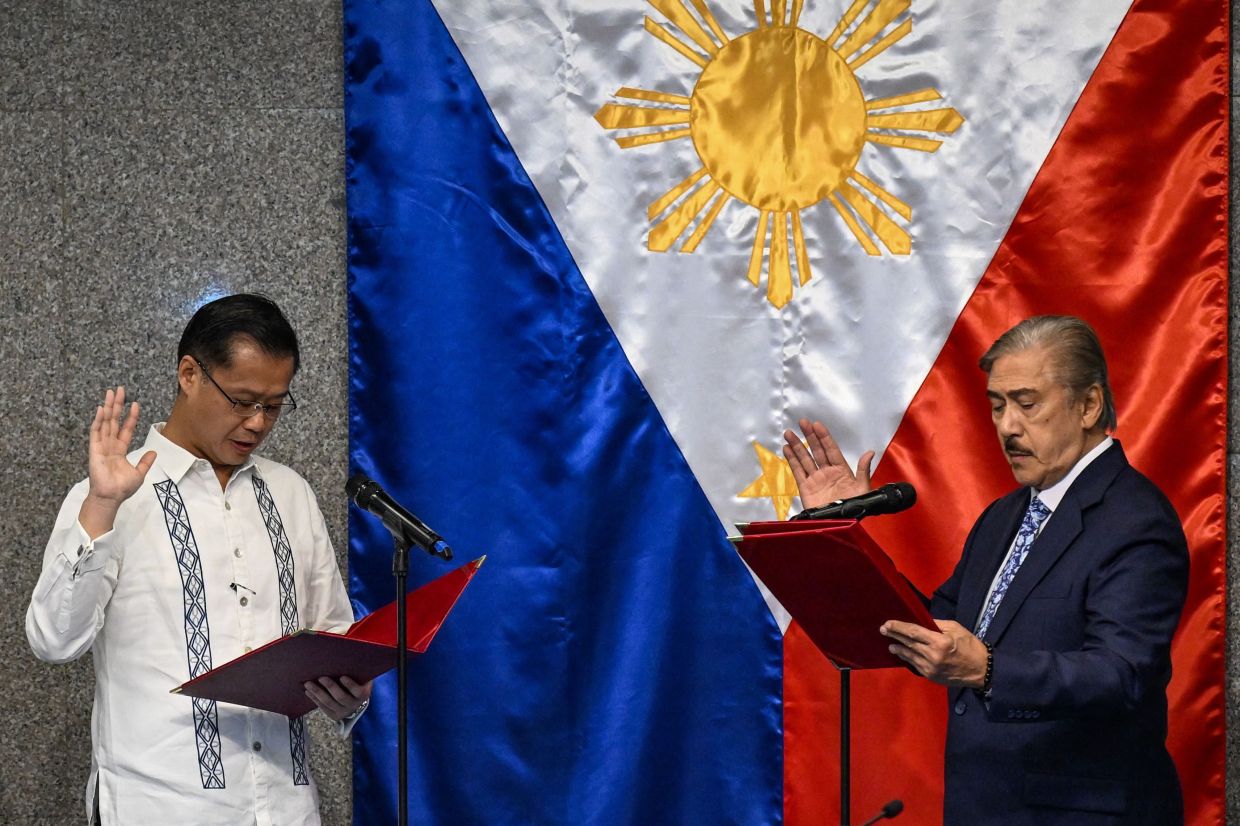
The Philippine Senate completed a dramatic leadership transition on Wednesday (June 17) when it elected Senator Sherwin Gatchalian to the position of Senate president, marking a significant shift in the chamber's power dynamics. The vote came after weeks of political manoeuvring and last-minute negotiations that underscored the fragile nature of legislative coalitions in the Philippines' divided upper house.
Gatchalian's ascension to the 24-member chamber's top post required the attendance and support of exactly 13 senators—the constitutional minimum needed to conduct business and effect officer elections. This narrow margin proved decisive in the political calculus, as legislators aligned themselves across competing blocs vying for control of one of the Philippines' most influential institutions. Gatchalian brings extensive political experience to the role, having previously served as Mayor of Valenzuela City in Metro Manila and as a House Representative, demonstrating a career trajectory typical of Filipino politicians who transition between local and national office.
The path to Gatchalian's election was anything but straightforward. On June 3, a bloc of 12 senators had already moved to remove the incumbent Senate president, Alan Peter Cayetano, by voting to install Gatchalian as Senate president pro tempore. Cayetano, who had assumed the presidency on May 11, contested this action, arguing that the removal required 13 votes—not 12—under Senate rules. This technical dispute over voting thresholds became central to the political standoff that followed, with both sides claiming legitimacy under different interpretations of parliamentary procedure.
Cayetano's position initially appeared defensible from a procedural standpoint. He correctly noted that 13 senators constituted the minimum quorum for conducting business related to the election or removal of Senate officers. However, the political arithmetic shifted dramatically when Senator Joel Villanueva, a longtime Cayetano ally, unexpectedly switched sides to support Gatchalian's faction. This defection proved fatal to Cayetano's continued hold on the presidency, as it tipped the balance decisively in Gatchalian's favour. By Tuesday, Cayetano publicly acknowledged that the political dynamics had changed fundamentally following his conversation with Villanueva, signalling his willingness to step down rather than engage in a prolonged power struggle.
For Malaysian observers, this episode illustrates patterns of coalition politics that differ markedly from Westminster parliamentary traditions. Unlike systems with fixed party structures and disciplined voting blocs, the Philippine Senate operates as a body of ambitious individuals willing to recalibrate alliances based on shifting incentives and personal relationships. The significance of a single senator's defection—sufficient to determine the outcome of a major institutional election—demonstrates the leverage individual players enjoy in a chamber where consensus requires supermajority support for procedural matters.
The institutional context adds another layer of complexity to Gatchalian's election. The Senate currently operates with only 22 sitting members rather than its full complement of 24, creating additional pressure on securing votes. Senator Jinggoy Estrada surrendered to police earlier this month and faced suspension from office following a 90-day order issued by the Sandiganbayan, the Philippines' specialist anti-graft court, over allegations of corruption. Additionally, Senator Ronald Dela Rosa, a former national police chief, remains a fugitive wanted by the International Criminal Court, with his whereabouts unknown to Philippine authorities. These absences mean that any legislative faction attempting to block a motion must secure votes from the relatively restricted pool of available senators.
The implications of these absences extend beyond simple arithmetic. Estrada's situation, tied to graft allegations now being formally adjudicated, reflects ongoing concerns about corruption within Philippine legislative institutions. The Sandiganbayan's decisive action in ordering his suspension demonstrates that the judicial branch is willing to intervene in the affairs of individual legislators, even when seated in the chamber. Meanwhile, Dela Rosa's status as an ICC fugitive raises broader questions about the Philippines' international standing and its willingness to cooperate with international justice mechanisms—a sensitive topic given President Ferdinand Marcos Jr.'s administration and the Philippine government's controversial relationship with international human rights bodies.
Gatchalian's election positions him to shape the Senate's legislative agenda over the coming months. As the chamber's presiding officer, he will exercise considerable influence over which bills receive floor time, how debate is structured, and which committees exercise priority. The Senate president's role extends beyond ceremonial functions to encompassing genuine institutional power, particularly in a chamber characterised by cross-cutting personal and factional interests rather than rigid party discipline.
The political dynamics evident in this transition carry significance for regional observers. The Philippines' institutional arrangements—with their emphasis on individual negotiation, personal relationships, and fluid coalition-building—present both advantages and disadvantages for governance. On one hand, they permit flexibility and pragmatic dealmaking. On the other, they can encourage opportunism, make sustained policy commitments difficult to achieve, and concentrate power in individual actors rather than stable institutions. For Southeast Asia, where different countries experiment with various democratic configurations, the Philippine Senate's operational mode offers lessons about the challenges of maintaining institutional coherence amid fractious political competition.
Looking ahead, Gatchalian's presidency will be tested by his ability to maintain the coalition that elected him while navigating the Chamber's partisan and factional divisions. The ease with which Villanueva switched allegiance suggests that future political realignments remain possible, and Gatchalian cannot assume permanent loyalty from any particular bloc of senators. Building durable working relationships and demonstrating fair-handed leadership of the chamber's proceedings will be essential to consolidating his position and maintaining effective legislative functioning.