Communications Minister Datuk Fahmi Fadzil has praised the government's decision to provide free broadcasting of the 2026 FIFA World Cup through Radio Televisyen Malaysia and Unifi TV, highlighting how the arrangement is delivering measurable financial relief to food and beverage operators and households across the country. The minister made the remarks during a visit to Seberang Jaya Public Market in Butterworth on June 20, where he engaged directly with traders and the public to assess the practical impact of the initiative.
The feedback from the Malaysian Muslim Restaurant Owners Association has been notably encouraging, with business owners describing the free broadcast access as generating substantial cost savings that would otherwise cut into already-thin profit margins. One trader shared with the minister that gaining access to World Cup matches without subscription fees represented a watershed moment—the first time in over twenty years that he had been able to offer this attraction to customers without incurring licensing or broadcast fees. This anecdote underscores a persistent challenge facing small and medium enterprises in Malaysia's hospitality sector, where securing rights to premium sporting events has traditionally required significant expenditure.
The availability of matches through multiple platforms—RTM's traditional television service, the RTMKlik digital portal, and Unifi TV—demonstrates a coordinated strategy to ensure broad accessibility across different demographic segments and viewing preferences. By reducing the transmission costs that establishments would normally absorb, the government initiative directly supports the competitiveness of local restaurants and food courts, which often rely on major sporting events as draw factors during peak viewing periods. The World Cup's quadrennial schedule makes these broadcasts particularly valuable, as they generate concentrated periods of customer traffic that can substantially boost revenue during the tournament months.
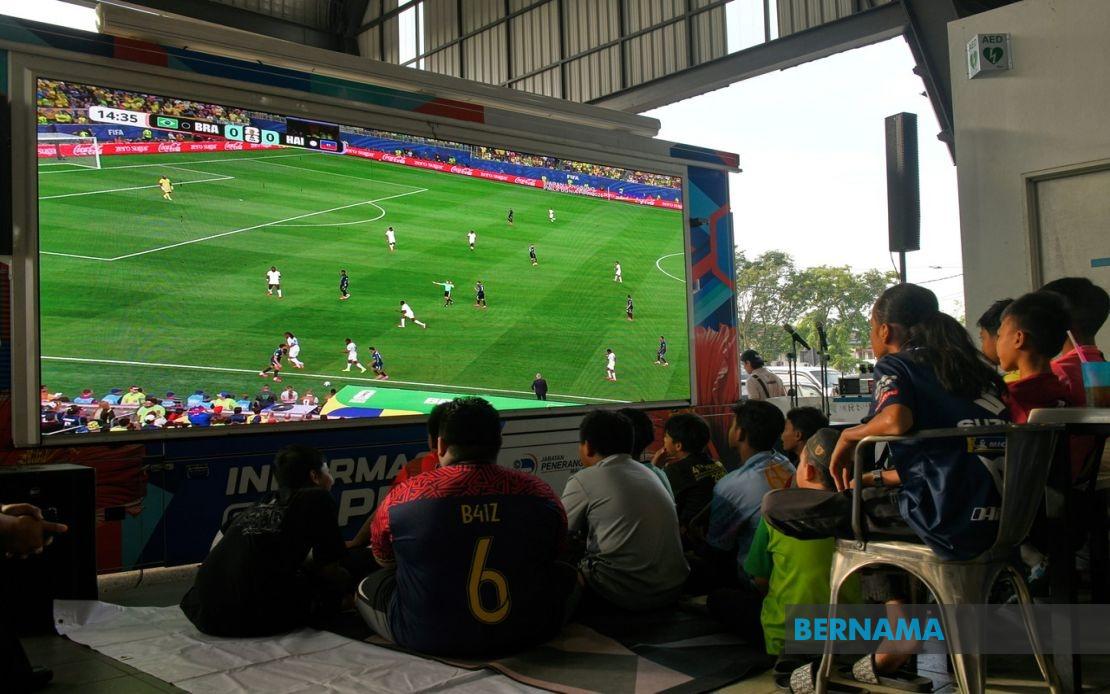
Fahmi's visit to the Seberang Jaya market was structured to move beyond formal announcements, with the minister actually spending time watching the Brazil versus Haiti match alongside ordinary residents and engaging in conversations with stall operators. This ground-level approach yielded direct insights into the operational realities facing small traders, many of whom face compounding economic pressures that extend well beyond broadcast costs. The minister collected detailed feedback on immediate business challenges and documented expectations regarding potential support mechanisms from both state and federal authorities, indicating an intention to escalate these concerns through official channels.
The timing of this initiative carries particular significance within Malaysia's broader economic context. Traders and consumers continue navigating elevated costs for numerous goods and services, a situation substantially exacerbated by regional instability in West Asia, which has driven up transportation and commodity expenses globally. Food and beverage operators have absorbed these inflationary pressures while managing customer expectations about pricing, making any reduction in operational costs—including broadcast licensing—a meaningful contribution to their financial sustainability. The World Cup's mass appeal means that providing free access potentially drives foot traffic that might otherwise be directed toward competing venues or home viewing, benefiting the broader hospitality ecosystem.
Fahmi emphasized that the government initiative addresses not only business operators but also ordinary Malaysian families who have traditionally faced subscription barriers to viewing premium sporting content. The democratization of World Cup access through free-to-air and publicly accessible streaming channels reflects a recognition that major international sporting events hold cultural and social significance beyond their commercial dimensions. For households managing tight budgets, the elimination of pay-per-view or subscription requirements removes a financial obstacle to participating in the collective national experience of supporting favorite teams during the tournament.
The minister's comments included an explicit call for greater engagement by other political leaders—including fellow cabinet members, Members of Parliament, and state assemblymen—to spend substantive time observing conditions on the ground rather than relying solely on official briefings and statistical reports. This appeal reflects an understanding that direct observation of market conditions, trader concerns, and consumer experiences yields insights that cannot be captured through conventional administrative channels. Such field-based engagement, particularly during high-profile events like the World Cup that concentrate public attention, provides politicians with unfiltered perspectives on how government policies actually translate into lived reality for ordinary Malaysians.
The West Asia conflict's ongoing economic ripple effects demand sustained policy attention, according to Fahmi, who identified supply chain disruptions and commodity price volatility as persistent challenges requiring coordinated responses. While hoping for eventual regional stabilization, the minister acknowledged that current conditions continue imposing cost burdens on Malaysian traders and consumers, many of whom lack insulation against international market shocks. The free World Cup broadcasts, therefore, represent one tactical measure within a broader requirement for comprehensive economic support strategies addressing multiple pressure points affecting household and business viability.
The initiative also demonstrates how government coordination across different agencies and platforms can amplify public benefit with minimal additional expenditure. By leveraging RTM's existing infrastructure and Unifi TV's distribution network, the government achieved broad accessibility without creating new bureaucratic mechanisms. This approach offers a template for other cultural or sporting initiatives where public interest is high but commercial barriers limit equitable access. The positive reception from traders and the public suggests that similar strategies—focusing on cost reduction for both businesses and consumers rather than subsidy mechanisms—could be applied to other areas where government intervention could unlock economic benefits through creative use of existing resources.
The broader implication of this initiative extends to questions about the role of public broadcasting infrastructure in contemporary Malaysia. As streaming and subscription services proliferate, the continued relevance and public value of traditional broadcasting platforms depends partly on their ability to secure and deliver content that audiences genuinely want to access. The 2026 World Cup agreement demonstrates that strategic negotiation at the government level can secure rights that benefit the entire population, reinforcing the justification for sustained investment in public broadcasting capacity. For Malaysian readers, the arrangement signals that major international sporting events need not remain exclusively accessible to households and businesses with discretionary spending capacity, opening pathways toward more equitable cultural participation.