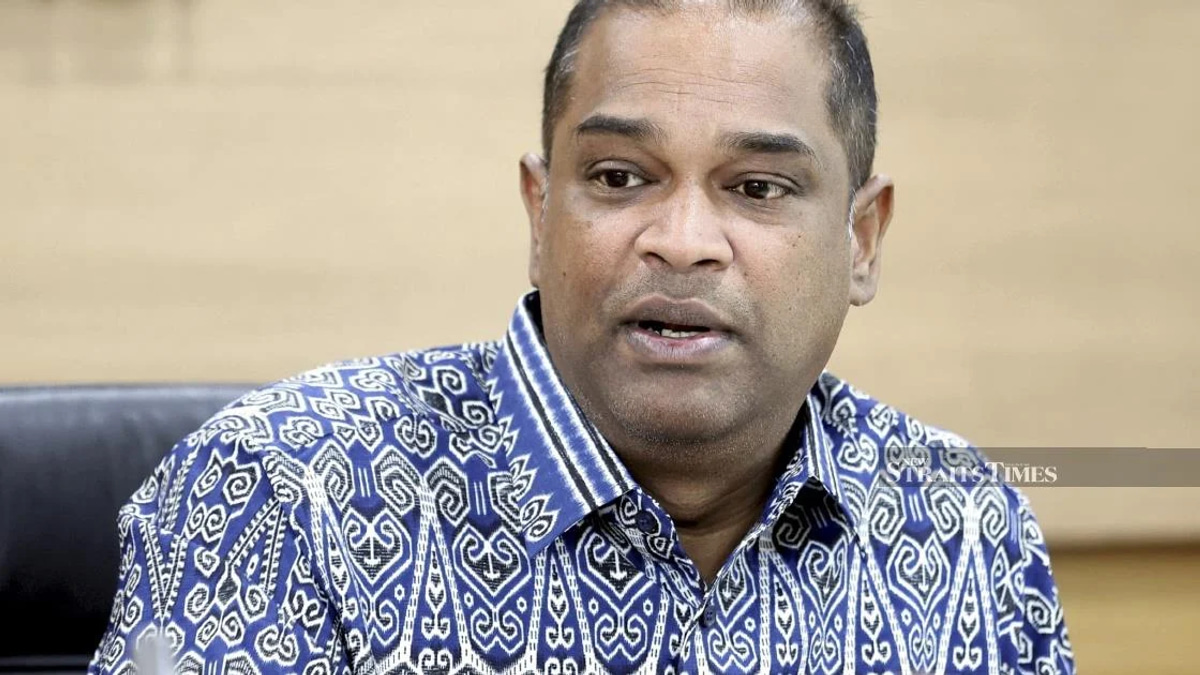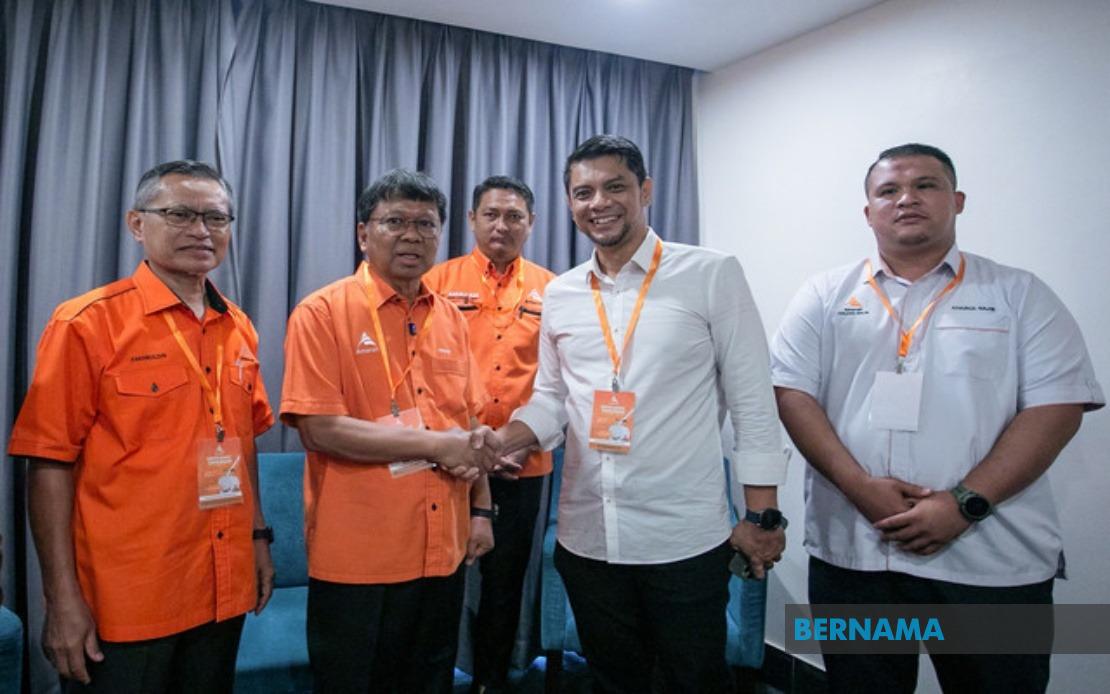
Former Titi Serong state assemblyman Hasnul Zulkarnain Abd Munaim has returned to the fold of Parti Amanah Negara (Amanah) following a departure that stretched nearly six years, a development announced in Ipoh on June 21. The readmission decision was ratified during the party's National Management Meeting and National Leadership Meeting held on June 18, according to Perak Amanah chairman Datuk Asmuni Awi, signalling a notable shift in the party's willingness to embrace returning members during a period when Malaysian politics continues to experience significant flux.
The decision to welcome back Hasnul Zulkarnain represents more than a routine administrative matter. It reflects an emerging strategy within Amanah to tap into a reservoir of former members who departed during turbulent political periods but retain ideological alignment with the party's founding principles. Asmuni explained that although Hasnul Zulkarnain had previously indicated interest in rejoining, the political climate was not sufficiently favourable for formal discussion. The timing of the acceptance now suggests party leadership views the current environment as more conducive to consolidating its base through strategic reintegration.
Hasnul Zulkarnain's journey through Malaysia's fractious party-political landscape illustrates the volatility that has characterised state and federal politics since 2018. In March 2020, shortly after the formation of the Perikatan Nasional (PN) government in Perak, he stepped down from his Titi Serong seat and declared himself an independent, joining two DAP colleagues in that decision. His move coincided with broader realignments triggered by the PN administration's consolidation of power in the state, when multiple assemblymen crossed party lines seeking advantage within the shifting political hierarchy.
From independent status, Hasnul Zulkarnain subsequently aligned himself with Bersatu in July 2020, the party that had become the dominant force within the PN coalition. His stint with Bersatu lasted until his recent decision to return to Amanah, demonstrating the fluid nature of political affiliation among state-level representatives during this tumultuous period. Unlike some assemblymen whose party-hopping appeared driven purely by ministerial ambitions or patronage access, Hasnul Zulkarnain's trajectory suggests a more complex calculus involving both pragmatic positioning and ideological recalibration.
Asmuni's public statement that the party leadership believes "the time is right to reconsider applications from former members" explicitly signals an institutional readiness to expand membership through retrospective acceptance. This approach mirrors strategies adopted by other Malaysian parties navigating the aftermath of the PN era's political upheaval. Rather than maintaining rigid exclusionary standards, Amanah appears to recognise that former members who departed during extraordinary circumstances might contribute meaningfully to party renewal and electoral positioning ahead of future contests.
The Amanah chairman emphasised that readmitting figures like Hasnul Zulkarnain strengthens the party by recovering individuals who fundamentally subscribe to Amanah's ideological platform despite their temporary departures. This framing redefines party-hopping not as disloyalty but as a negotiable response to changed circumstances, provided the underlying commitment to party principles remained intact. For Amanah, which has faced electoral pressures and fragmentation within the reformist political bloc, such reintegration offers modest numerical reinforcement without requiring the party to compromise its positioning.
Hasnul Zulkarnain's response characterised his readmission as validating proof that party leadership retained confidence in his future contributions. His statement avoided defensive posturing about his previous departure, instead adopting a forward-looking stance that emphasises renewed dedication to Amanah's agenda. This constructive tone from both readmitting institution and returning member suggests the reconciliation process, while administratively straightforward, carries symbolic weight in demonstrating internal party cohesion during a period when Malaysian political organisations remain fragile.
The readmission also occurs within the broader context of Perak state politics, where Amanah maintains a presence within the opposition framework. In state legislative dynamics where individual assemblymen's affiliations can determine government formation outcomes, recovering a former representative—even one no longer holding elective office—sends tangible signals to both grassroots members and the electoral constituency. Hasnul Zulkarnain's former roles as state assemblyman and Amanah Youth chief indicate he possessed sufficient standing to influence party direction and member mobilisation.
For Malaysian observers tracking intra-party dynamics and the evolution of political allegiances post-2020, this development underscores how established parties are adapting institutional frameworks to accommodate the unprecedented volatility of recent years. Rather than permanently expunging members who left under PN-related pressure, organisations like Amanah are developing readmission protocols that implicitly acknowledge the extraordinary nature of that political moment. This flexibility may represent pragmatism or necessity, but it reshapes how party membership and loyalty operate in contemporary Malaysian politics.
Looking ahead, Hasnul Zulkarnain's return to Amanah could presage broader reintegration of former members during the lead-up to future elections. Parties requiring expanded organisational capacity may find former representatives like him valuable for grassroots mobilisation, candidate recruitment, and campaign operations—functions that transcend the need for formal electoral positions. For Amanah specifically, absorbing such figures potentially strengthens the reformist coalition's depth in Perak, a state where opposition consolidation remains critical to competitive positioning against entrenched governance structures.