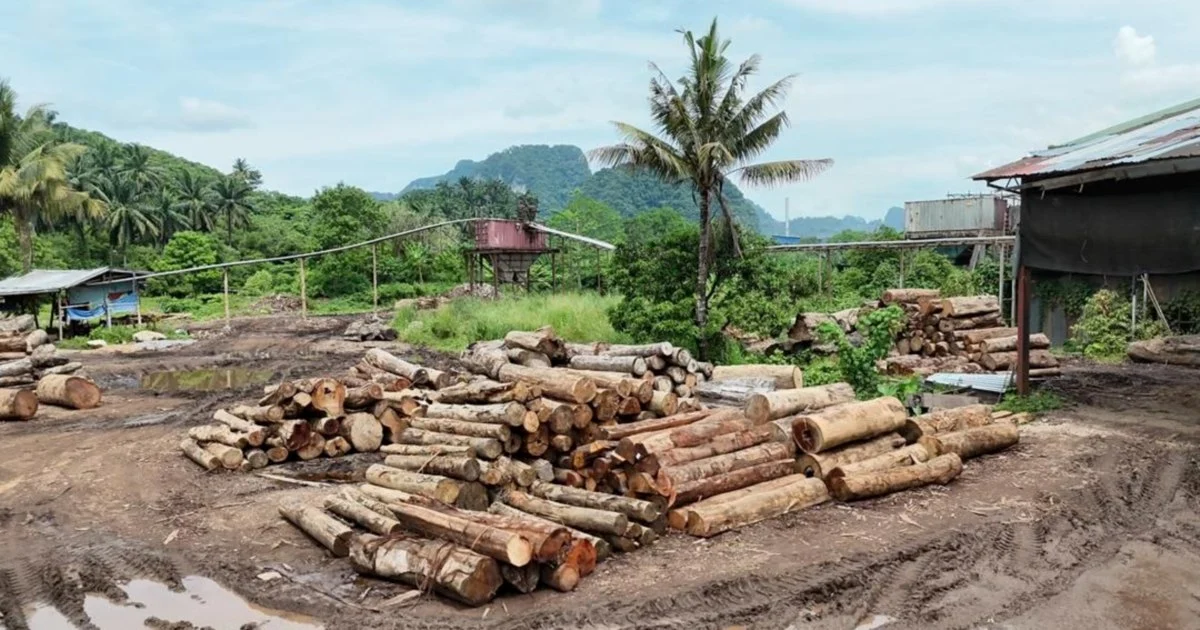
Malaysia's forest enforcement apparatus has struck a substantial blow against an illegal timber operation, with eleven individuals now in custody following coordinated raids spanning Kelantan and Terengganu. The operation, executed today, resulted in the seizure of timber stocks and associated machinery exceeding RM2.43 million in combined asset value. Among those detained are four foreign nationals from Indonesia, signalling the transnational dimension of timber trafficking that continues to challenge regulatory bodies across the region.
The involvement of Indonesian nationals underscores an ongoing challenge in the enforcement landscape. Cross-border timber smuggling networks have long exploited geographical proximity and porous enforcement mechanisms to move illicit forestry products between Malaysia and Indonesia. These operations typically involve complex supply chains where logs are harvested across jurisdictional boundaries and relocated through multiple transshipment points before reaching final processing facilities or export terminals. The presence of foreign operatives suggests this particular network had established operational relationships enabling coordinated extraction and trafficking activities.
Timber trafficking represents one of the most persistent environmental crimes affecting Southeast Asian nations. Beyond the immediate economic loss to state governments through lost royalties and harvesting rights, illegal logging destabilises forest management regimes that depend on sustainable yield planning. The RM2.43 million valuation of seized assets provides only a partial picture of the operation's scale. Such figures typically reflect inventory on hand during raids rather than total throughput, meaning the actual volume processed by this network over its operational period likely exceeded captured amounts considerably.
Kelantan and Terengganu occupy critical positions within Malaysia's forest geography. Both states contain significant Primary and Secondary growth forests within their territorial domains, making them particularly vulnerable to exploitation by organised timber trafficking syndicates. The eastern corridor's forest resources have historically attracted enforcement attention, yet systematic poaching continues despite regulatory presence. The dual-state nature of these raids suggests enforcement coordination between state-level authorities, potentially indicating intelligence sharing that enabled simultaneous operations to maximise disruption impact.
The machinery component of seized assets carries particular significance for enforcement strategy. Equipment used in logging operations—including chainsaws, portable mills, transport vehicles, and processing machinery—represents capital investment for trafficking networks. Seizing operational infrastructure imposes genuine disruption costs that extend beyond timber value alone. Such asset confiscation makes reinitiation of operations materially more challenging, forcing networks to either rebuild logistical capacity or relocate activities entirely. This equipment-focused approach represents evolution in enforcement tactics beyond simple stock seizure.
The four Indonesian nationals' involvement raises questions about diplomatic coordination in enforcement activities. Malaysia and Indonesia maintain bilateral mechanisms for natural resources management, though implementation remains inconsistent across jurisdictions. Cross-border criminal cooperation on environmental matters faces persistent challenges from competing regulatory priorities and limited resource allocation to transnational crime units. The detention of foreign nationals may trigger diplomatic channels, potentially creating opportunities for enhanced bilateral coordination or intelligence exchange regarding broader trafficking networks.
Illegal timber operations generate substantial revenue flows that frequently extend beyond simple profit from wood sales. Trafficking networks typically embed themselves within broader criminal ecosystems involving money laundering, document fraud, and customs evasion. The apprehended suspects may facilitate investigation into associated criminal infrastructure. Financial tracing from captured operations often reveals funding sources and money movement patterns that expose network complexity beyond visible logging activities. Law enforcement's capacity to pursue financial dimensions determines whether enforcement represents temporary disruption or sustained network degradation.
The seasonal dimension of logging activities deserves consideration in assessing timing and scope of these operations. Kelantan and Terengganu experience monsoon patterns affecting forest accessibility and transport conditions. Enforcement operations typically concentrate during periods when weather permits maximum operational mobility. The timing of today's raids may reflect strategic planning around seasonal opportunities or intelligence-driven targeting of specific networks known to operate within current weather windows.
Regional forest governance faces escalating pressure from multiple competing interests. Legitimate timber harvesting, palm oil expansion, infrastructure development, and conservation objectives generate overlapping territorial claims. Within this complex landscape, illegal operators exploit regulatory gaps and enforcement resource constraints. The consistent emergence of substantial trafficking networks demonstrates that current enforcement capacity, while producing occasional high-impact seizures, remains insufficient for comprehensive market interdiction. Sustainable suppression of timber trafficking likely requires coordinated regional approaches addressing both supply-side enforcement and demand-side market interventions.
These enforcement actions carry implications beyond immediate criminal justice proceedings. Successful prosecution of detained suspects depends on evidence quality, chain-of-custody integrity, and prosecution expertise. Conviction rates for environmental crimes remain historically lower than other offence categories across Southeast Asia, creating incentive structures that inadequately deter participation in trafficking networks. The captured evidence from seized materials and machinery may prove instrumental in establishing systematic operation rather than isolated incidents, potentially strengthening prosecution arguments regarding organised crime dimensions.
The broader enforcement environment faces resource constraints that limit operational frequency and geographic coverage. These Kelantan-Terengganu operations represent singular enforcement actions, yet illegal logging persists continuously across multiple jurisdictions. Sustainable progress requires enhanced coordination between federal and state authorities, adequate equipment and personnel allocation, and sustained intelligence capabilities. The captured assets will likely undergo valuation processes and potential legal forfeit proceedings, though financial recovery rarely compensates states for ecological losses associated with long-term forest exploitation.


