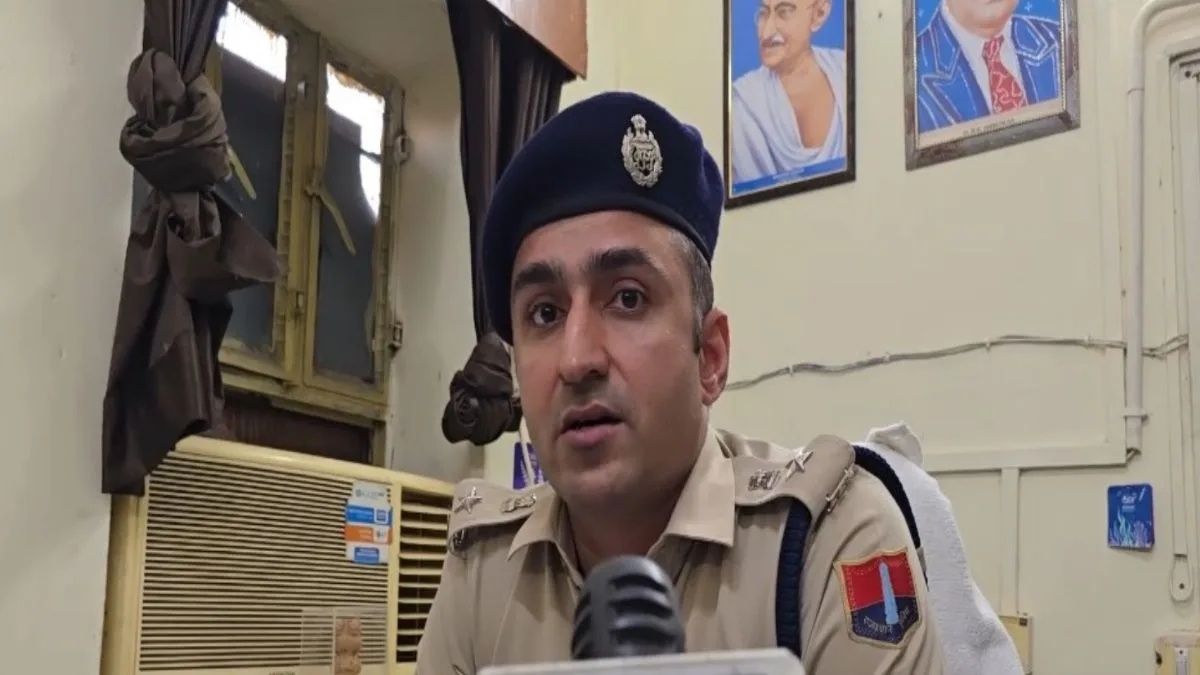
In what authorities describe as a potential honour killing, two young women have died in Rajasthan's Dholpur district following an incident that has shocked investigators and renewed concerns about family violence linked to romantic choices. Superintendent of Police Vikas Sangwan confirmed on Friday that police have launched a comprehensive investigation after receiving information that Bharat Lodha, a resident of Pharakpur village and father of four, allegedly murdered two of his daughters near Sagarpada Bridge in the early hours of June 11.
The sequence of events leading to the tragedy centres on a family dispute over the women's romantic relationships, according to preliminary police findings. Officers believe the daughters had chosen partners or were involved in romantic attachments that their family members had explicitly rejected. This disapproval, investigators suggest, may have motivated the alleged perpetrators to take the extreme step of disposing of the victims by forcing them into the river below the bridge. The incident, believed to have occurred between 9 and 10 in the evening on June 11, represents a particularly brutal manifestation of family conflict over personal autonomy and marriage choices.
The investigation has expanded beyond Bharat Lodha to encompass several other family members who police suspect were complicit in the alleged crime. Investigators are systematically reconstructing the movements and actions of those involved, examining how the young women were transported to Sagarpada Bridge, who accompanied them during this journey, and what vehicles were used. These granular details, Sangwan explained, remain subjects of ongoing verification as officers attempt to build a comprehensive understanding of the crime's mechanics and establish the precise roles played by individual suspects.
Police teams have descended upon the location to gather forensic evidence and interview witnesses who may have observed unusual activity on the evening in question. Officers are carefully examining the site near Sagarpada Bridge and the surrounding area to collect physical evidence that might corroborate or challenge the preliminary account of events. The river and its banks have become focal points for this evidentiary collection process, though authorities have emphasised that critical facts remain unverified at this stage of the inquiry.
The case highlights a persistent pattern of violence within Indian families that stems from disputes over marriage and romantic autonomy. Honour killings, though illegal and prosecutable as murder under Indian law, continue to occur in various parts of the country, particularly in regions where traditional family structures and social hierarchies exert considerable influence over individual life choices. Rajasthan, like several other states, has witnessed multiple cases of families resorting to extreme violence to prevent what they perceive as dishonourable relationships or marriages outside their social circle.
For Malaysian readers and the broader Southeast Asian context, this case underscores troubling similarities in how family honour and romantic autonomy can intersect in deeply problematic ways. While the legal systems in Malaysia and other ASEAN nations provide protections against such violence, cases from neighbouring South Asia serve as reminders of the ongoing struggle for women's rights in the region and the dangers that can arise when traditional patriarchal structures clash with personal freedoms.
The Sadar Police station, which received the initial information triggering this investigation, has become the epicentre of efforts to establish whether the deaths were indeed perpetrated by family members. Sangwan acknowledged that many aspects of the case remain preliminary and subject to verification as investigators continue their work. The police have indicated that concrete legal action will follow once the investigation reaches a stage where sufficient evidence has been gathered and examined to support formal charges.
The timing of the alleged incident is significant in establishing a timeline and identifying potential witnesses. The evening hours of June 11, with the incident positioned between 9 and 10 in the evening, suggest that darkness may have facilitated the alleged crime. Investigators are questioning whether this timing was deliberately chosen to minimize visibility and reduce the likelihood of witnesses observing the family members transporting the victims to the bridge.
Authorities have stressed that the investigation is far from complete and that premature conclusions would be inappropriate. Sangwan's repeated emphasis on the preliminary nature of current findings reflects standard investigative protocol, particularly in cases involving serious allegations against family members. The complexities inherent in family-based crimes often mean that apparent narratives can shift as new evidence emerges and witnesses provide varying accounts.
The investigation also touches on broader questions about community awareness and intervention in family disputes. Whether neighbours or other community members had prior knowledge of conflict within the household, or whether warning signs of potential violence existed, remains unclear. Such questions often emerge in post-incident analysis of honour killings and family violence cases across South Asia.
As the investigation progresses, the case will likely attract significant public and legal attention given the serious nature of the allegations and the involvement of multiple family members. The outcome will have implications for how similar cases are investigated and prosecuted in Rajasthan and potentially influence judicial interpretation of honour killing cases across India. For the families affected and the broader community in Dholpur district, this tragedy raises urgent questions about family dynamics, social pressure, and the protection of individual autonomy within traditional structures that continue to exercise considerable influence over life and death decisions.