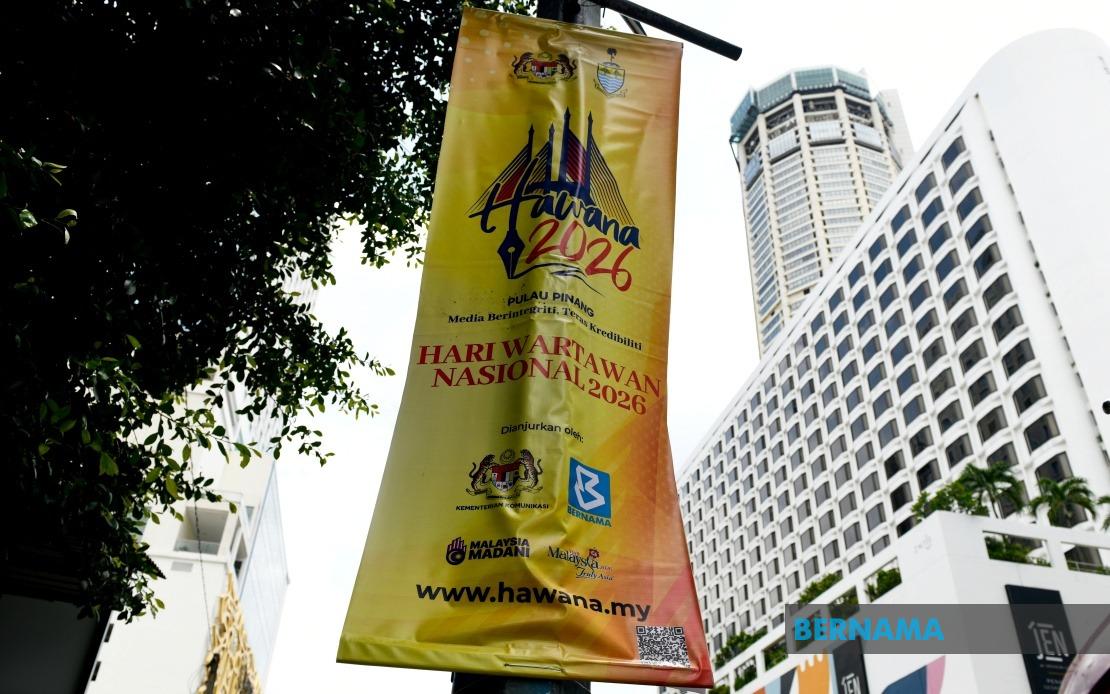
Communications Minister Datuk Fahmi Fadzil has embarked on a two-day working visit to Penang that underscores the government's commitment to supporting Malaysia's media landscape and creative sector. The visit, which commenced in George Town, is anchored around the National Journalists' Day (HAWANA) 2026 grand finale—a significant annual gathering that reflects the administration's recognition of journalists' contributions to national development and democratic discourse.
The minister's itinerary demonstrates the breadth of engagement between government and the media industry. Fahmi's opening engagement at the Malaysia Media Retreat Programme 2.0 in Seberang Jaya sets the tone for substantive dialogue with media leadership. This gathering brings together editors-in-chief and senior management from both local and international news organisations, creating an opportunity for high-level discussion about contemporary journalism challenges and opportunities. The evening state government dinner with Penang Yang Dipertua Negeri Tun Ramli Ngah Talib adds ceremonial weight to the occasion, signalling strong state-level support for media development initiatives.
Beyond formal ministerial duties, Fahmi's attendance at the RIUH Pi HAWANA Carnival at PICCA Convention Centre @ Butterworth Arena reflects a broader government strategy to integrate media recognition with creative industry promotion. The three-day carnival, which combines arts workshops with dialogue sessions, represents an evolving understanding of how journalism intersects with cultural production and community engagement. Activities such as cyanotype printmaking, albumen printing, and stone-carving workshops position media practitioners not merely as news gatherers but as participants in Malaysia's wider creative ecosystem.
The carnival's extensive programming reveals the scope of Malaysia's creative sector. With more than 24 local creative product brands exhibiting, 20 food and beverage vendors, and 16 stage performances featuring emerging and established artists including Sakura Band, Kaka Azraff, Budak Nakal Hujung Simpang, and Chelsea Ng, the event attracts diverse audiences beyond the journalism community. Free admission encourages public participation, democratising access to conversations typically confined to industry professionals. This approach aligns with government objectives to nurture creative talent while building public appreciation for both journalism and artistic endeavour.
Fahmi's continued engagement on the second day through the Jiwa@Sembang Santai Special World Cup Edition programme at Seberang Jaya Public Market Food Court demonstrates the government's willingness to meet media practitioners and the public in informal settings. This grassroots approach contrasts with the more formal Media Dialogue with the Communications Minister, scheduled for the following morning in Butterworth. The dual-track strategy—combining accessible community forums with structured policy discussions—reflects evolving communication practices within Malaysia's government apparatus.
The centrepiece of the visit is undoubtedly the HAWANA 2026 Grand Finale, themed "Media Integrity Strengthens Credibility," at PICCA Convention Centre @ Butterworth Arena. The presence of Prime Minister Datuk Seri Anwar Ibrahim as the officiating figure elevates the event's political significance and reaffirms the administration's priority placed on media standards and public trust in news institutions. Gathering approximately 1,000 media practitioners from Malaysia and abroad, the grand finale provides a platform for examining contemporary journalism's trajectory in an era of misinformation, digital disruption, and shifting audience behaviours.
The choice of "Media Integrity Strengthens Credibility" as the thematic focus carries particular resonance for Southeast Asian journalism, where concerns about press freedom, corporate ownership concentration, and state influence remain pertinent issues. By emphasising integrity as the foundation of credibility, the government positions itself as aligned with professional journalism standards, potentially addressing perceptions of media-state relations that occasionally generate controversy in Malaysia's political landscape. For regional observers, such messaging suggests the administration's interest in projecting an image of media openness and professional independence.
HAWANA's role as Malaysia's premier platform for recognising journalists' contributions and professionalism has grown significantly since its establishment. Administered by the Ministry of Communications with Bernama, the Malaysian National News Agency, serving as the implementing body, the event has become integral to professional development conversations within Malaysia's journalism sector. The inclusion of international participants signals an effort to benchmark Malaysian journalism against global standards and foster knowledge exchange within the region's media communities.
For Malaysia's broader creative and media sectors, such high-level government engagement carries practical implications. Ministerial participation and prime ministerial patronage signal government support for funding, regulatory frameworks, and policy environments that nurture journalism and creative industries. The integration of HAWANA celebrations with creative industry carnival programming suggests emerging recognition that journalism, while distinct professionally, shares common ground with creative practitioners in terms of skill development, market challenges, and audience engagement strategies.
The Penang setting itself merits consideration. As a state with particular media vitality and a cosmopolitan public discourse culture, Penang has frequently hosted significant national events related to journalism and creative industries. Holding HAWANA 2026's grand finale in the northern state rather than the capital demonstrates geographical rotation of high-profile media events and acknowledgement of regional creative hubs beyond the Klang Valley. This geographical diversification of major events reflects government sensitivity to decentralising cultural and professional recognition.
Stakeholders in Malaysia's media landscape will scrutinise outcomes of the HAWANA 2026 grand finale, particularly discussions emerging from the dialogue sessions involving international and local journalists. Regional media observers will monitor whether the grand finale generates substantive commitments regarding professional standards, editorial independence, or capacity-building initiatives. For Malaysian journalists navigating an increasingly complex information environment, Fahmi's visit and the broader HAWANA programme represent institutional acknowledgement of their profession's importance to democratic governance and social stability.


