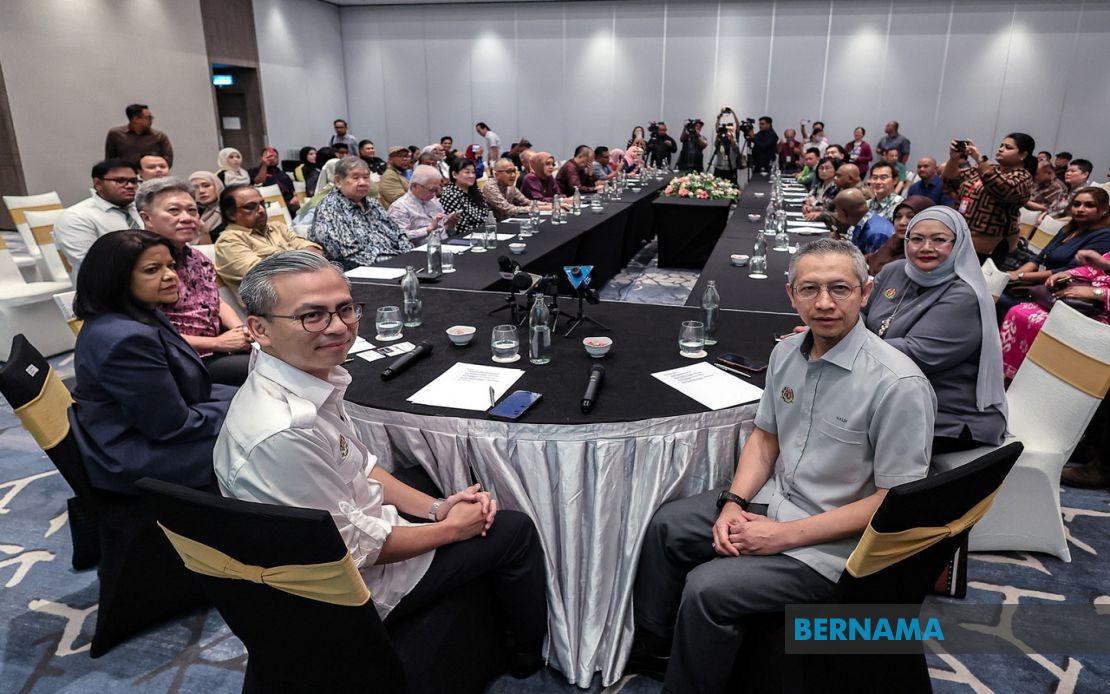
Communications Minister Datuk Fahmi Fadzil has unveiled plans to establish a recurring dialogue mechanism between the government and Malaysia's media fraternity by incorporating retreat sessions into all future National Journalists' Day (HAWANA) celebrations. The initiative, announced during a lengthy engagement with media representatives at HAWANA 2026 in Butterworth on June 20, reflects efforts to formalise ongoing communication channels and demonstrate the ministry's commitment to collaborative policymaking within the sector.
The proposal centres on creating dedicated retreat sessions designed to function as comprehensive feedback mechanisms where journalists and media organisations can voice concerns, propose solutions, and contribute to shaping government communications policy. Rather than relying on ad-hoc meetings, this structured approach aims to ensure that industry perspectives receive systematic consideration when the government reviews existing legislation or develops new regulatory frameworks affecting the media landscape.
Responsibility for coordinating these proposed retreats would fall to the Malaysian Media Council (MMC), according to Fahmi's statement. By delegating organisational duties to the MMC—an industry body with established relationships across the sector—the Communications Ministry seeks to enhance the credibility and inclusivity of the consultation process. This arrangement potentially signals government recognition that media self-regulatory bodies should play a more prominent role in facilitating constructive engagement between the state and the press.
The minister outlined the substantive purpose behind these sessions with considerable specificity. Beyond serving as mere forums for airing grievances, the retreats would function as formal channels through which the media industry can submit detailed proposals concerning policy matters, legislative amendments, and statutory reforms. This methodology acknowledges that practitioners working within news organisations often possess frontline insights regarding gaps or inefficiencies in existing regulatory frameworks that policymakers may not immediately perceive.
A particularly significant focus area emerging from Fahmi's remarks concerns the economic sustainability of Malaysia's mainstream media landscape. The minister identified a critical structural challenge confronting the industry: the widespread practice of repurposing professionally-produced news content across social media platforms generates negligible financial returns for news organisations despite substantial audience reach. This phenomenon has intensified pressure on traditional revenue models already weakened by digital transformation and shifting advertising expenditure patterns.
The minister's acknowledgment of this problem carries particular weight given that few government officials have previously articulated such explicit recognition of the economic squeeze facing news organisations. By elevating this issue during a high-profile gathering attended by senior ministry officials, Bernama leadership, and representatives from established media houses, Fahmi signalled that alleviating this constraint constitutes a legitimate policy consideration deserving government attention and potential intervention.
Fahmi indicated that the Communications Ministry would position itself as a facilitator in ongoing negotiations between the Malaysian Media Council and major social media platforms regarding compensation mechanisms or content-sharing agreements. This stance represents a notable shift from passive non-interference, suggesting the government perceives addressing media industry viability as falling within its legitimate purview. Such positioning could prove consequential if it leads to concrete government involvement in facilitating commercial negotiations between domestic media companies and international technology companies.
The dialogue session itself attracted substantial institutional representation, reflecting the significance attributed to the gathering. In attendance were senior ministry figures including secretary-general Datuk Abdul Halim Hamzah and deputy secretary-general Datuk Bahria Mohd Tamil, alongside leadership from Bernama including chairman Datuk Seri Wong Chun Wai and chief executive officer Datin Paduka Nur-ul Afida Kamaludin. The participation of Malaysian Media Council chairman Tan Sri Nallini Pathmanathan and senior executives from competing media organisations underscored the inclusive nature of the initiative.
From a Malaysian context, this development warrants close observation as it may reshape how the government engages with the broader media ecosystem. The formal institutionalisation of feedback mechanisms could provide opportunities for media organisations to advocate for more conducive regulatory environments, though the degree to which government subsequently implements industry recommendations will ultimately determine whether these retreats function as meaningful consultations or ceremonial exercises. For regional observers, the initiative also signals Malaysia's approach to media governance during a period when many Southeast Asian democracies grapple with balancing press freedom with government information management objectives.
The HAWANA 2026 dialogue represents one instance within a broader contemporary debate regarding the relationship between state institutions and media organisations. Rather than confrontational positioning, the Communications Ministry's proposed approach emphasises structured collaboration and mutual problem-solving. Whether this framework successfully addresses the media industry's genuine economic challenges or merely creates appearances of dialogue without substantive policy shifts remains an open question that will become apparent through the government's subsequent actions and legislative agenda.


