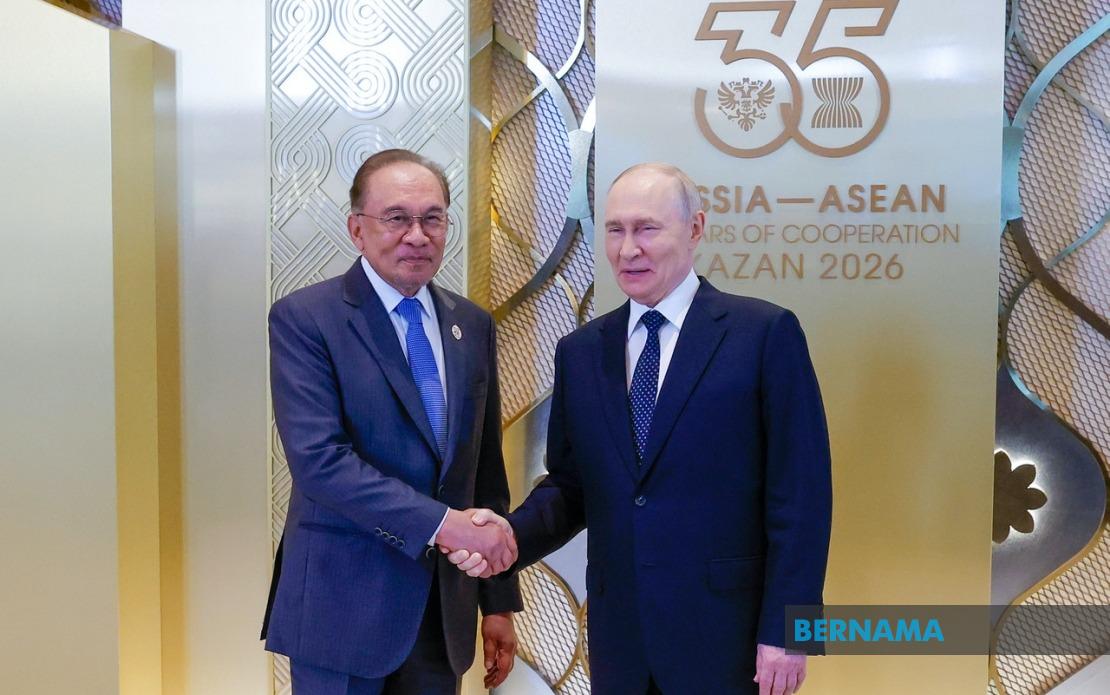
Prime Minister Datuk Seri Anwar Ibrahim has emphasized that sustained diplomatic engagement platforms remain essential for navigating the complex global landscape, particularly as nations worldwide grapple with mounting challenges and systemic uncertainties. Speaking at the ASEAN-Russia Commemorative Summit in Kazan, the Malaysian leader underscored how structured dialogue mechanisms—whether through multilateral forums or bilateral partnerships—serve as indispensable instruments for deepening mutual comprehension among nations with divergent interests and perspectives.
The summit, held from June 17 to 18 in Kazan, the capital and largest city of Tatarstan, represents a significant moment for recalibrating ties between Southeast Asia's premier regional bloc and Moscow. Anwar's remarks, delivered following a formal gala dinner hosted by President Vladimir Putin, reflected his conviction that such high-level gatherings transcend ceremonial significance and function as authentic spaces where leaders can cultivate interpersonal relationships and navigate substantive policy discussions.
Beyond the immediate diplomatic pleasantries, Anwar identified concrete strategic benefits arising from such engagements. He articulated that these summits provide crucial opportunities for ASEAN member states and Russia to identify complementary interests, establish frameworks for collaboration, and pursue initiatives that generate tangible advantages for all participating parties. This framing is particularly relevant to Malaysia and other Southeast Asian nations, which have historically balanced relations with major powers while prioritizing regional stability and economic prosperity.
The Malaysian Prime Minister, who simultaneously serves as Finance Minister, noted that the Kazan gathering functioned as a platform showcasing Russia's substantial cultural, historical and civilizational contributions—a recognition that extends beyond conventional security or economic cooperation. This cultural dimension carries particular resonance for ASEAN capitals, where understanding Russia's broader perspectives and heritage can inform more sophisticated diplomatic approaches that account for Moscow's strategic interests and historical grievances.
Anwar's emphasis on trust-building reflects a sophisticated understanding of contemporary geopolitical dynamics. In an era marked by great-power competition, technological disruption, and transnational challenges such as climate change and pandemic preparedness, the capacity of nations to establish confidence through regular dialogue becomes increasingly valuable. For Malaysia specifically, as a non-aligned nation with strategic interests spanning energy security, maritime commerce, and technological development, maintaining constructive relationships across the global spectrum remains central to national interests.
The bilateral dimension of ASEAN-Russia engagement carries particular importance for Malaysian policymakers. Direct country-to-country relationships enable more granular discussions on matters including investment flows, educational exchanges, defense cooperation, and scientific collaboration. Malaysia's participation in such high-level summits signals Kuala Lumpur's commitment to diversifying its international partnerships beyond traditional Western alignments, reflecting a pragmatic foreign policy orientation.
The timing of this summit holds additional significance within the context of regional geopolitics. Southeast Asia faces mounting pressures from great-power competition, particularly regarding the South China Sea and broader Indo-Pacific architecture. Maintaining engaged relationships with major powers including Russia provides ASEAN with greater flexibility in navigating these pressures while preserving the bloc's unity and centrality in regional affairs. Anwar's participation underscores Malaysia's role as a constructive actor in these delicate balance-of-power dynamics.
Anwar's remarks about exploring cooperation pathways reflect pragmatic recognition that mutual benefits arise when nations identify overlapping interests rather than focusing exclusively on points of divergence. For ASEAN-Russia relations, potential areas of collaboration span energy markets, defense capabilities, space technology, educational partnerships, and cultural exchanges. Each domain offers opportunities for deepening engagement while advancing legitimate national interests on both sides.
The gala dinner setting itself merits consideration within diplomatic protocol. Such formal occasions serve important functions beyond ceremonial value—they provide informal spaces where leaders can engage in candid conversations, build personal rapport, and develop the trust necessary for managing future disagreements constructively. In multilateral diplomacy, these personal connections often prove decisive in resolving procedural obstacles or finding creative solutions to substantive disputes.
For Malaysian audiences and policymakers, Anwar's message carries broader implications about Malaysia's international positioning. The country's ability to maintain productive relationships with diverse global actors—from traditional Western partners to rising powers and regional actors—depends fundamentally on consistent, high-level engagement. This requires sustained diplomatic investment, genuine commitment to understanding different perspectives, and willingness to identify areas of mutual benefit even amid broader geopolitical competition.
The ASEAN-Russia relationship itself remains somewhat underdeveloped compared to either party's engagement with other regions. Increasing substantive cooperation requires precisely the kind of sustained dialogue and confidence-building that summits facilitate. Energy cooperation, particularly in hydrocarbon markets, represents one domain where ASEAN nations and Russia possess natural complementarities, while security matters including counter-terrorism and cybersecurity present additional collaboration opportunities.
Looking forward, Anwar's advocacy for robust engagement platforms suggests Malaysia will continue prioritizing multilateral diplomacy and structured dialogue as mechanisms for advancing national interests while contributing to regional stability. As geopolitical tensions persist and new challenges emerge, such platforms become increasingly valuable for preventing miscalculation, reducing uncertainty, and identifying pathways toward cooperative outcomes that benefit all participants.