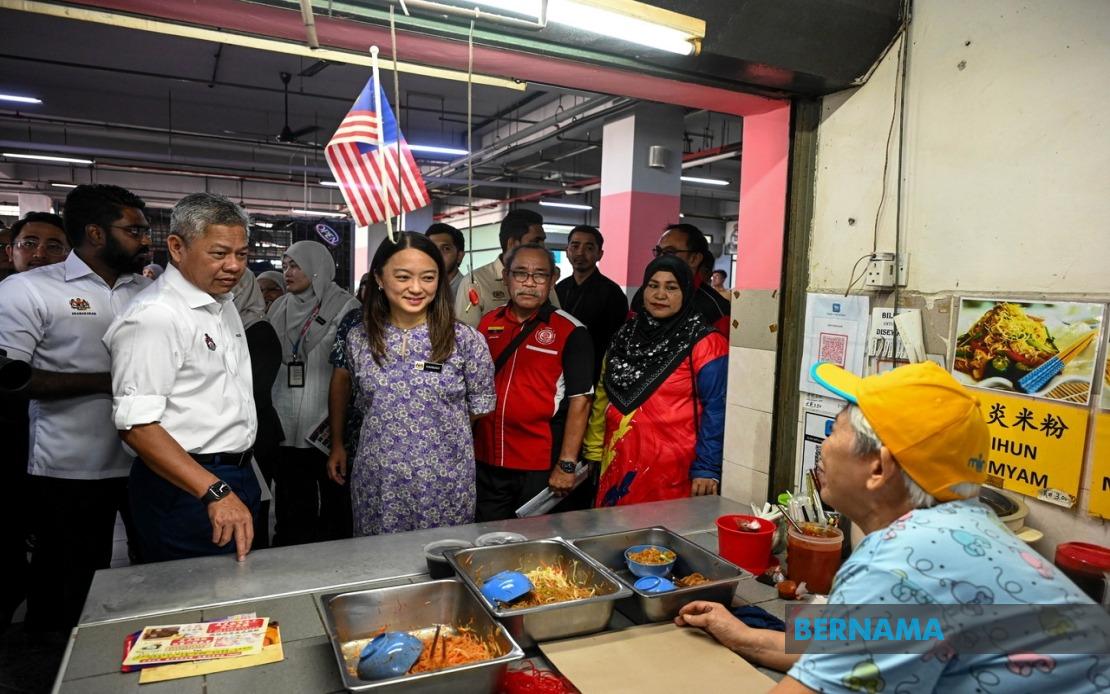
Kuala Lumpur City Hall (DBKL) is embarking on a substantial infrastructure initiative to revamp hawker operations across the federal capital, allocating RM200 million to enhance 287 trading sites as part of the Lestari Niaga @ Kuala Lumpur 2026 programme. The comprehensive modernisation effort represents one of the largest coordinated upgrades of informal trading spaces in the city's recent history, signalling a strategic shift towards professionalising the hawker sector while maintaining its accessibility for small operators.
The initiative directly impacts more than 11,000 street vendors and hawkers, offering them the prospect of operating from safer, more hygienic, and better-organised commercial spaces. Minister in the Prime Minister's Department (Federal Territories) Hannah Yeoh outlined the government's commitment to balanced stakeholder management, emphasising that the programme carefully weighs the interests of traders, residents concerned with traffic and congestion, and building tenants. This multi-perspective approach reflects broader challenges facing Kuala Lumpur's urban renewal efforts, where informal commerce operates alongside residential and commercial zones.
Hannah Yeoh stressed that DBKL prioritises inclusive consultation when redesigning hawker areas, incorporating feedback from all affected parties before finalising implementation plans. She noted that the rollout across multiple locations throughout 2026 demonstrates DBKL's staged approach to managing relocation and infrastructure upgrades, avoiding mass disruption while achieving systematic improvement. The UTC Sentul hawker project, which recently attracted public attention, exemplifies this methodology, with stakeholder engagement sessions informing the redevelopment strategy.
The UTC Sentul initiative, launched on June 15 with a RM1.6 million budget, will replace existing structures with 20 modern modular kiosks operational within three months. Rather than displacing traders, DBKL has introduced a pioneering financial support mechanism: affected hawkers receive RM1,500 monthly assistance during the construction period. According to Kuala Lumpur Mayor Datuk Seri Fadlun Mak Ujud, this direct financial approach proves more efficient than establishing temporary trading sites, which typically incur substantial costs and suffer from suboptimal locations that undercut customer traffic.
The financial assistance model represents a notable policy evolution for Malaysian municipal authorities. Traditional relocation programmes often provide temporary sites on municipal land, but these typically fail to replicate original trading volumes due to unfamiliar locations and reduced foot traffic. By providing cash support instead, DBKL enables traders to weather construction periods while maintaining flexibility in their operations. This approach particularly benefits established hawkers with established customer bases who would suffer greater losses from forced site changes.
Beyond UTC Sentul, comparable simultaneous projects incorporating the special financial incentive are expanding to Jalan Dato Senu, Pudu Ulu, and Bandar Tun Razak, indicating that the RM1,500 monthly assistance will become a standard feature of larger-scale upgrades. This geographic diversification ensures that benefits distribute across different communities and hawker populations throughout the city. The coordinated expansion demonstrates DBKL's confidence in the sustainability of the model and commitment to systematic, city-wide improvement rather than isolated pilots.
The 287 targeted sites encompass diverse hawker categories operating under DBKL supervision, requiring differentiated implementation strategies. Of this total, 224 locations represent the immediate focus for the initial phase, including street hawkers, traders operating under mayoral assets, and those in the reapplication category. The breakdown reveals the complexity of Kuala Lumpur's informal trading ecosystem: over 4,000 street-level hawkers operate without fixed premises, approximately 5,000 lease municipal assets, and around 1,000 fall into special reapplication categories requiring individualised assessment.
This structural diversity necessitates flexible modernisation approaches. Street hawkers may require purpose-built hawker centres or stalls, while asset-based operators need facility upgrades at their current locations. The reapplication category—traders seeking renewed permissions after previous suspensions or violations—requires administrative and compliance support alongside infrastructure improvements. DBKL's staged implementation allows the authority to tailor solutions appropriately rather than imposing uniform standards unsuitable for all contexts.
The broader implications for Southeast Asia's informal economy are significant. Hawker centres form essential components of food security and employment in Malaysian urban areas, yet tensions persist between formal municipal governance, resident expectations, and trader livelihoods. The Lestari Niaga programme suggests that substantial public investment in informal sector modernisation, combined with financial support mechanisms, can advance regulatory compliance and infrastructure quality without displacing vulnerable operators. This contrasts with aggressive enforcement-focused approaches that simply relocate rather than resolve underlying operational challenges.
For Malaysian small business operators and consumers, the programme offers tangible benefits. Modernised hawker facilities typically feature improved sanitation, waste management, and safety systems, elevating food security standards. Better-organised trading spaces reduce congestion and improve customer experience, potentially increasing sales volumes that offset trader anxieties about relocation. The RM200 million investment represents substantial public commitment to formalising and professionalising food commerce, recognising hawkers' cultural and economic significance.
The programme also addresses environmental and urban management objectives. Properly designed hawker centres incorporate waste segregation, water management, and pest control systems that informal sites often lack. Improved traffic flow in previously congested areas benefits broader community mobility. These infrastructure upgrades align with Kuala Lumpur's aspirations toward becoming a more organised, efficient metropolitan region while preserving the accessibility and affordability that make hawker food integral to urban life.
Successful implementation will depend on sustained funding, effective stakeholder communication, and responsive management of emerging challenges. DBKL's demonstration of consultation processes and financial flexibility suggests institutional learning from previous upgrade programmes. However, completing 224 locations within the initial phase demands substantial coordination capacity and construction resources. The timeline extending through 2026 provides reasonable scope, yet delays or quality issues could undermine trader confidence and community support for subsequent phases.
The Lestari Niaga initiative ultimately represents a significant evolution in municipal governance approaches toward informal commerce. Rather than viewing hawkers as regulatory problems to be managed through restrictions, DBKL positions them as legitimate business operators deserving investment and professional support. This reframing, coupled with concrete financial commitments and inclusive planning processes, may establish a template for other Malaysian cities navigating similar tensions between formalisation imperatives and informal sector resilience.


