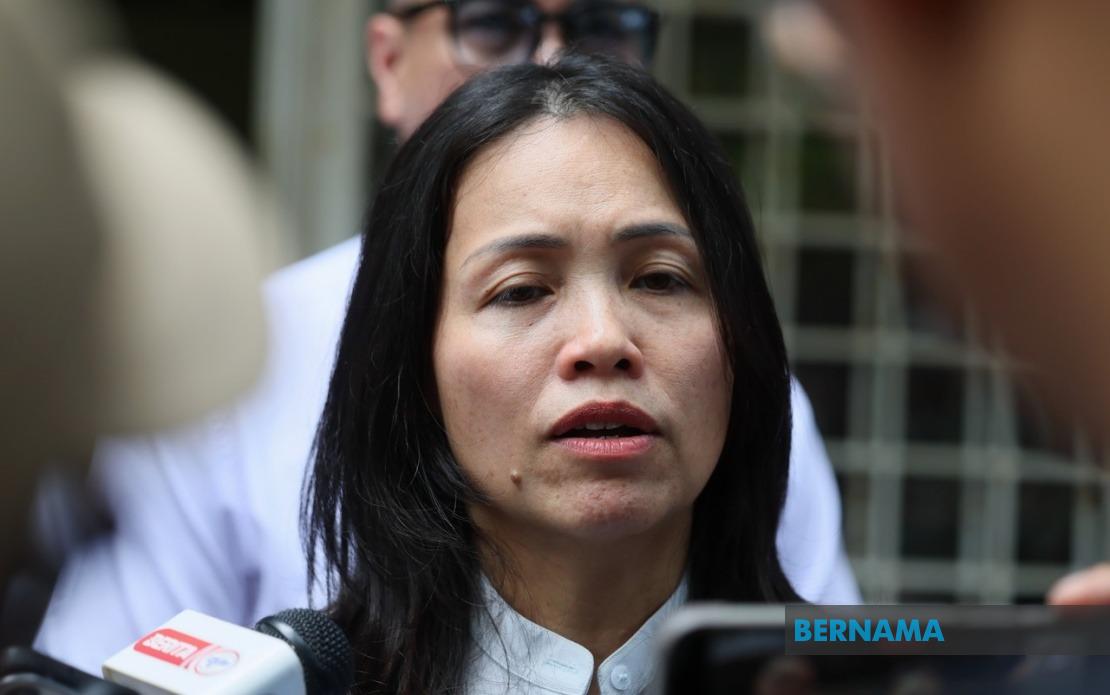
The Johor Democratic Action Party is sounding the alarm over what it characterises as a coordinated disinformation effort designed to undermine public support for opposition candidates in the imminent state election. Party chairman Teo Nie Ching has publicly denounced the deliberate manipulation of campaign posters depicting potential DAP candidates, warning that such tactics represent an escalation in electoral gamesmanship that threatens to poison the political discourse in Malaysia's southern state.
According to Teo, certain political actors have systematically altered posters to misrepresent would-be candidates as Muslim women wearing headscarves in what the party views as an inappropriate manner. The apparent objective, in DAP's assessment, is to generate anxiety among non-Malay voters—particularly the Chinese electorate—by suggesting that the opposition coalition might field candidates whose religious identity or observance differs from voter expectations. This framing strategy, if effective, could theoretically suppress turnout or redirect votes away from Pakatan Harapan candidates.
The allegation underscores the sensitive intersection of religious identity, representation, and electoral strategy in Malaysian politics. By depicting non-Muslim candidates in religious attire associated with Islam, the manipulation appears designed to exploit potential discomfort with religious crossover imagery and to sow doubt about DAP's actual slate and its commitment to representing minority communities. Such tactics, whether intentional or not, risk trivialising both the significance of religious observance and the legitimate concerns of voters seeking clarity about candidate backgrounds.
Teo's response, articulated through a Facebook statement, emphasises DAP's stated commitment to religious pluralism and respect for all faiths. She underscored that the Democratic Action Party has consistently advocated for the rights of all Malaysians irrespective of ethnicity, socioeconomic status, geographic location, religious belief, or gender identity. By framing the poster manipulation as simultaneously disrespectful to Islam and demeaning to women, Teo attempted to broaden the appeal of the party's counter-narrative beyond its traditional support base.
As Deputy Communications Minister, Teo holds a position that grants her platform and credibility to speak on matters related to information flow and public discourse. Her intervention in this particular dispute reflects growing awareness among Malaysian political leaders that control of the narrative during election periods often proves as consequential as ground-level campaigning. The minister's willingness to engage directly with accusations of electoral manipulation suggests that such incidents have become sufficiently widespread or concerning to warrant high-level attention.
The Johor state election represents a significant electoral contest within the broader Malaysian political landscape. With 56 state assembly seats at stake, the distribution of power in the state government carries implications for federal coalitions and the viability of different political blocs. Prior to the dissolution of the State Legislative Assembly on June 1, Barisan Nasional controlled 40 seats, Pakatan Harapan held 12, Perikatan Nasional commanded three, and MUDA possessed a single seat. These numbers indicate that while BN enjoys a commanding position, a united opposition could theoretically pose challenges in select constituencies.
The Election Commission has scheduled June 27 as the nomination day for candidates, with polling set for July 11. This timeline provides a compressed campaign period during which candidates must introduce themselves to voters, parties must mobilise supporters, and the public must navigate an increasingly complex information environment. In such compressed timeframes, the impact of misinformation and tactical poster manipulation can be magnified, as voters have less opportunity to verify claims or assess candidate credentials through multiple channels.
Smear campaigns and poster manipulation represent a recurring challenge in Southeast Asian elections more broadly. Malaysian political parties have long employed visual propaganda as a core campaign tool, and the digitalisation of society has enabled both the rapid dissemination and rapid reproduction of altered images. The sophistication of such tactics has increased, with modern editing software allowing for seamless alterations that may deceive casual observers. However, the relatively transparent nature of poster manipulation—compared to more insidious forms of disinformation—means that counterattacking through direct public statements remains an effective response.
Teo's plea for voters to reject divisive tactics and embrace harmony, unity, and peace represents an attempt to reframe the election narrative away from identity-based anxieties toward values-based governance. Whether such appeals resonate depends largely on whether the underlying concerns motivating the poster manipulation—questions about representation, identity, and candidate selection—are themselves perceived as legitimate by the voting public. If voters view these concerns as artificial or cynically manufactured, Teo's intervention may effectively neutralise the campaign's impact. Conversely, if the concerns align with genuine voter preferences or unease, the damage may persist regardless of the party's denials.
The broader implication of this controversy extends to questions about electoral integrity and the responsibility of political actors to maintain standards of conduct during campaigns. While Malaysia's regulatory framework permits considerable latitude in campaign messaging, the deliberate falsification of candidate imagery occupies an ambiguous zone between legitimate political competition and conduct that undermines the informed electoral choice that democracy requires. The tacit acceptance of such tactics—should it occur—risks normalising a political culture in which appearance and misrepresentation take precedence over substantive policy engagement.
For Malaysian voters and observers, the Johor election will provide an important test case for how electoral competition unfolds in an increasingly polarised political environment. The willingness of major parties to employ or condemn poster manipulation, the responsiveness of regulatory authorities, and the ultimate voter reaction to such campaigns will collectively shape expectations about electoral conduct in future contests. As the state campaign intensifies through late June and early July, the extent to which this particular controversy influences electoral outcomes will merit close observation.