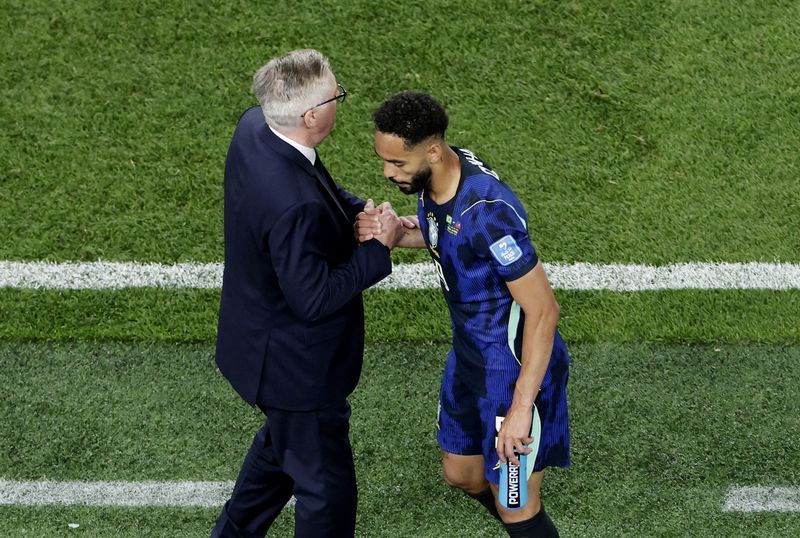
Carlo Ancelotti demonstrated tactical adaptability in Brazil's 3-0 victory over Haiti at Philadelphia, offering the Seleção's supporters a tangible sense of direction following their opening-match stalemate against Morocco. While the result itself came against limited opposition unlikely to pose significant resistance, the performance marked a meaningful shift in approach that has broader implications for how Brazil might approach stronger opponents in the Copa America tournament.
The Italian manager's principal adjustment involved introducing Matheus Cunha into the forward line in place of Igor Thiago, a substitution that fundamentally altered Brazil's attacking pattern. Rather than pursuing the direct, pacy approach of the previous encounter, Cunha's presence enabled smoother transitions between midfield and attacking phases, restoring a more intricate passing structure that had eluded Brazil in their opening fixture. This switch suggested Ancelotti had identified specific structural deficiencies within the team's setup and possessed a coherent plan to address them, even if one match remains insufficient to declare the tactical experiment a complete success.
The most intriguing aspect of Ancelotti's approach involved deploying a diamond midfield formation, with Lucas Paqueta operating as the left-sided midfielder rather than in a more central role. Having endured significant criticism following his subdued performance against Morocco, Paqueta appeared considerably more assured in this repositioned responsibility. His improved comfort seemed to stem from the clarity of his role and the natural understanding established between himself, Vinicius Jr, and Cunha on the left side of the pitch. Rather than forcing Paqueta into an unfamiliar central demanding position, Ancelotti allowed him to operate in wider space where his technical qualities could flourish more authentically.
Cunha's movement patterns proved instrumental to Brazil's attacking effectiveness during the Haiti encounter. Operating from a position that demanded constant repositioning and fluid exchanges with surrounding players, the Atletico Madrid forward demonstrated the tireless work ethic and positional intelligence that had previously been absent from Brazil's attacking line. His chemistry with Vinicius and Paqueta appeared almost organic, suggesting that finding the right personnel and tactical framework could unlock combinations that have eluded Brazil since Neymar's injury removed a crucial creative fulcrum from their attacking structure. The three goals emerged predominantly from the left flank, validating Ancelotti's faith in this revised setup.
However, the manager's emerging blueprint revealed vulnerabilities on the right wing that demand urgent attention. Raphanha's underwhelming display extended across both Copa America matches, representing a significant concern given his importance to Barcelona and his status as a key attacking asset. Physical difficulties, including blisters that forced him to miss a training session midweek, appeared to compromise his sharpness and decision-making. Yet beyond injury concerns, the tactical positioning itself seemed to restrict Raphanha's natural strengths, confining him to a traditional winger role rather than allowing the more central, creative positioning he enjoys at club level where he functions similarly to Cunha's Haiti performance.
The substitution of Raphanha midway through the second half suggested Ancelotti recognized that his right flank remained dysfunctional and unlikely to generate the attacking thrust necessary against quality opposition. Rayan's introduction failed to inject greater dynamism, leaving Luiz Henrique as the probable alternative should Raphanha's physical condition deteriorate before upcoming fixtures. This positional uncertainty on the right represents perhaps the most substantial concern emerging from Brazil's first two matches, as the absence of attacking threat down that flank severely diminishes their overall attacking profile and creates predictable patterns that experienced defenders can exploit.
Another tactical consideration involves the durability of 34-year-old Casemiro in central midfield roles against stronger, more physically demanding opposition than Haiti provided. The Real Madrid midfielder's availability in this tournament remains partially clouded by question marks regarding whether his particular style can withstand sustained pressure from elite midfield units. Bruno Guimaraes, who operated effectively as a right midfielder against Haiti, represents a potential option to drop deeper and provide additional defensive reinforcement while simultaneously improving structural solidity during buildup phases from the back. This potential repositioning would create a more defensively balanced framework, though it would necessarily sacrifice some attacking ambition on the flank where Guimaraes would operate.
While Ancelotti's diamond formation and Cunha's integration cannot yet be classified as definitive solutions to Brazil's recent struggles, the tactical recalibration unquestionably represents measurable progress beyond the frustration evident in the Morocco stalemate. The left-flank combination showed sufficient promise to suggest that with continued refinement and confidence in the emerging understanding between Cunha, Paqueta, and Vinicius, Brazil could develop a more potent attacking force. Nevertheless, the right-wing vacancy and lingering questions about Raphanha's form and fitness remain unresolved challenges that could constrain the team's effectiveness if not addressed before facing genuinely competitive opposition in knockout stages.
Brazil's remaining group-stage fixtures will prove crucial in determining whether Ancelotti's emerging tactical framework represents genuine innovation capable of delivering tournament success or merely temporary adjustments against limited opponents. The upcoming Scotland match offers an intermediate test between Haiti's minimal resistance and the caliber of opponent Brazil is likely to encounter in knockout football. How Ancelotti manages the Raphanha situation, whether he persists with Casemiro as the single defensive midfielder, and whether the left-flank combination continues to flourish will fundamentally shape Brazil's prospects as they progress deeper into the tournament.


