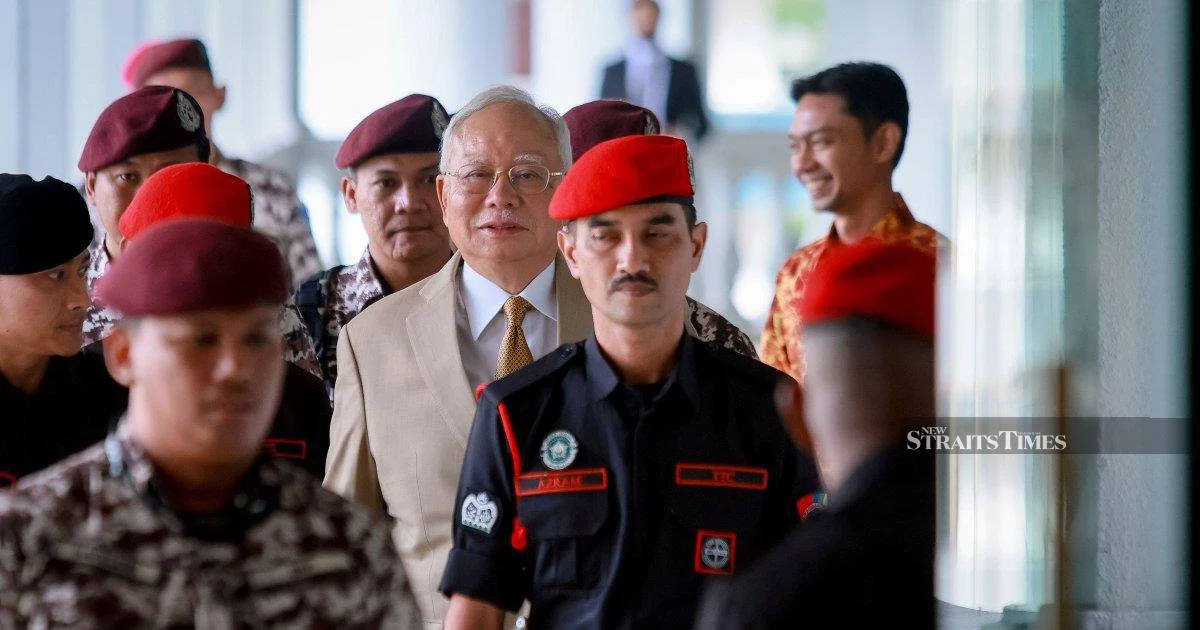
A Malaysian court has delivered a significant judgment against Datuk Seri Najib Razak, finding that the former Prime Minister's passivity regarding massive transfers traced to the 1Malaysia Development Bhd scandal into his personal bank accounts constituted an unreasonable failure of duty. The judicial pronouncement carries considerable weight in the ongoing legal reckoning over one of Asia's largest financial frauds, a matter that continues to reverberate through Malaysian politics and international financial oversight more than a decade after the initial fund misappropriations occurred.
The judge's assessment directly challenges assertions that Najib held no knowledge of or responsibility for the movement of these substantial sums through his accounts. By characterising his inaction as unreasonable, the court has essentially determined that a reasonable person in his position—particularly someone holding the office of Prime Minister with access to financial information and advisory structures—should have questioned, investigated, or taken steps to understand the provenance and purpose of such funds. This reasoning applies a standard of care and diligence that extends beyond mere passive receipt of money.
The linguistic choice employed by the judge to describe these transfers as decidedly "not chicken feed" serves a rhetorical and legal function: it establishes for the record that the sums involved were substantial enough that their presence in personal accounts could not plausibly be overlooked or treated as routine financial movements. The phrase underscores that no reasonable explanation could attribute such transfers to everyday business transactions or personal income. This judicial language matters because it creates a factual foundation for finding culpability based on the very magnitude of the amounts in question.
The 1MDB scandal, which unfolded primarily between 2009 and 2014, has cast a long shadow over Malaysian governance and institutional credibility. The development fund, established ostensibly to undertake strategic investments and national development projects, became a vehicle for alleged embezzlement on a staggering scale. Investigators and prosecutors have since traced billions of ringgit diverted from the fund to various destinations, including personal accounts, international real estate purchases, and art acquisitions. The scandal prompted reforms in Malaysia's anti-money laundering framework and damaged the nation's international reputation for financial integrity.
Najib's personal bank accounts became central to prosecutorial strategy because evidence indicated that 1MDB-linked funds flowed directly into them, creating a direct link between the alleged scheme and the former leader. The government has long maintained that these transfers represented proof of Najib's involvement in or knowledge of the misappropriation. His failure to question their origin, destination, or legitimacy has been presented as consciousness of guilt or at minimum gross negligence in overseeing accounts bearing his name and holding his assets.
The court's finding also illuminates the expectations placed upon individuals occupying positions of supreme executive authority in Malaysia. As Prime Minister, Najib wielded power to direct government agencies, access classified information, and implement policies. The judiciary's determination that he should have known better regarding his own financial accounts suggests an expectation that persons of his stature, position, and presumed financial sophistication cannot credibly claim ignorance of unexplained billions transiting through their personal banking relationships. This sets a legal precedent for evaluating the conduct of high-ranking officials facing similar circumstances.
The implications extend beyond Najib's individual culpability to questions about institutional accountability and the mechanisms through which Malaysian financial systems failed to detect or prevent such movements. Banks that processed these transactions, government agencies that might have monitored them, and oversight bodies all become subjects of retrospective scrutiny. The court's judgment implicitly asks why systems designed to detect unusual financial flows did not halt or investigate such massive transfers into an account held by the nation's leader.
For Southeast Asian observers, the judgment reinforces that major financial crimes do not remain consequence-free indefinitely and that courts can hold powerful figures accountable through application of reasonableness standards. Malaysia's legal system has demonstrated, despite political pressures and complications, a capacity to pursue cases of this magnitude and make determinations that cut against the interests of former office-holders. This stands as significant, though fraught, progress toward strengthening the rule of law in a region where political connections have historically shielded elites from prosecution.
The case also resonates with ongoing regional efforts to improve financial transparency and combat illicit capital flows. International bodies, including the Financial Action Task Force, have scrutinised Malaysia's anti-money laundering regimes partly in light of the 1MDB affair. The court's judgment supports arguments for strengthening bank reporting requirements, enhancing scrutiny of politically exposed persons' accounts, and ensuring that institutional safeguards cannot be circumvented by official position or political influence.
Looking forward, this finding may influence how courts assess similar cases of high-ranking officials whose accounts become repositories for diverted state funds or laundered proceeds. The standard of reasonableness applied here suggests that position, access to information, and sophistication will weigh heavily against claims of ignorance or passive receipt. For Malaysian officials and regional leaders generally, the judgment serves as a cautionary reminder that courts increasingly expect vigorous oversight of one's own financial arrangements and that unexplained transfers into personal accounts will attract judicial scrutiny supported by evidence of culpable neglect.
The 1MDB saga, through cases such as this, continues reshaping Malaysian jurisprudence on financial crime, political accountability, and the scope of due diligence expected from those wielding state power. While investigations, prosecutions, and convictions span years and the full accounting of diverted funds remains incomplete, judgments like this one advance incremental but meaningful progress toward establishing that even former prime ministers cannot operate beyond reach of the law and that courts will require reasoned justification for conduct that strains credulity.