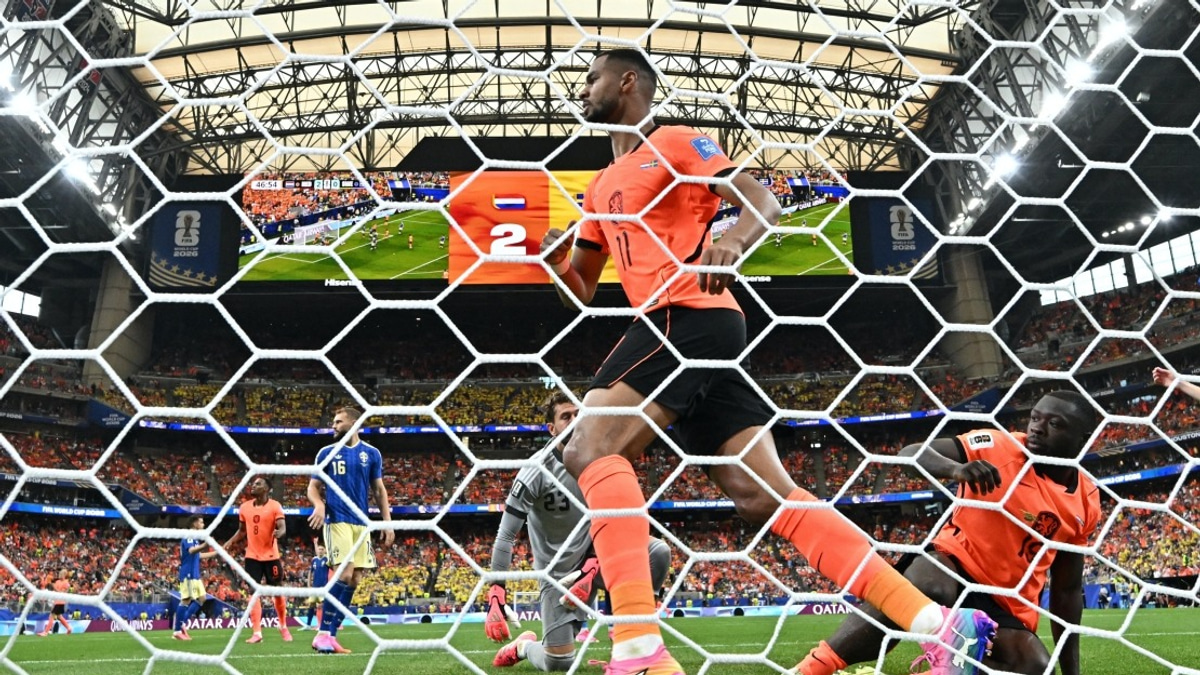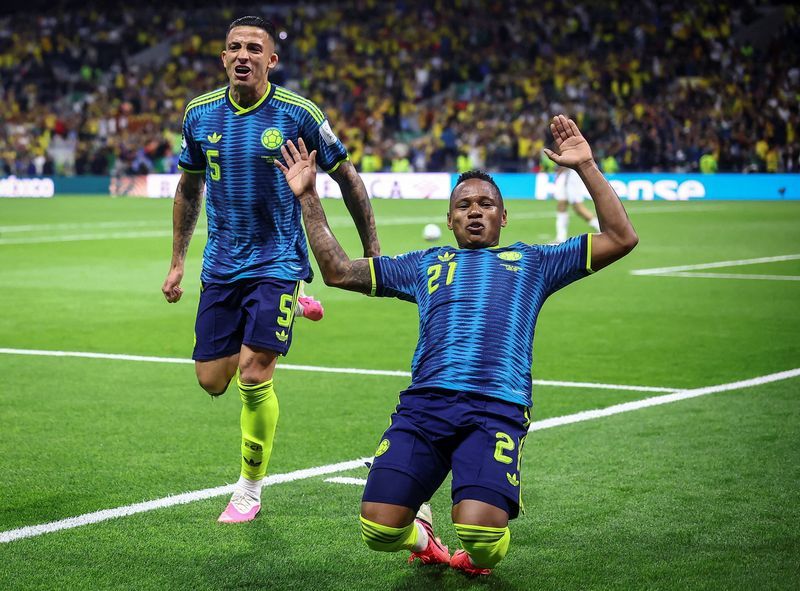
Colombia head into their second Group K fixture on Tuesday buoyed by a three-goal victory over Uzbekistan, but coach Nestor Lorenzo remains acutely aware that their opening performance contained warning signs that cannot be ignored against an increasingly confident DR Congo side. The South American nation's convincing scoreline belies a concerning second-half display in which their Central Asian opponents carved out opportunities and exposed gaps in the Colombian defensive structure—weaknesses that the Congolese, having already demonstrated their capacity to frustrate elite opposition, will certainly attempt to exploit.
A victory in this encounter would guarantee Colombia's progression to the Round of 32 and could prove decisive in the race for top spot in Group K, particularly if Portugal stumble against Uzbekistan simultaneously. The mathematical advantage works firmly in Colombia's favour, yet the path to securing it requires greater discipline and sharpness than was evident during stretches of their opener. Lorenzo has publicly acknowledged these deficiencies, signalling that complacency presents as much of a threat as DR Congo's tactical approach.
The spotlight will again illuminate Luis Diaz, the Bayern Munich forward whose pace, directness, and clinical finishing terrorised Uzbekistan throughout the match. Diaz's combination of a goal and an assist earned him player-of-the-match honours and established him as Colombia's primary attacking weapon. However, the reliance on his individual brilliance also underscored a broader issue: the inconsistency of other attacking contributors, particularly captain James Rodriguez, who operated far beneath his considerable capabilities during the opening win. For Colombia to navigate the tournament successfully, they require greater threat generation across their attacking ranks rather than depending disproportionately on one player's creativity and execution.
DR Congo, by contrast, arrive in this fixture brimming with the kind of confidence that comes from exceeding expectations in high-profile circumstances. Their 1-1 draw against Portugal in their tournament opener—their first World Cup appearance since 1974 when they competed as Zaire—represented a seismic achievement for a nation whose football infrastructure cannot compete with established continental powers. Yoane Wissa's goal marked a historic moment, yet the significance extended beyond the scoresheet. Under the stewardship of coach Sebastien Desabre, DR Congo demonstrated the kind of structural discipline and tactical organisation that transforms underdogs into formidable opponents.
The Congolese defensive shape proved suffocating against Portugal's possession-heavy approach, with their compact defensive block regularly frustrating the Portuguese and their lightning-quick transitions creating genuine threatening moments. This approach—predicated on minimising space, denying the opposition time on the ball, and launching rapid counter-attacks—represents a fundamentally different challenge to the relatively straightforward Uzbekistan side. Where Uzbekistan lacked the technical security to execute an organised press, DR Congo possess the tactical acuity and individual capability to execute a suffocating defensive gameplan while remaining dangerous on the break.
Lorenzo has identified this tactical dimension as presenting a specific and pressing challenge. In the hours following the Uzbekistan victory, the Colombian manager highlighted the qualitative difference in their upcoming opponent's approach, noting that DR Congo's emphasis on transition play, direct distribution, and explosive counter-attacking would demand heightened defensive concentration. The manager's cautionary tone reflected genuine concern rather than routine pre-match hedging, suggesting that Colombia's coaching staff recognises the structural vulnerabilities exposed against Uzbekistan could prove catastrophic against opponents better equipped to punish such lapses.
Beyond tactical considerations, Lorenzo also identified another area requiring urgent refinement: Colombia's profligacy in the final third. Excessive possession, he noted, occasionally became counterproductive, with the team retreating into lateral movement rather than decisively attacking the Uzbekistan goal. This pattern of dominating the ball without consistently generating clear opportunities—let alone converting them—suggests a team still developing coherence between their attacking structure and the clinical execution required at tournament football's highest level. Against DR Congo, whose defensive compactness will narrow available space and restrict the opportunity for sustained possession-based build-up, Colombia will require significantly greater efficiency in chance creation.
The atmospherics of their contest add another dimension worth considering. During their opener at Mexico City's Estadio Azteca, thousands of Colombian supporters transformed the venue into something approaching a home ground, draped in the national colours and providing vocal reinforcement for their team. With their tournament base established in Guadalajara, reasonably proximate to Mexico City, Colombia can expect a substantial supporter presence once again. This demographic advantage provides genuine benefit—research consistently demonstrates the impact of crowd support on team performance—yet also carries risk. Should Colombia falter despite home-crowd advantage, the psychological impact of squandering such support can amplify negative momentum.
The broader context matters considerably for understanding the significance of this fixture. DR Congo's appearance in the World Cup represents a moment of national sporting pride, with generations having passed since the nation last competed at football's showpiece tournament. Every player in their squad understands the historical weight of their participation and the expectation that they might replicate their opening performance's promise. For Colombia, meanwhile, the tournament represents their third consecutive World Cup appearance and an opportunity to progress beyond the group stage following previous campaigns. The contrasting narratives—one of historic return, the other of continuation of established participation—will undoubtedly influence the psychological dimension of their contest.
Lorenzo's extensive experience managing sides across multiple continents has equipped him with the tactical flexibility and adaptability required for navigating such challenges. Yet even the most accomplished managers cannot entirely neutralise the uncertainties inherent in knockout-stage qualifying fixtures. Colombia's second-half vulnerabilities against Uzbekistan suggest a team still consolidating its identity and strategic coherence. Should they fail to address these issues decisively before facing a DR Congo side equipped with greater tactical sophistication, the consequences could prove severe. The Round of 32 ticket remains genuinely within reach, yet claiming it with the requisite authority and confidence demands marked improvement across multiple dimensions.
%22%2F%3E%3C%2Fpattern%3E%3C%2Fdefs%3E%3Crect%20width%3D%22100%25%22%20height%3D%22100%25%22%20fill%3D%22url(%23ph32hyvg)%22%2F%3E%3Crect%20width%3D%22100%25%22%20height%3D%22100%25%22%20fill%3D%22url(%23ph32hyvp)%22%2F%3E%3Ctext%20x%3D%2250%25%22%20y%3D%2250%25%22%20text-anchor%3D%22middle%22%20dominant-baseline%3D%22central%22%20fill%3D%22rgba(255%2C255%2C255%2C0.95)%22%20font-family%3D%22Georgia%2C%20'Times%20New%20Roman'%2C%20serif%22%20font-weight%3D%22700%22%20font-size%3D%22151%22%20letter-spacing%3D%22-0.02em%22%3EPerikatan%3C%2Ftext%3E%3C%2Fsvg%3E)