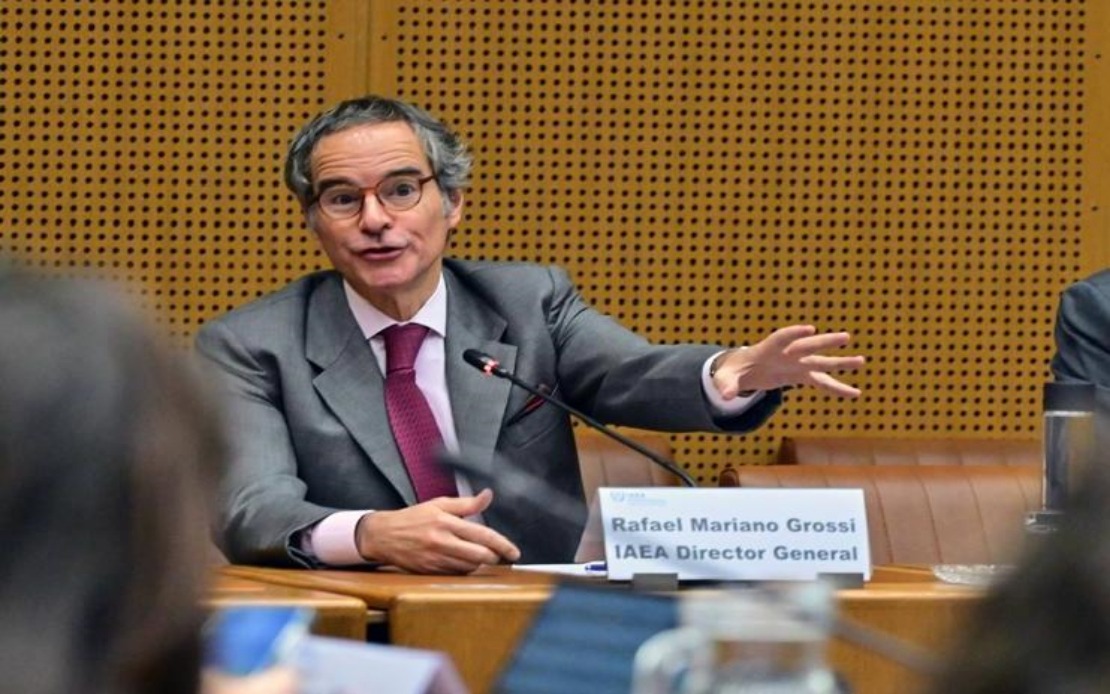
The head of the International Atomic Energy Agency has made an emphatic plea for continued diplomatic engagement as American and Iranian delegations prepare for substantive talks in Switzerland. At this pivotal juncture in nuclear negotiations, IAEA Director General Rafael Mariano Grossi stressed that multilateral diplomacy must be afforded every reasonable opportunity to achieve a breakthrough on Iran's contested nuclear programme. His remarks, posted on social media platform X, reflect the delicate balance required to sustain momentum in talks that have long represented one of the most intractable geopolitical challenges in the Middle East.
Grossi's call for restraint and persistence comes as both nations position themselves for negotiations at Burgenstock, a Swiss resort location traditionally favoured for sensitive international discussions. The timing carries particular significance given decades of escalating tensions between Washington and Tehran over Iran's nuclear activities, which the West views with deep suspicion whilst Iran maintains its programme serves only peaceful purposes. The assignment of Switzerland as neutral ground underscores the international community's recognition that such talks require environments insulated from domestic political pressures and hostile rhetoric.
In advance of the formal negotiations, Grossi visited Switzerland to confer with Swiss Foreign Minister Ignazio Cassis on recent developments surrounding Iran's nuclear posture and the IAEA's role in the diplomatic process. Grossi expressed appreciation for Switzerland's consistent backing of the nuclear watchdog and its longstanding commitment to advancing multilateral approaches to resolving international disputes. This coordination reflects the IAEA's institutional interest in seeing negotiations succeed, as the agency bears responsibility for monitoring Iran's nuclear activities under any eventual agreement.
Parallel to Grossi's diplomatic engagement, Switzerland's foreign minister independently met with Iranian Foreign Minister Abbas Araghchi, further demonstrating Bern's active facilitation role. These preliminary consultations between neutral parties and both sides suggest careful choreography designed to prevent misunderstandings and reinforce each delegation's commitment to good-faith engagement. For Malaysia and other Southeast Asian nations watching from afar, such multilayered diplomatic architecture offers instructive lessons in de-escalation and conflict resolution through patient, structured dialogue.
The momentum toward these talks was accelerated following a significant bilateral agreement signed on Wednesday. US President Donald Trump and Iranian President Masoud Pezeshkian inked the Islamabad Memorandum of Understanding, marking an extraordinary breakthrough given the profound animosity that has characterised US-Iranian relations for over four decades. This memorandum appears to have established foundational understandings between the two nations, clearing ground for more detailed negotiations on the central issues of sanctions relief, nuclear inspections, and international recognition of Iran's rights under the Non-Proliferation Treaty.
For regional observers, including Malaysian policymakers concerned with regional stability and energy security, the significance of these talks extends far beyond bilateral US-Iranian relations. Iran's nuclear programme carries implications for global oil markets, regional military dynamics, and the balance of power in the Middle East. Any durable agreement that verifiably limits Iran's nuclear weapons capacity while restoring its legitimate access to peaceful nuclear technology could substantially reduce tensions that have periodically threatened freedom of navigation and commerce through critical shipping lanes upon which Southeast Asian trade depends.
The diplomatic framework being tested in Switzerland represents a departure from the confrontational approach that dominated recent years. Rather than relying primarily on economic sanctions and military posturing, both countries have apparently concluded that sustained dialogue offers greater prospects for achieving mutually acceptable outcomes. This recalibration suggests recognition that indefinite confrontation serves neither party's strategic interests and that a negotiated settlement, while difficult to achieve, remains preferable to continued escalation and isolation.
Grossi's intervention underscores the IAEA's institutional commitment to transparency and verification mechanisms that would form the backbone of any comprehensive agreement. The agency's credibility as a neutral technical body makes its participation invaluable; neither Washington nor Tehran can dismiss IAEA findings as politically motivated. Should negotiations progress successfully, the watchdog would likely assume expanded monitoring responsibilities, requiring resources and cooperation that the current moment of diplomatic opportunity must help facilitate.
The stakes involved in achieving a negotiated outcome are substantial for global nonproliferation architecture itself. A successful resolution would demonstrate that even deeply rooted adversaries can reach accommodation through sustained diplomatic effort, reinforcing the principle of multilateralism over unilateral action. Conversely, a collapse of these talks could trigger renewed nuclear escalation, expanded sanctions, and heightened regional militarisation with ripple effects extending to Southeast Asia through energy prices and geopolitical realignment.
As talks commence, observers must recognise that Grossi's emphasis on giving diplomacy every opportunity reflects awareness that these negotiations remain fragile. Numerous technical and political obstacles remain unresolved, including questions about sanctions sequencing, the scope of nuclear inspections, and verification mechanisms. Yet the very fact that both delegations have agreed to direct talks in a neutral setting, preceded by careful preparatory diplomacy, suggests that both Washington and Tehran recognise the mutual benefits of breaking through longstanding deadlock.
For Southeast Asian nations, the outcome of these Swiss negotiations carries implications extending well beyond the Middle East. A successful agreement would validate multilateral approaches to conflict resolution and demonstrate that persistence in diplomacy can overcome seemingly insurmountable barriers. Malaysia, as an active participant in regional organisations and forums addressing global challenges, has genuine interest in seeing established international rules and institutions prove effective at managing complex crises.
%22%2F%3E%3C%2Fpattern%3E%3C%2Fdefs%3E%3Crect%20width%3D%22100%25%22%20height%3D%22100%25%22%20fill%3D%22url(%23ph2vu8jg)%22%2F%3E%3Crect%20width%3D%22100%25%22%20height%3D%22100%25%22%20fill%3D%22url(%23ph2vu8jp)%22%2F%3E%3Ctext%20x%3D%2250%25%22%20y%3D%2250%25%22%20text-anchor%3D%22middle%22%20dominant-baseline%3D%22central%22%20fill%3D%22rgba(255%2C255%2C255%2C0.95)%22%20font-family%3D%22Georgia%2C%20'Times%20New%20Roman'%2C%20serif%22%20font-weight%3D%22700%22%20font-size%3D%22194%22%20letter-spacing%3D%22-0.02em%22%3ESpeaker%3C%2Ftext%3E%3C%2Fsvg%3E)
%22%2F%3E%3C%2Fpattern%3E%3C%2Fdefs%3E%3Crect%20width%3D%22100%25%22%20height%3D%22100%25%22%20fill%3D%22url(%23ph21h54g)%22%2F%3E%3Crect%20width%3D%22100%25%22%20height%3D%22100%25%22%20fill%3D%22url(%23ph21h54p)%22%2F%3E%3Ctext%20x%3D%2250%25%22%20y%3D%2250%25%22%20text-anchor%3D%22middle%22%20dominant-baseline%3D%22central%22%20fill%3D%22rgba(255%2C255%2C255%2C0.95)%22%20font-family%3D%22Georgia%2C%20'Times%20New%20Roman'%2C%20serif%22%20font-weight%3D%22700%22%20font-size%3D%22170%22%20letter-spacing%3D%22-0.02em%22%3ETambirat%3C%2Ftext%3E%3C%2Fsvg%3E)
%22%2F%3E%3C%2Fpattern%3E%3C%2Fdefs%3E%3Crect%20width%3D%22100%25%22%20height%3D%22100%25%22%20fill%3D%22url(%23ph3xqbzg)%22%2F%3E%3Crect%20width%3D%22100%25%22%20height%3D%22100%25%22%20fill%3D%22url(%23ph3xqbzp)%22%2F%3E%3Ctext%20x%3D%2250%25%22%20y%3D%2250%25%22%20text-anchor%3D%22middle%22%20dominant-baseline%3D%22central%22%20fill%3D%22rgba(255%2C255%2C255%2C0.95)%22%20font-family%3D%22Georgia%2C%20'Times%20New%20Roman'%2C%20serif%22%20font-weight%3D%22700%22%20font-size%3D%22194%22%20letter-spacing%3D%22-0.02em%22%3EBintulu%3C%2Ftext%3E%3C%2Fsvg%3E)