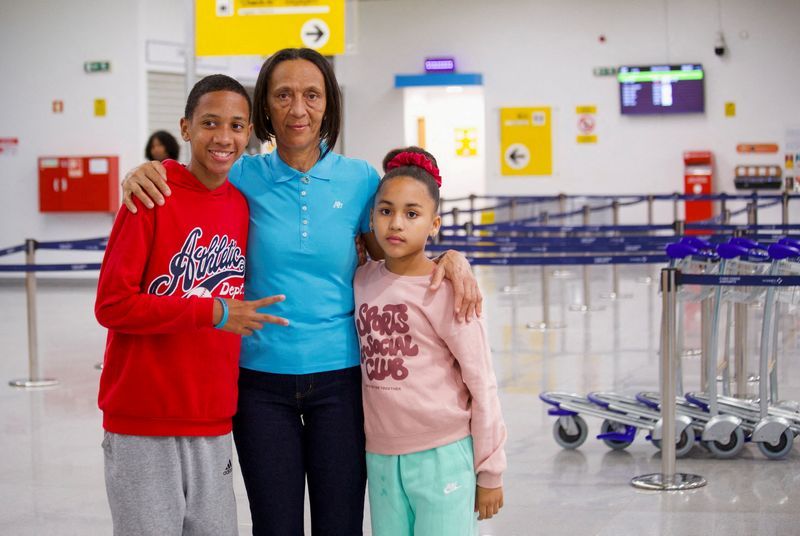
The mother of Cape Verde goalkeeper Vozinha has finally secured permission to travel to the United States to witness her son's World Cup campaign after the American diplomatic service intervened following a widely-shared account of her missing his breakthrough tournament performance. Ana Candida Evora will now be in Miami on Sunday to watch Cape Verde face Uruguay in their second Group H match, marking a dramatic reversal of circumstances that had prevented her from attending the team's tournament opener.
Vozinha's heroic display against Spain in Atlanta instantly became one of the tournament's standout individual performances, with the 40-year-old goalkeeper producing seven crucial saves to hold the reigning European champions to a goalless draw. His emergence as Cape Verde's player of the match represented a significant moment for both the goalkeeper and his island nation's footballing ambitions in this global showcase. The performance demonstrated Cape Verde's competitive potential against higher-ranked opposition and showcased the goalkeeper's technical mastery under sustained pressure.
What should have been an unbridled celebration for Evora became instead a source of heartache when Vozinha publicly revealed that his mother had been unable to secure the necessary travel documentation to reach Atlanta. The goalkeeper's emotional disclosure about her absence resonated widely across social and traditional media platforms, drawing attention to the practical barriers that sometimes separate families during landmark international sporting events. His candid discussion of the situation highlighted the human dimension often overlooked in tournament coverage.
The U.S. State Department's visa office in Praia, Cape Verde's capital, immediately engaged with Evora following the publicity surrounding her situation. Diplomatic officials confirmed they had provided comprehensive support throughout the visa application process and maintained close communication to expedite her case through standard procedures. A State Department representative indicated that the matter would proceed with urgency, stating that travel arrangements would proceed "consistent with all policies, procedures, and standards."
Evora's initial inability to attend stemmed partly from the elevated entry costs imposed on citizens of numerous countries under immigration enforcement policies. Cape Verde had been among dozens of nations whose citizens faced requirements to post bonds reaching $15,000 as conditions for US entry, a measure that effectively placed international travel beyond the financial reach of many ordinary families. The substantial financial barrier proved decisive in Evora's case, as the initial costs of securing documentation, combined with travel expenses, made the trip prohibitive from a household budget perspective.
Though the bond requirement for general travellers remained in effect, an important exemption was subsequently introduced for World Cup ticket holders, a recognition of the tournament's cultural significance and the desire to facilitate legitimate sporting attendance. This carve-out addressed some of the accessibility concerns but came too late for Evora's original travel planning. Her eventual approval followed a different pathway, one that benefited from the heightened scrutiny and diplomatic attention her case had attracted.
The resolution of Evora's visa situation carries broader implications for supporters travelling to international tournaments, particularly those from smaller nations with limited consular infrastructure or citizens facing enhanced entry scrutiny. The incident illustrates how family separation during major sporting events can carry genuine emotional weight, transcending the usual athlete-focused narrative of World Cup coverage. For Cape Verde, a nation with limited footballing resources and infrastructure compared to established powerhouses, the presence of family members carries particular significance in sustaining players through demanding tournament schedules.
For Southeast Asian audiences, the situation resonates with familiar experiences of visa complexity and financial barriers affecting football fans' international travel. Many supporters from the region have encountered similar documentation challenges and bond requirements when attempting to attend major tournaments abroad. The case demonstrates how diplomatic intervention can sometimes smooth such processes when circumstances become publicly visible, though it also underscores systemic inequalities that privilege citizens of wealthy nations with streamlined travel protocols.
Cape Verde's participation in this World Cup represents a significant achievement for Caribbean football, and Vozinha's stellar debut performance has positioned him as a potential tournament story worthy of continued attention. With his mother now able to provide in-person support, the goalkeeper enters the critical match against Uruguay with enhanced personal motivation. The narrative arc—from tearful disappointment to diplomatic resolution—adds compelling human dimensions to the team's quest for survival in an extremely competitive group.
The Uruguay match carries significant strategic importance for Cape Verde's tournament hopes, as a positive result would substantially improve their prospects of advancing from the group stage. With his mother finally able to witness his performances in person, Vozinha enters the fixture with the psychological lift that comes from family presence at critical moments. The broader story of perseverance and eventual resolution reflects broader themes about access, fairness, and the power of international sporting platforms to spotlight individual circumstances that might otherwise remain hidden from public attention.