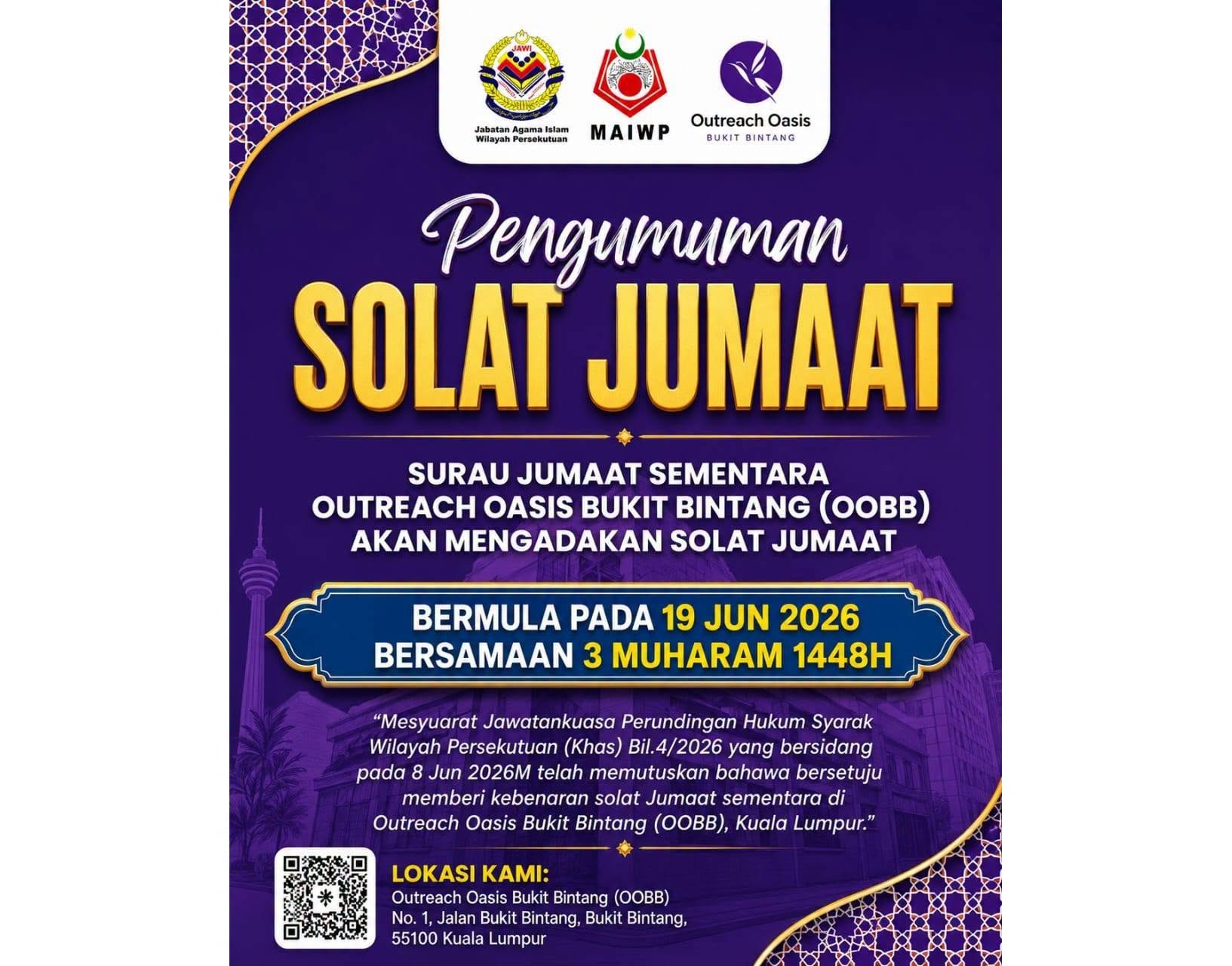
The Bukit Bintang commercial district will become home to Friday prayer services from June 19 onwards, addressing a longstanding gap in worship facilities for the Muslim community in one of Kuala Lumpur's busiest shopping and entertainment hubs. The temporary arrangement at the Bukit Bintang Outreach Oasis follows special approval from the government and represents a significant development for religious accommodation in the heart of the capital's retail and tourism precinct.
Dr. Zulkifli Hassan, the Minister in the Prime Minister's Department overseeing Religious Affairs, announced the initiative through social media, characterising the launch as a historic moment for the area. He framed the approval as both a practical solution and a religious milestone, emphasising that this facility will serve worshippers until construction of a purpose-built Friday surau—the Malaysian term for a dedicated prayer hall—reaches completion. The temporary nature of the arrangement underscores the government's commitment to providing immediate relief while longer-term infrastructure develops.
The establishment of prayer facilities at Bukit Bintang addresses a real challenge faced by Muslim professionals, shoppers, and workers in the precinct. Previously, those wishing to observe the Friday congregational prayer obligation have had to venture beyond the immediate area, consuming valuable time during midday breaks or navigating traffic during peak commercial hours. The new facility eliminates the need to rush or journey considerable distances, making religious observance more accessible within the context of modern urban working and shopping patterns.
The Minister's appeal for community participation carries broader significance beyond simple facility management. By inviting the Bukit Bintang Muslim community to attend prayers and fill the prayer rows, Dr. Zulkifli Hassan framed participation as both a religious duty and an act of solidarity. This language reflects broader government messaging around Islamic presence and practice in secular-oriented commercial spaces, positioning religious observance as integral to national identity and community life rather than something confined to residential neighbourhoods or dedicated religious zones.
The development also signals evolving attitudes toward religious accommodation in Malaysia's commercial centres. Bukit Bintang, as a major shopping and entertainment district attracting both local residents and international tourists, historically prioritised retail and leisure functions. The explicit government effort to integrate prayer facilities reflects recognition that Muslim-majority Malaysia must balance commercial vitality with religious practice, particularly as workplaces and shopping districts become increasingly significant in daily routines.
From a practical standpoint, the temporary facility at the Outreach Oasis provides a testing ground for operations before the permanent structure opens. The government can assess usage patterns, manage logistics, and gather feedback from the community about requirements for the dedicated surau. This phased approach allows planners to incorporate lessons learned into the final design, potentially resulting in a more effective facility than would have emerged from planning documents alone.
The timing and execution of this initiative also reflect Malaysia's ongoing efforts to enhance religious infrastructure across urban areas. As the country develops economically and urbanises further, ensuring that religious facilities keep pace with demographic and spatial changes becomes increasingly important. The Bukit Bintang example may establish precedent for similar arrangements in other commercial districts facing comparable gaps in prayer facilities for Muslim workers and visitors.
For the broader Southeast Asian context, Malaysia's approach to integrating religious facilities within commercial urban spaces demonstrates one model of religious pluralism in action. Unlike some jurisdictions where prayer facilities remain marginalised or physically separated from main commercial activities, the Bukit Bintang arrangement normalises religious practice within the city's economic heartland. This integration signals that Islam and Islamic practice are not peripheral to Malaysian commercial life but central to the nation's identity.
The permanent surau under construction will likely reflect contemporary architectural and functional standards. Modern mosque and surau design in Malaysia increasingly incorporates both traditional Islamic aesthetics and contemporary facility amenities, including climate control, ablution facilities, and flexible prayer spaces. The permanent Bukit Bintang facility, when completed, will presumably offer substantial improvements over the temporary arrangement while maintaining the accessibility that the interim solution establishes.
Community response to the initiative will be significant. The willingness of Muslim shoppers, office workers, and residents to utilise the temporary facility will generate data about actual demand and usage patterns. This real-world information will prove invaluable for planners designing the permanent structure, from determining appropriate prayer space dimensions to assessing parking and access requirements.
The announcement reflects Dr. Zulkifli Hassan's broader portfolio focus on integrating religious affairs into contemporary Malaysian governance. By securing special approval for the Bukit Bintang facility, he demonstrated responsiveness to community religious needs while working through bureaucratic channels to make exceptions and accommodate emerging demands. This approach characterises much of Malaysia's religious policy-making, where centralised oversight coexists with flexibility for local circumstances.
Looking forward, the success of the Bukit Bintang arrangement may encourage similar initiatives elsewhere. Other major commercial districts or employment centres lacking adequate prayer facilities could potentially petition for comparable temporary arrangements while permanent structures develop. This incremental expansion of religious infrastructure represents practical accommodation of Muslim religious obligations within the realities of contemporary urban living.