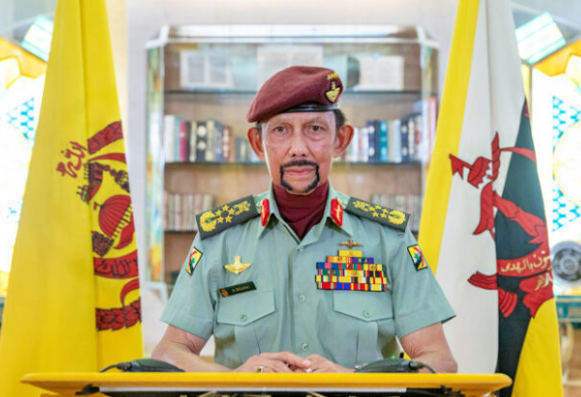
Brunei's Sultan Hassanal Bolkiah has issued a comprehensive call for national unity and renewed dedication to development as the Islamic New Year 1448 Hijrah dawns, framing the occasion as a moment for deepening resolve rather than merely initiating fresh endeavours. Speaking in his capacity as the constitutional monarch of this small yet strategically positioned Southeast Asian state, the Sultan articulated a vision encompassing simultaneous advancement across economic, infrastructural, educational, spiritual and moral dimensions—a carefully calibrated message reflecting the complexities of governing a nation balancing modern development with religious values.
The Sultan's remarks positioned the arrival of a new Islamic calendar year as far more than a ceremonial milestone. Instead, he characterised it as an opportunity for citizens and residents to interrogate their existing commitments and strengthen their dedication to objectives already underway. This rhetorical distinction carries significance, suggesting that Brunei's development trajectory requires persistent, layered effort rather than cyclical restarts. The framing implies a sophisticated understanding that meaningful progress—whether economic growth, infrastructure development, or spiritual enrichment—demands consistency and sequential building rather than episodic bursts of activity.
The Sultan identified two complementary spheres demanding attention: the material and the spiritual. The material domain encompasses economic vitality and physical infrastructure development, the tangible foundations upon which modern states function. The spiritual sphere, however, encompasses knowledge acquisition, educational advancement, and dakwah—the Islamic concept of conveying religious teachings and values. This dual emphasis reflects a governance philosophy increasingly prevalent across Muslim-majority Southeast Asian nations, which seek to integrate modernisation with religious observance rather than treat them as opposing forces.
Central to the Sultan's message was an invocation of gratitude and collective spiritual practice. He invited Bruneians to acknowledge divine blessing for another year of Islamic observance and to channel this gratitude into productive action benefiting individuals, families and the broader nation. The language employed—sincerity, collective expression, gratitude to Allah—establishes a foundation of shared religious identity that transcends individual or sectarian interests, potentially serving as a unifying force during periods of international uncertainty.
The Sultan's acknowledgment of global instability carries particular resonance for Southeast Asia, a region traversed by competing geopolitical interests and experiencing periodic security challenges. His observation that conflict breeds only suffering and hardship, with universal effects, reflects both wisdom and perhaps a cautionary note about the region's vulnerability to spillover effects from distant conflicts. By contrast, he emphasised Brunei's fortunate position enjoying peace and stability without natural disasters—a carefully worded appreciation of the nation's relative insulation from major crises, though such statements also carry implicit recognition that this stability cannot be taken for granted.
The Sultan attributed Brunei's peace partly to spiritual practice—prayers, remembrance of God, and Quranic recitation—positioning religious devotion as a stabilising force with tangible national consequences. This theological framework, prevalent across Muslim-majority governance discourse, links individual spiritual practice to collective security outcomes. For Malaysian and Southeast Asian audiences, such framing resonates with similar arguments made by regional leaders attempting to integrate faith-based governance with modern state functions.
However, the Sultan's warning about crime—specifically drug-related offences, theft and other criminal acts—signals significant concerns beneath the surface narrative of stability and progress. His characterisation of crime as tarnishing national image and violating religious principles indicates that despite Brunei's relative peace, internal security challenges require urgent attention. The emphasis on drug-related offences particularly suggests an acknowledgment of trafficking vulnerabilities or consumption patterns affecting the nation's youth and social fabric, concerns shared across Southeast Asia where narcotics trafficking represents a persistent transnational threat.
The Sultan's directive to relevant agencies—particularly security and religious authorities—to act with speed and effectiveness demonstrates recognition that addressing crime demands coordinated, multifaceted approaches combining law enforcement with religious education. His specific call for strengthened religious education and enhanced dakwah efforts targeting drug awareness reflects a governance strategy common throughout Southeast Asia, wherein religious institutions serve instrumental roles in social engineering and behaviour modification alongside conventional law enforcement mechanisms.
The Sultan's final emphasis on collective vigilance and prayer reveals an interesting rhetorical strategy: while delegating operational responsibility to state institutions, he simultaneously mobilises religious faith as a complementary safeguarding mechanism. By framing protection as requiring both human agency and divine blessing, the Sultan distributes responsibility across institutional, community and individual levels. This approach acknowledges that state apparatus alone cannot address systemic social challenges; community participation and individual moral commitment prove equally essential.
For Malaysian observers, Brunei's situation offers instructive parallels regarding regional governance challenges. Both nations navigate balancing rapid development with social stability, integrating religious values within modernisation frameworks, and addressing transnational security threats including narcotics trafficking. The Sultan's emphasis on continuous effort rather than occasional intervention, and his integration of religious and material progress, reflect principles increasingly evident across Southeast Asian policy-making.
The broader context of the Sultan's address reflects evolving regional anxieties about maintaining stability amid global uncertainty. Southeast Asia faces multifaceted pressures from geopolitical competition, economic volatility, climate challenges and internal security concerns. Brunei, despite its petroleum wealth and relative isolation, remains embedded within regional dynamics and international systems generating these pressures. The Sultan's call for unity, vigilance and simultaneous material-spiritual progress represents a comprehensive response strategy acknowledging that sustainable development requires integrated approaches addressing security, economics, education and faith simultaneously.
As Brunei enters 1448 Hijrah, the Sultan's message ultimately positions the new Islamic year as catalyst for renewed commitment to established trajectories rather than fundamental reimagining of national direction. This conservative approach reflects the stability and predictability characteristic of Brunei's governance under the Sultan's long reign, whilst the underlying warnings about crime suggest continuing need for vigilant management of emerging challenges threatening the nation's peace and prosperity.