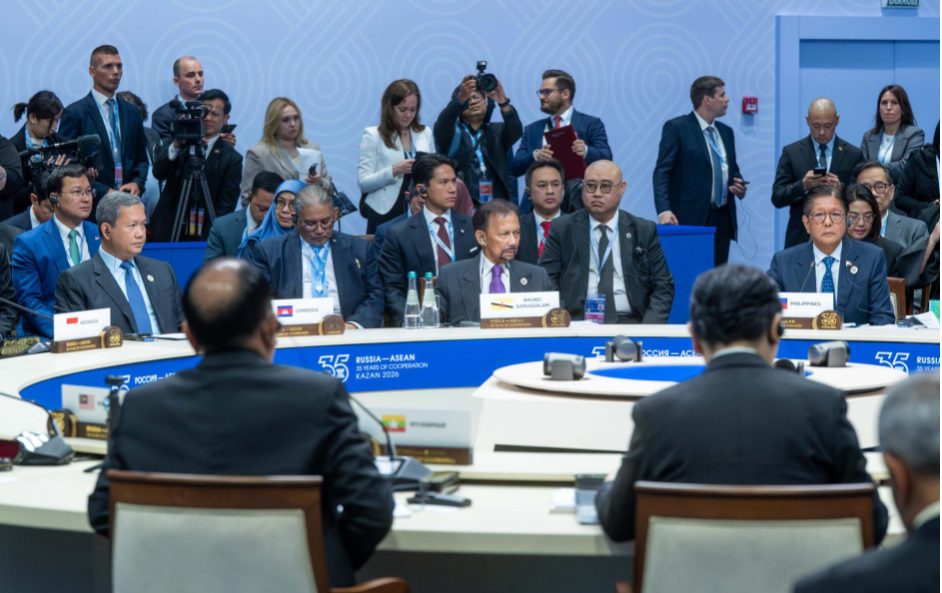
The Asean-Russia Commemorative Summit in Kazan has reaffirmed the bloc's commitment to strengthening ties with Moscow, with Brunei's Sultan Hassanal Bolkiah using the occasion to underscore the enduring significance of their three-and-a-half decade partnership. The monarch, who addressed the gathering at the Kazan Expo International Exhibition Centre on 18 June, expressed gratitude to Russian President Vladimir Putin and the government of Tatarstan for hosting the event, which brought together regional leaders to review progress and chart future cooperation pathways.
The summit reflects a wider regional recalibration as Asean navigates an increasingly multipolar geopolitical landscape. For Southeast Asian nations, engagement with Russia represents a critical component of the region's balancing strategy—maintaining dialogue with major powers while pursuing economic and security interests independent of great power competition. Brunei's prominent role in articulating this position carries particular weight given the nation's chairmanship responsibilities within the bloc and its consistent advocacy for dialogue-based solutions to regional tensions.
In his remarks, Sultan Hassanal Bolkiah emphasized that the Asean-Russia relationship had demonstrated notable resilience despite significant global transformations. The partnership's evolution across all three pillars of the Asean Community—the political-security, economic, and socio-cultural spheres—indicates a comprehensive engagement framework rather than transactional exchanges. This structural depth suggests both parties view the relationship as strategically important for addressing contemporary challenges that transcend traditional bilateral frameworks.
The Sultan identified several pressing global issues requiring enhanced multilateral cooperation: political tensions creating destabilising effects across regions, fragmentation of economic systems limiting development opportunities, the accelerating climate crisis threatening vulnerable populations including those in Southeast Asia, and technological disruption outpacing regulatory capacity. These challenges resonate particularly with Malaysian and regional audiences, as Southeast Asia faces direct impacts from geopolitical instability, supply chain disruptions, environmental degradation, and the need to manage digital transformation equitably.
Energy security emerged as a priority area within the expanded cooperation framework. For Malaysia and other Asean members, stable relationships with energy-producing nations remain economically vital. Russian cooperation in energy matters—whether through technology transfer, investment, or supply diversification—offers potential benefits for the region's long-term sustainability and energy independence, particularly as the bloc transitions toward renewable sources while managing transitional energy demands.
Food security received equal emphasis from the Sultan, reflecting acute regional awareness of supply chain vulnerabilities exposed by recent global disruptions. Southeast Asian nations, though agriculturally productive, depend on international trade for nutritional security. Collaboration with Russia on agricultural development, supply chain resilience, and food production techniques could strengthen regional food systems and reduce vulnerability to external shocks.
The monarch highlighted human capital development as fundamental to sustaining the partnership across generations. Educational exchanges, professional training programmes, and knowledge-sharing initiatives create lasting institutional connections and build networks of mutual understanding beyond government-to-government relations. For Malaysian professionals, scientists, and scholars, expanded opportunities for engagement with Russian institutions in research, technology, and professional development represent tangible benefits of strengthened Asean-Russia cooperation.
Adoption of four significant outcome documents—including the Kazan Declaration 2026, a strategic partnership implementation plan extending through 2030, and separate statements on energy and cultural cooperation—provides concrete frameworks for future engagement. The declaration's emphasis on "Unity in Diversity" acknowledges both the diversity within Asean's membership and the need for inclusive partnership approaches that respect national interests while pursuing common objectives.
The business forum held preceding the formal summit signals recognition that sustained political relationships require underlying economic foundations. Private sector engagement creates constituencies within both regions with vested interests in maintaining stable relations, potentially insulating partnerships from short-term political fluctuations. For Malaysian businesses and investors, expanded Asean-Russia commercial networks could open market opportunities across energy, technology, manufacturing, and services sectors.
The second plenary session's focus on "Integration Processes in Eurasia" placed Asean within a broader continental context. Participation by the Shanghai Cooperation Organisation and the Eurasian Economic Commission reflected an emerging architecture of regional cooperation mechanisms across Eurasia. Southeast Asia's geographic position and economic dynamism make it increasingly relevant to Eurasian integration discussions, positioning the region not merely as an object of great power competition but as an active participant in shaping continental cooperation frameworks.
For Malaysia specifically, this summit carries implications for regional balancing strategies. As a significant economy and influential voice within Asean, Malaysia benefits from maintaining diverse partnerships that provide diplomatic flexibility and economic optionality. Enhanced Asean-Russia cooperation complements rather than substitutes other regional relationships, contributing to Southeast Asia's strategic autonomy in an era of competing influence.
The Sultan's references to Asean Vision 2045 linked immediate cooperation initiatives to longer-term regional aspirations for prosperity, stability, and centrality in regional affairs. This framing positions the Asean-Russia partnership as instrumental to achieving these objectives, suggesting that regional leaders view Russian engagement as contributing meaningfully to Southeast Asia's development trajectories and security architectures over the coming decades.
Moving forward, the implementation of the 2026-2030 strategic partnership plan will determine whether this summit represents substantive deepening of relations or primarily rhetorical reaffirmation. Tracking progress in energy cooperation, disaster management coordination, climate action initiatives, and people-to-people exchanges will provide indicators of partnership momentum. For regional observers and policymakers, the success of this renewed framework will inform broader assessments of Asean's capacity to maintain balanced engagement with major powers while advancing cohesive regional interests.