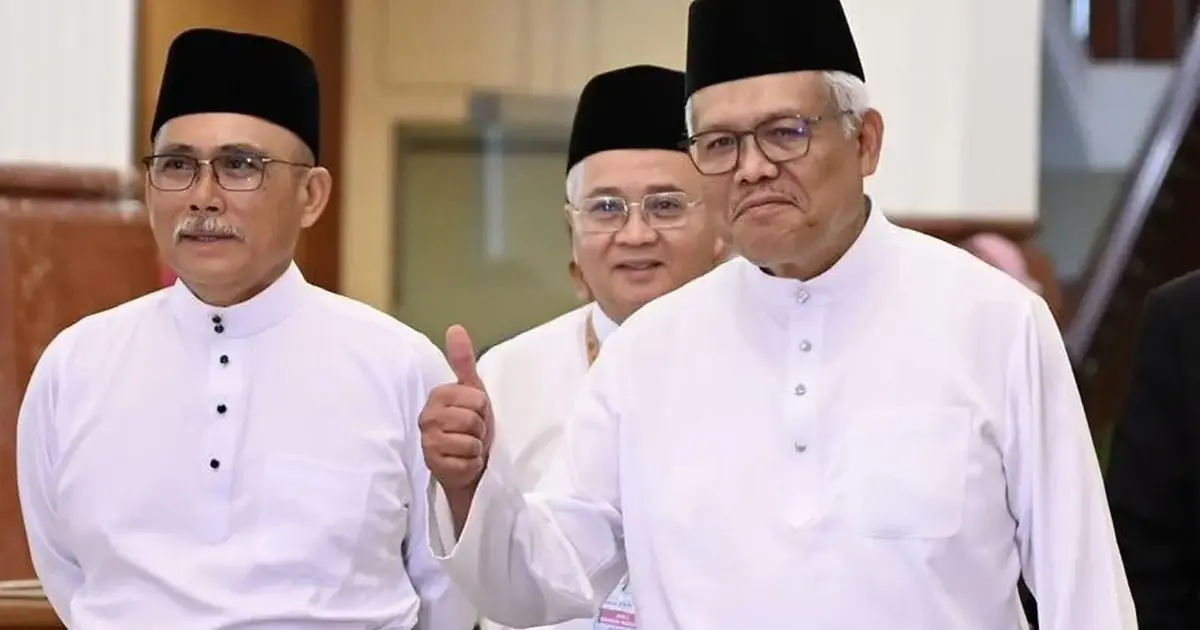
Hamzah Zainudin's elevation to the position of opposition leader was based on demonstrable parliamentary support, according to a statement made by a senior member of Bersatu who has since been suspended from the party. The assertion provides insight into the mechanisms through which opposition leadership roles have been allocated in Malaysia's recent political landscape, a process that has often generated debate regarding legitimacy and procedural clarity.
The Larut MP, who represents a constituency in Perak, received backing that extended beyond his own party affiliation. Most notably, PAS extended its institutional support across the board to endorse Hamzah's appointment, effectively leveraging its parliamentary numbers to shore up the opposition leadership position. In Malaysian parliamentary tradition, such bloc endorsements from established coalition partners carry significant weight when determining senior opposition roles, which typically require demonstrated command of sufficient numbers to meet constitutional and procedural requirements.
Within Bersatu's own parliamentary caucus, Hamzah secured support from a commanding majority of the party's MPs. This internal consensus proved crucial, as Bersatu remains one of the larger component parties of the opposition coalition, and securing backing from most of its representatives sent a clear signal of internal party alignment behind the leadership appointment. The breadth of support across these two major opposition groupings underscored the procedural legitimacy of the decision, even if it did not necessarily reflect unanimity across the entire opposition bloc.
The timing of these clarifications deserves consideration within the broader context of Malaysian opposition politics. Since the 2022 general election delivered a fractured parliament, opposition groupings have sought to consolidate their standing and demonstrate coherence to the electorate. Leadership positions carry symbolic weight beyond their immediate parliamentary functions, and the appointment of opposition leaders has become a contentious matter whenever questions emerge about the representativeness of such decisions.
For Malaysian readers tracking opposition dynamics, Hamzah's background merits attention. His parliamentary tenure and previous ministerial experience in various portfolios have positioned him as a figure with substantial cross-party recognition, despite the partisan divides that characterise contemporary Malaysian politics. The Larut constituency itself, located in Perak's industrial heartland, represents a politically competitive seat with a diverse voter base, and Hamzah's representation there suggests electoral credibility within his immediate electorate.
The suspension of the Bersatu official making these claims adds a layer of complexity to the narrative. Suspensions within Bersatu have become increasingly frequent occurrences, reflecting internal party turbulence that has persisted since the party's founding. The fact that a suspended member felt compelled to articulate the rationale for Hamzah's appointment suggests ongoing internal party tensions and possibly disputes over how such decisions are being publicly communicated or justified.
From a Southeast Asian perspective, Malaysia's opposition leadership structures merit attention because they reflect broader democratic dynamics in the region. Unlike Westminster systems with fixed opposition leader positions, Malaysian opposition arrangements depend more heavily on demonstrated parliamentary support and inter-party coordination. This fluid approach can produce either flexibility or instability, depending on one's analytical viewpoint, and Hamzah's appointment represents one instance of how such arrangements are negotiated and justified.
The coalition-building narrative implicit in these explanations also illuminates the practical requirements for effective opposition governance in contemporary Malaysia. With parliamentary seats distributed across numerous parties and independent representatives, opposition coordinating roles have become exercises in managing diverse interests and maintaining sufficient consensus for parliamentary operations. Hamzah's appointment thus reflects not merely personal advancement but acknowledgment of the complex negotiating landscape opposition parties must navigate.
PAS's role in this arrangement carries particular significance given the party's historical positioning and recent electoral gains. The party's willingness to extend bloc support signals its commitment to maintaining opposition unity despite occasional public disagreements between PAS and other coalition partners on various policy matters. Such institutional discipline, however, coexists with underlying tensions around ideology, policy priorities, and resource allocation that periodically surface in opposition-affiliated media commentaries.
For observers of Malaysian politics, these clarifications about Hamzah's appointment process underscore the importance of understanding how informal power-sharing arrangements complement formal parliamentary procedures. Opposition leadership roles often remain understated in public discourse compared to government positions, yet they command genuine influence over parliamentary agendas, opposition communications strategies, and negotiating positions on proposed legislation.
Looking forward, Hamzah's position will likely face periodic scrutiny, particularly if internal opposition cohesion weakens or if electoral circumstances shift the parliamentary balance further. Opposition leadership in Malaysia remains contingent on maintaining the support that originally secured the position, a reality that distinguishes it from executive government roles. The emphasis placed on demonstrating majority support suggests recognition among opposition players that legitimacy for such positions rests fundamentally on documented backing rather than mere appointment or convention.


