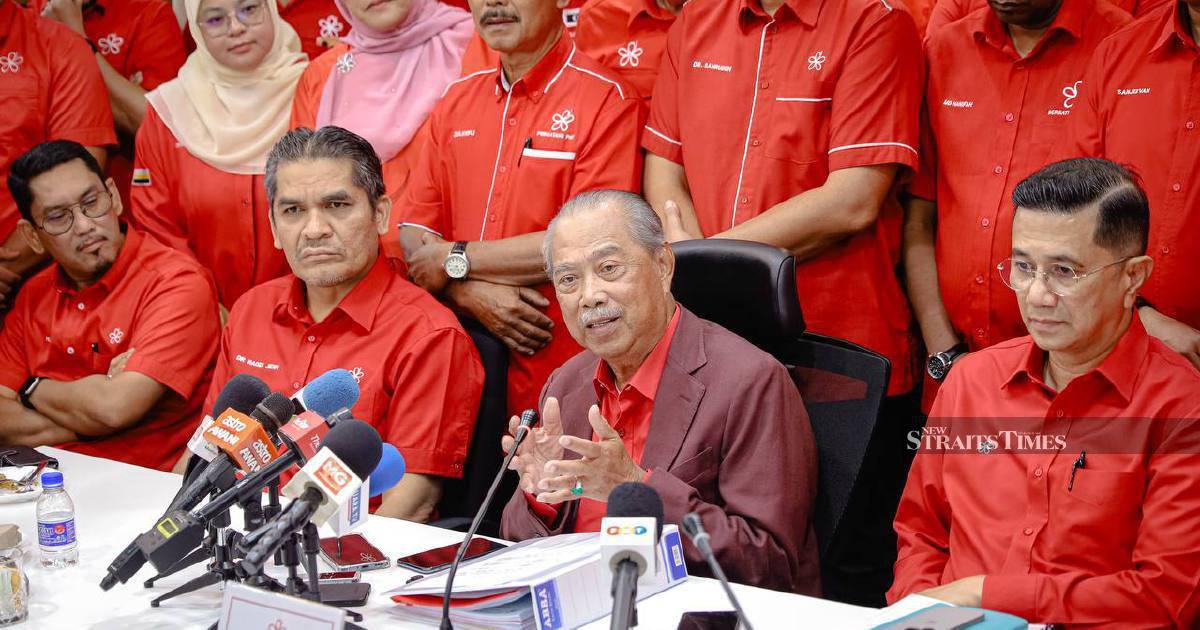
Parti Pribumi Bersatu Malaysia's leadership has signalled confidence in confronting rival Islamic opposition party Pas should electoral competition emerge in the Johor state election, with party president Tan Sri Muhyiddin Yassin throwing down a challenge that reflects deepening fractures within Malaysia's Islamist political landscape.
Muhyiddin's assertion that Bersatu stands prepared to contest against Pas in contested seats marks a notable shift in the coalition dynamics that have governed Malaysian politics in recent years. The two parties, despite their overlapping appeal to Malay-Muslim voters, have increasingly found themselves on divergent political trajectories, culminating in positioning statements that suggest neither is prepared to cede ground voluntarily in the forthcoming Johor contest.
The Johor election assumes particular significance as a barometer for coalition stability across the country. As Malaysia's most populous state and historically a Barisan Nasional stronghold, Johor has served as a political testing ground for new alliances and shifting voter preferences. The prospect of Bersatu and Pas running separate campaigns in the same constituencies would represent a fundamental recalibration of the political battlefield, one with ripple effects extending well beyond the state's borders.
Bersatu's readiness to engage in direct electoral combat with Pas underscores the party's confidence in its voter mobilisation capacity and organisational strength. However, this posture also reflects the broader erosion of consensus within Malaysia's Malay-Muslim political sphere, where ideological distinctions and leadership personalities have increasingly superseded traditional factional loyalties. The party's willingness to challenge Pas, rather than negotiate exclusive territories, suggests calculations about where its competitive advantages lie.
For Malaysian voters and observers of the country's political trajectory, this development signals that the upcoming Johor election will not follow the script of carefully negotiated power-sharing arrangements that have characterised much recent Malaysian electoral politics. Instead, voters may witness a more robust competition in which both Bersatu and Pas present distinct visions and competing candidates, fundamentally altering the calculation for voters seeking alternatives to the ruling coalition.
The implications for the broader Perikatan Nasional coalition remain uncertain, given that Bersatu and Pas have been nominal allies in this confederation. If significant electoral clashes materialise in Johor, it would raise questions about the cohesion and long-term viability of the opposition alliance. Strategic miscalculation in seat allocation could result in vote-splitting that benefits neither party while strengthening Barisan Nasional's position across contested constituencies.
Muhyiddin's public stance must also be understood within the context of Bersatu's internal political dynamics and broader leadership ambitions. By projecting readiness for confrontation with Pas, the Bersatu president reinforces his party's independence and signals to members and supporters that the organisation remains a force capable of standing on its own merits. This positioning becomes especially significant given the broader challenges facing Bersatu, including questions about its unique proposition in Malaysian politics beyond its association with specific leaders.
The regional dimension cannot be overlooked either. Johor's significance extends beyond its size and demographics; the state occupies a strategically crucial position in Southeast Asian geopolitics and serves as Malaysia's primary commercial and cultural interface with Singapore. Electoral developments there attract scrutiny not merely from domestic political observers but from the broader region, making the outcome of the Johor contest a matter of interest to policymakers and analysts across the ASEAN landscape.
From a voter perspective, the prospect of more open competition between these two parties may offer benefits in terms of genuine political choice and substantive policy differentiation. Rather than facing predetermined arrangements where seat allocations have been decided in backroom negotiations, Johor voters could witness campaigns where competing parties more directly address local concerns and present distinct policy frameworks. This transparency, however, comes at the potential cost of fragmented opposition votes.
Looking ahead, the practical implications of Muhyiddin's statement will become apparent only as campaign season approaches and nomination processes unfold. Whether Bersatu and Pas ultimately succeed in reaching accommodations on contested seats remains to be seen, but Muhyiddin's public declaration has effectively placed both parties on notice that any seat-sharing arrangement will need to reflect Bersatu's strength and influence. The coming months will reveal whether this public positioning represents genuine preparation for electoral contest or tactical posturing designed to extract concessions during behind-the-scenes negotiations.