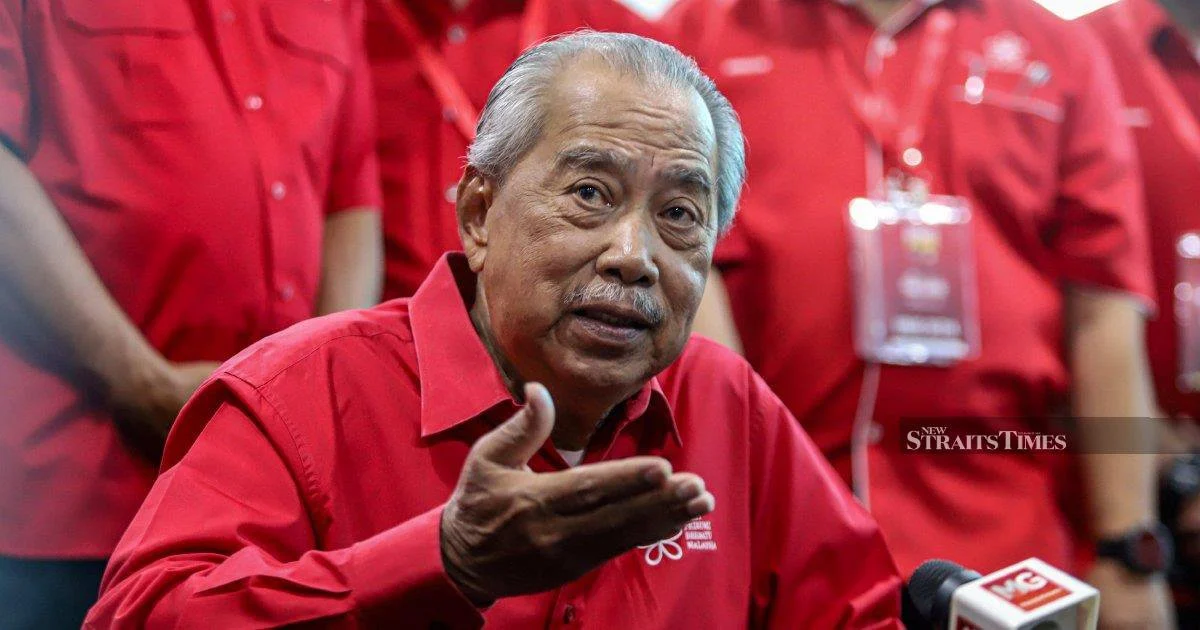
Tan Sri Muhyiddin Yassin, the president of Bersatu, has moved to dispel persistent doubts about his party's future within the Perikatan Nasional coalition, declaring that the partnership will endure indefinitely. The statement comes amid an extended period of political uncertainty that has characterised Malaysian politics since the 2022 general election, with various factions constantly exploring alternative alliance configurations and power-sharing arrangements.
The coalition dynamics in Malaysia's parliament remain fluid and contentious, with multiple blocs competing for influence and legislative advantage. Perikatan Nasional has emerged as a significant force in this fragmented landscape, bringing together several parties with distinct regional and ideological bases. For Bersatu, which holds considerable sway in certain states and among specific voter demographics, remaining within PN represents both a strategic positioning and an ideological alignment that party leadership appears keen to emphasise during this period of heightened speculation.
Muhyiddin's reassurance appears designed to address recent commentary and analysis suggesting that coalition partners might be contemplating alternative arrangements. Such speculation is not uncommon in Malaysian politics, where parties frequently recalibrate their alignments based on changing electoral calculations and shifting parliamentary arithmetic. The timing of his statement suggests that concerns about potential defections or strategic realignment had reached a level requiring explicit clarification from the party president.
Bersatu's role within Perikatan Nasional carries particular significance given its performance in recent electoral contests and its influence in state-level politics. The party draws support from various communities across the country and has built meaningful representation in certain constituencies. Maintaining party unity and coalition stability becomes especially important when broader political narratives suggest instability in governance structures or uncertainty about which blocs might ultimately command parliamentary majorities.
The Malaysian political environment has demonstrated considerable volatility since the 2022 general election, with unexpected coalition formations and sudden political developments becoming somewhat routine. This environment naturally breeds speculation about potential realignments, particularly when smaller coalition partners must assess whether their current arrangements serve their long-term interests and electoral prospects. Muhyiddin's categorical statement attempts to remove Bersatu from the roster of potentially mobile political actors, thereby providing a degree of predictability within an otherwise uncertain political landscape.
Stability in coalition membership matters significantly for governing effectiveness and legislative productivity. When coalition partners face persistent questions about their commitment levels, the resulting uncertainty can undermine policy implementation and create opportunities for opposition forces to exploit divisions. By declaring unwavering fidelity to Perikatan Nasional, Muhyiddin aims to strengthen the coalition's collective bargaining position and demonstrate internal cohesion during what remains a competitive period in Malaysian politics.
For regional observers, the durability of Perikatan Nasional carries implications beyond Malaysia's immediate political sphere. Coalition stability influences how Malaysia engages with neighbouring countries and its ability to pursue consistent foreign policy objectives. A coalition fractured by internal doubts might struggle to present unified positions on regional matters, whereas a stable partnership enables more decisive diplomatic engagement within Southeast Asia and beyond.
The broader context of Muhyiddin's statement reflects the reality that Bersatu must balance multiple considerations when assessing its coalition participation. The party's interests include not merely short-term parliamentary advantage but also medium-term electoral positioning and longer-term institutional development. By anchoring itself publicly to Perikatan Nasional, Bersatu signals confidence that the coalition remains the appropriate vehicle for advancing the party's objectives and serving its constituency base.
Muhyiddin's emphasis on permanence suggests an attempt to move beyond the cyclical speculation that characterises Malaysian politics. Rather than engaging with each rumour or analysis suggesting potential realignment, the party president has chosen to issue a definitive statement intended to settle the question, at least temporarily, in public discourse. Whether such declarations truly resolve underlying uncertainties, however, depends partly on broader political developments beyond any single party's control.
The statement also reflects strategic communication about party discipline and internal confidence. By publicly reaffirming commitment to Perikatan Nasional with such firmness, Muhyiddin addresses not only external observers but also party members who might harbour doubts or consider alternative options. Clear leadership messaging becomes essential during periods of political turbulence when coalition partners must demonstrate unity to maintain credibility with both their base supporters and parliamentary colleagues.
Looking forward, the sustainability of Bersatu's commitment to Perikatan Nasional will likely depend on how effectively the coalition performs in governing, delivering on policy objectives, and positioning itself for upcoming electoral contests. Political declarations, however forcefully articulated, ultimately succeed only if the underlying institutional arrangements continue delivering benefits to coalition members and their supporters throughout the political cycle.
%22%2F%3E%3C%2Fpattern%3E%3C%2Fdefs%3E%3Crect%20width%3D%22100%25%22%20height%3D%22100%25%22%20fill%3D%22url(%23ph32hyvg)%22%2F%3E%3Crect%20width%3D%22100%25%22%20height%3D%22100%25%22%20fill%3D%22url(%23ph32hyvp)%22%2F%3E%3Ctext%20x%3D%2250%25%22%20y%3D%2250%25%22%20text-anchor%3D%22middle%22%20dominant-baseline%3D%22central%22%20fill%3D%22rgba(255%2C255%2C255%2C0.95)%22%20font-family%3D%22Georgia%2C%20'Times%20New%20Roman'%2C%20serif%22%20font-weight%3D%22700%22%20font-size%3D%22151%22%20letter-spacing%3D%22-0.02em%22%3EPerikatan%3C%2Ftext%3E%3C%2Fsvg%3E)