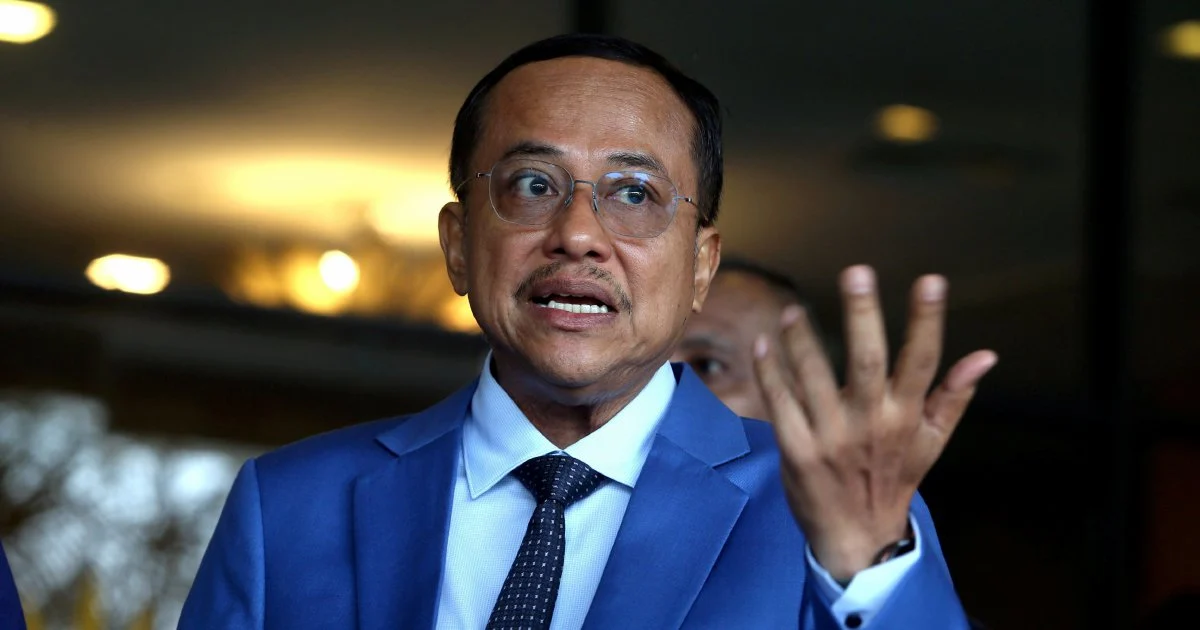
Bersatu's information chief Datuk Tun Faisal Ismail Aziz has launched a scathing critique of Perikatan Nasional chairman Datuk Seri Dr Ahmad Samsuri Mokhtar, asserting that the coalition leader has abdicated his fundamental responsibilities at a critical juncture for the three-party alliance. The pointed rebuke represents an escalation of tensions simmering beneath the surface of PN, which comprises Bersatu, Pas, and Gerakan, and underscores deepening fault lines within what was once positioned as an alternative political force to the ruling Pakatan Harapan coalition.
The criticism centres on what Bersatu characterises as Ahmad Samsuri's passive approach to managing inter-party disputes and his apparent conflation of his role as PN chairman with his position within Pas, the Islamic party that has emerged as the dominant faction within the coalition structure. For a coalition to function effectively, particularly one comprising parties with distinct ideological positions and member bases, the chairman must operate with impartiality and enforce agreed mechanisms for resolving disagreements. Faisal Ismail's comments suggest Ahmad Samsuri has failed this test, instead allowing his loyalties to Pas to override his obligations to the broader PN framework.
The timing of this public confrontation is particularly significant given the broader political landscape in Malaysia. Perikatan Nasional has positioned itself as a formidable opposition bloc, yet persistent internal friction undermines its credibility as a cohesive alternative government. When coalition partners openly question each other's leadership competence, particularly through senior figures like Faisal Ismail, it signals deeper structural problems that cannot be dismissed as routine political theatre. The accusation of irresponsibility carries weight because effective coalition management requires difficult decisions that sometimes displease individual member parties in service of the collective interest.
Bersatu's grievance likely extends beyond Ahmad Samsuri's personal conduct to encompass the broader power dynamics within PN. As Pas has consolidated its electoral fortunes and parliamentary representation, the balance of influence within the coalition has shifted noticeably in the Islamic party's direction. Bersatu, which founded PN and initially anchored the alliance, may feel increasingly sidelined in decision-making processes. When the coalition chairman appears to prioritise his party's interests over institutional neutrality, smaller or less influential members naturally become concerned about their relevance and influence within the partnership.
The distinction Faisal Ismail draws between Ahmad Samsuri's capacity as PN chairman versus his standing as a Pas functionary is analytically crucial. A coalition chairman must maintain psychological and operational distance from individual member parties, much as the prime minister must technically stand above partisan considerations despite inevitable party allegiances. Ahmad Samsuri's apparent inability or unwillingness to compartmentalise these roles suggests either a conceptual misunderstanding of what coalition leadership entails or a deliberate choice to subordinate PN interests to Pas priorities. Either interpretation presents problems for the alliance's stability.
For Malaysian observers and particularly for voters evaluating opposition credentials, this dispute illuminates a fundamental weakness in PN's project. Coalitions require not merely shared electoral objectives but also agreement on governance principles and mechanisms for managing conflict. When the chairman fails to establish and enforce such frameworks, trust erodes rapidly. Bersatu's public rebuke indicates that internal mechanisms for resolving disagreements have broken down, necessitating recourse to public criticism as a means of registering complaints and attempting to force accountability.
The broader implications extend to PN's capacity to present itself as an effective governing alternative. Malaysian voters evaluating opposition options naturally question whether a coalition demonstrating such internal management problems could reliably govern at the national level. Competent crisis management and principled leadership become especially important when a political alliance lacks the advantage of incumbency, cannot distribute patronage from government resources, and must instead rely on reputation and demonstrated competence to attract support.
Ahmad Samsuri's chairmanship, now publicly contested, faces a credibility challenge that cannot be easily repaired through rhetoric alone. Faisal Ismail's criticism suggests that Bersatu leadership has lost confidence in his ability to provide neutral, coalitional stewardship. Whether this represents a prelude to leadership changes within PN or signals a broader reassessment of the coalition's viability remains unclear, but the public nature of the attack indicates that internal diplomatic channels have been exhausted.
The specific accusation that Ahmad Samsuri has forgotten his role as coalition chairman rather than Pas chairman cuts to the heart of institutional discipline. Effective coalitions function through clear role demarcation and agreed procedures. When senior members publicly suggest that the chairman has violated these principles, the entire coalition architecture comes into question. Bersatu's willingness to ventilate grievances publicly suggests that quieter approaches have yielded no results, reflecting a deterioration in the coalition's institutional health.
Looking forward, this rupture between Bersatu and the PN leadership structure may necessitate recalibration of the alliance's operational mechanics. If Ahmad Samsuri wishes to retain the chairmanship, he must credibly demonstrate renewed commitment to neutral coalition stewardship. If Bersatu's concerns persist without satisfactory resolution, the alliance risks descending into a series of escalating public disputes that would further undermine its credibility as a unified political force capable of offering Malaysian voters a viable alternative to the current government.