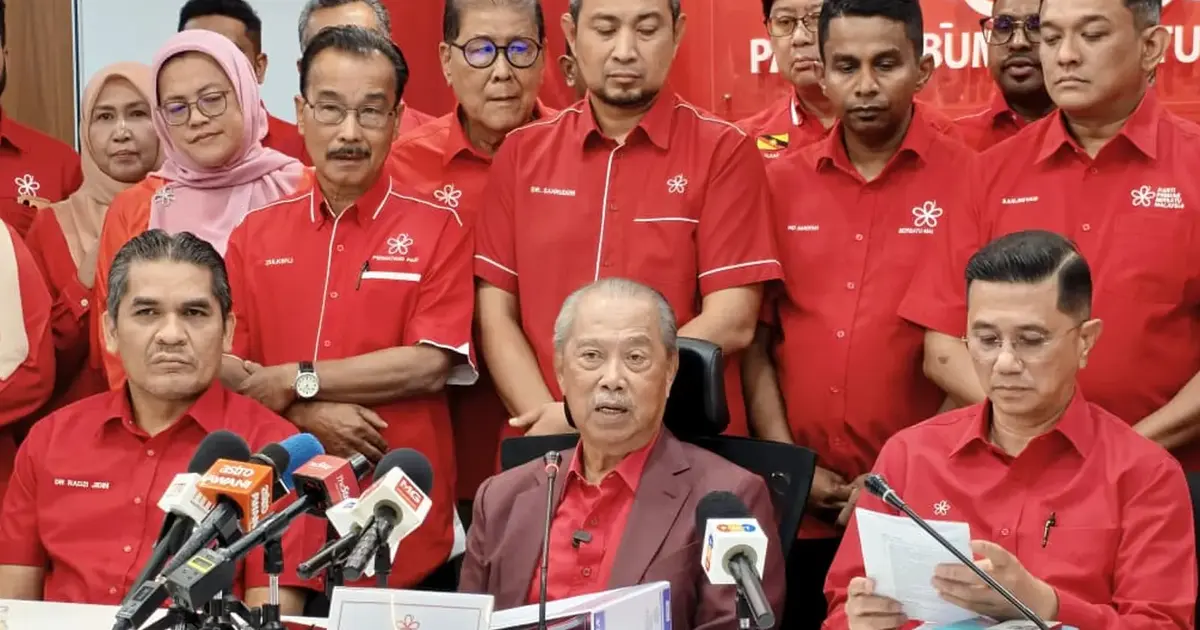
Bersatu will maintain its position within the Perikatan Nasional coalition, party president Muhyiddin Yassin announced, underscoring the alliance's continued relevance in Malaysia's complex political landscape. The decision reflects the party's assessment that the coalition enjoys substantial backing from the Malaysian electorate, positioning it as a viable force in national politics despite the shifting dynamics within the ruling structure.
Muhyiddin's statement comes at a significant moment for Malaysian politics, where coalition loyalty has become increasingly scrutinised following various political realignments and defections that have characterised the post-2018 period. Bersatu's decision to remain anchored within Perikatan Nasional signals the party's strategic calculation that the broader coalition framework offers better prospects for advancing its political agenda than pursuing alternative arrangements. The timing of the announcement appears designed to reassure party members and coalition partners of Bersatu's stability amid ongoing political manoeuvres at the federal and state levels.
The Perikatan Nasional coalition, which incorporates multiple political parties including PAS and several component parties from different states, has undergone considerable transformation since its initial formation. Bersatu's continued membership represents a crucial element in maintaining the coalition's numerical strength in parliament and its capacity to influence policy direction. The party's presence has been instrumental in shaping the coalition's positioning on key issues ranging from economic management to religious affairs, areas where Bersatu members have served in substantial ministerial and parliamentary roles.
Muhyiddin's emphasis on public acceptance as the foundation for Bersatu's coalition commitment reflects a strategic communication approach that attempts to frame the party's alliance through the lens of popular mandate rather than mere political pragmatism. This framing carries significance for Malaysian voters who have expressed varying degrees of support for the coalition across different electoral cycles and state-level elections. By tying Bersatu's participation to public sentiment, the party president seeks to legitimise the coalition's governing role and broader policy initiatives that require parliamentary support.
For Bersatu specifically, remaining within Perikatan Nasional provides several strategic advantages that likely influenced Muhyiddin's decision. The party gains leverage in coalition negotiations regarding ministerial portfolios, committee assignments, and policy priorities. Additionally, membership within an established coalition structure offers greater resources for election campaigning and organisational activities compared to operating as an independent political entity. The coalition framework also enables Bersatu to access electoral machinery and voter bases that might otherwise remain inaccessible.
The commitment statement also carries implications for opposition parties and alternative political coalitions operating in Malaysia. While Pakatan Harapan and other political groupings continue to present themselves as options to Malaysian voters, Bersatu's reaffirmation of Perikatan Nasional participation effectively reduces the likelihood of major coalition realignments in the near to medium term. This stability, or the appearance thereof, could influence voter behaviour and political strategising across the spectrum, particularly in preparation for future electoral cycles at state and federal levels.
Within the Perikatan Nasional structure itself, Bersatu's statement reinforces the party's position as a substantial stakeholder whose interests cannot be dismissed in coalition decision-making processes. This assertion becomes particularly relevant during periods when coalition partners might face pressure to pursue competing agendas or when internal disagreements emerge over resource allocation or strategic direction. By publicly reiterating its commitment, Bersatu simultaneously signals its expectation of respect for its role and contributions within the broader alliance.
The public's acceptance that Muhyiddin references likely encompasses diverse constituencies across Malaysia's geographical and demographic spectrum. Urban and rural voters, different ethnic communities, and various socioeconomic groups present nuanced perspectives on the coalition's performance and legitimacy. Bersatu's interpretation of this acceptance as a mandate for continued coalition membership suggests the party's internal polling or analysis indicates sufficient support to justify the alliance's continuation, though Malaysian politics has frequently demonstrated that political assumptions can shift rapidly following elections or significant political events.
Looking forward, Bersatu's declared commitment to Perikatan Nasional sets expectations for party discipline and coalition solidarity on critical parliamentary votes and policy matters. This commitment becomes tested during moments of political tension or when coalition members face conflicting pressures from their respective party bases or state-level political dynamics. The durability of Bersatu's pledge will likely be measured through the coalition's ability to govern effectively and address public concerns ranging from economic conditions to governance standards.
For Malaysian observers and political analysts, Muhyiddin's statement serves as a marker of the current political phase, where coalition stability appears prioritised despite underlying tensions and competing interests. The reaffirmation may also reflect calculations about upcoming electoral processes or opportunities to consolidate the coalition's position through successful governance and policy implementation. Whether this commitment withstands the pressures of Malaysian politics in coming months and years will significantly influence the country's political trajectory and the balance of power between competing coalitions.