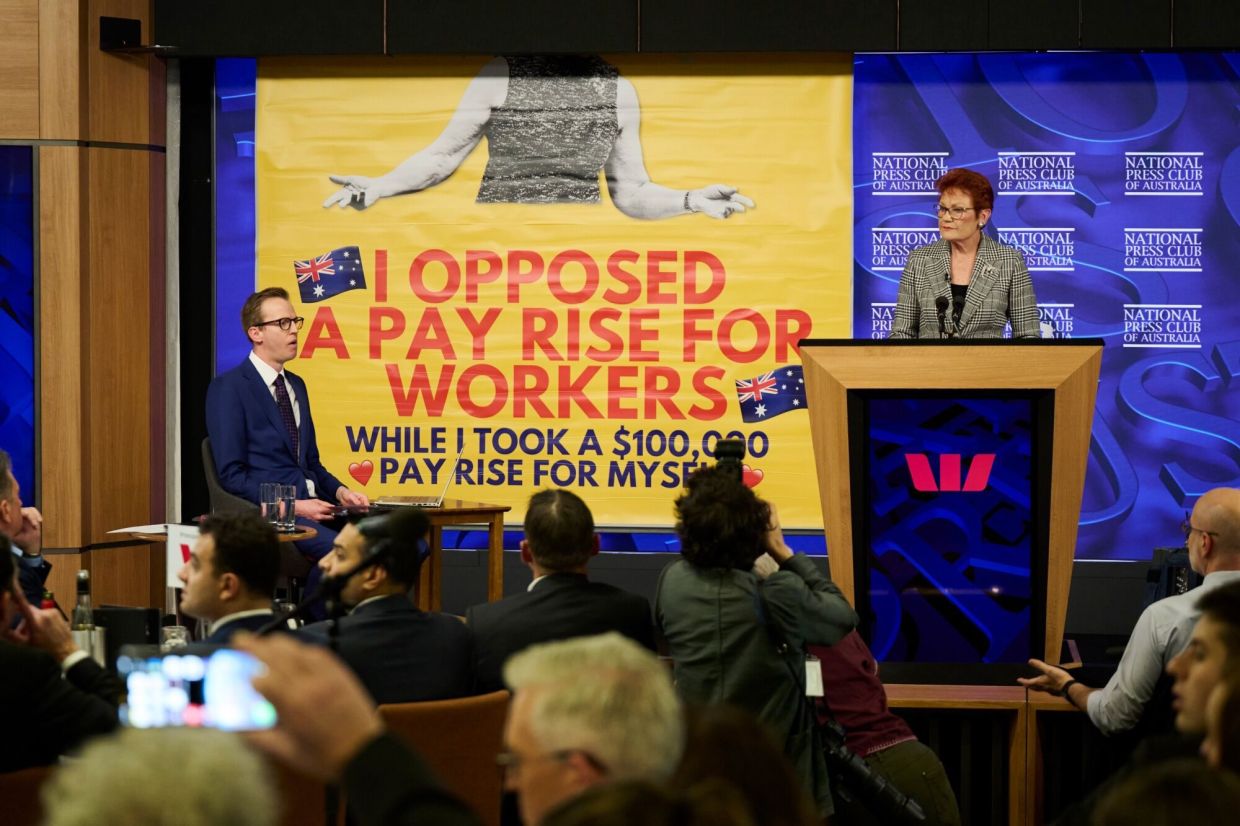
Pauline Hanson, the hard-right populist leading Australia's One Nation party, has escalated her political challenge to the government by calling for the country to abandon its multicultural framework in favour of a monocultural model. Speaking at the National Press Club in Canberra on Wednesday, Hanson delivered remarks that mark her first appearance at the prestigious venue during her three-decade political career, underscoring the significance she places on repositioning her party's message to mainstream audiences.
The One Nation leader's central argument centres on a sharp rejection of multiculturalism as policy, which she characterised as fundamentally flawed and incompatible with national cohesion. While acknowledging that Australia has become a multiracial society through immigration, Hanson insisted the nation must operate under what she termed "the one cultural umbrella"—a formulation that implies assimilationist expectations rather than celebration of cultural diversity. This rhetorical distinction attempts to separate acceptance of racial diversity from endorsement of cultural pluralism, a position that has become increasingly prominent in populist movements across developed economies.
Hanson tied her cultural nationalism directly to contemporary economic grievances, explicitly linking multiculturalism to Australia's acute housing affordability crisis. By framing the housing shortage as a consequence of immigration policy rather than examining supply-side constraints, planning regulations, or investment patterns, she channelled widespread frustration among Australian voters struggling with mortgage stress and rental inflation into an immigration-focused narrative. This strategic connection between housing accessibility and cultural policy resonates particularly with younger Australians and first-time homebuyers facing unprecedented price-to-income ratios in major cities like Sydney and Melbourne.
The One Nation leader pledged to dramatically curtail migration levels, using language that extends beyond economic arguments into security concerns. Her commitment to "slash" immigration included specific reference to restricting entry from "places immersed in extremism like radical Islam," a formulation that conflates geographic origin with religious identity and ideological threat. This rhetorical approach taps into post-9/11 security anxieties while employing coded language that avoids explicit religious discrimination while nonetheless targeting Muslim-majority regions and communities.
Hanson's rising political fortunes reflect substantial shifts in Australian electoral dynamics. Her One Nation party has experienced notable momentum in opinion polling over the preceding twelve months, with her influence accelerating markedly following the collapse of the centre-right coalition government's electoral dominance in May of the previous year. This timing suggests that voter disillusionment with the previous administration created opening space for populist challengers to reshape political conversation around economic management and national identity.
The economic context underpinning One Nation's surge involves multiple concurrent pressures bearing down on household finances. Australians have endured resurgent inflationary pressures, rising interest rate burdens, and sharply elevated fuel costs exacerbated by geopolitical tensions in the Middle East. These cumulative stressors have created genuine economic anxiety across the electorate, particularly among working-class and middle-income households. Rather than examining structural economic factors or global supply chain dynamics, Hanson attributed these challenges to immigration policy and what she characterised as the excessive cost of green energy investments—arguments that offer simple causal narratives for complex economic phenomena.
Prime Minister Anthony Albanese's Labor government has attempted to provide targeted relief through specific policy interventions, including a temporary reduction in fuel excise taxation and proposed tax reforms designed to improve housing accessibility. However, these measures address symptoms rather than fundamental structural issues driving affordability crises and inflationary pressures. The government's policy responses, while economically defensible, lack the narrative force of Hanson's more sweeping cultural and immigration critiques.
Albanese has characterised the rise of One Nation and similar movements as symptomatic of deeper economic dysfunction, framing populism as a reaction rooted in legitimate grievance about an economy that no longer serves broad segments of the population effectively. He has specifically invoked the dangers of "simplistic grievance-based politics," suggesting that while voter frustration reflects real economic challenges, the solutions proposed by populist parties oversimplify causation and offer palliatives rather than structural reform.
The debate between Hanson's cultural nationalism and the government's economic policy approach reflects a fundamental tension in contemporary democratic politics across developed economies. Voters experiencing economic stress increasingly respond to narratives offering clear villains and straightforward solutions, even when those narratives misidentify root causes. Immigration serves as a particularly convenient scapegoat because it encompasses multiple anxieties—labour market competition, housing demand, cultural change, and security concerns—within a single policy domain.
For Malaysia and Southeast Asia, Australia's political trajectory carries particular significance given regional economic interdependencies and migration patterns. A hardening of Australian immigration policy would directly affect Southeast Asian professionals, students, and temporary residents who have integrated substantially into Australian economic and social life. Moreover, the mainstreaming of Hanson's rhetoric signals how populist movements can successfully redirect policy conversation away from structural economic reform toward cultural and identity-based grievances, a pattern with clear relevance across the region.
The success of Hanson's framing also reflects a broader challenge facing centre-left and centrist political parties globally: their difficulty in constructing compelling narratives around economic management that match the emotional resonance of populist appeals. While Albanese's diagnosis of the problem appears analytically sound, his policy responses have struggled to capture public imagination or demonstrate rapid material improvement in household economic security.