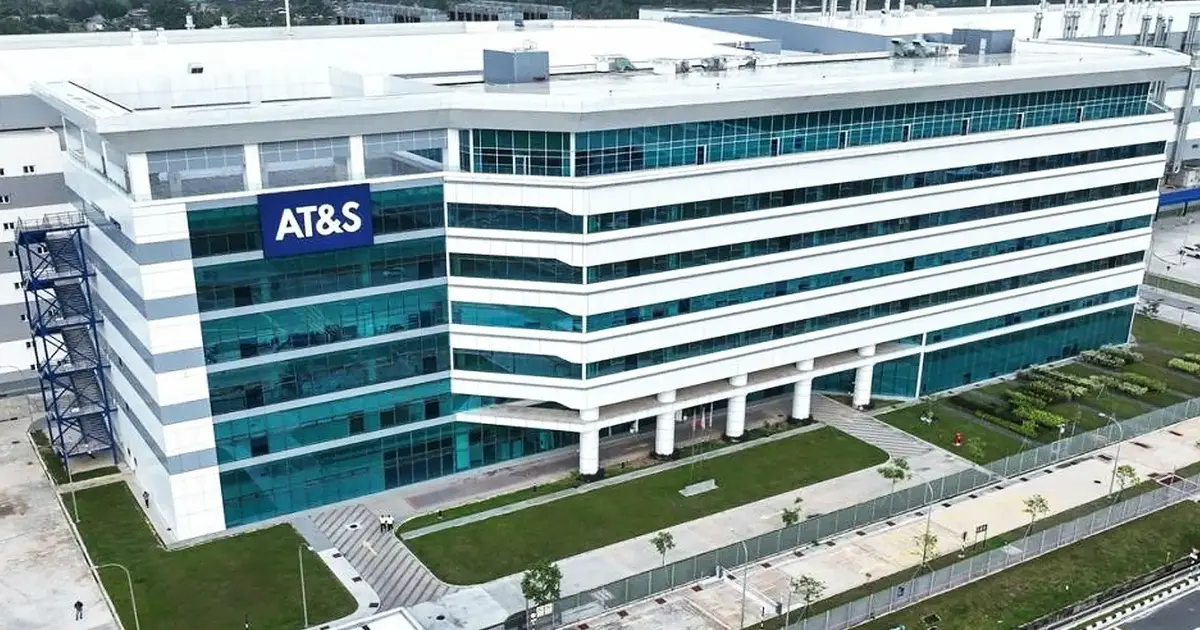
Austria's leading printed circuit board and semiconductor packaging manufacturer AT&S has announced a substantial RM9.4 billion investment in Kulim, Kedah, a move Prime Minister Anwar Ibrahim characterized as validation of Malaysia's institutional strength and economic competitiveness on the global stage. The investment, one of the region's most significant recent capital commitments to semiconductor infrastructure, underscores the country's appeal to multinational technology firms seeking reliable manufacturing bases amid global supply chain realignments.
Anwar attributed the company's confidence to Malaysia's demonstrated commitment to good governance and institutional stability, factors that have become increasingly material to foreign direct investment decisions since the pandemic exposed vulnerabilities in concentrated supply chains. The Prime Minister's emphasis on governance reflects deliberate efforts by the Malaysian government to rebrand the nation as a rules-based economy with transparent regulatory frameworks, a positioning that contrasts with earlier perceptions of bureaucratic opacity. This narrative resonates particularly with European and North American technology corporations that have become more rigorous in vetting their operational locations based on political stability and administrative efficiency.
Kulim has emerged as Malaysia's primary semiconductor manufacturing hub over the past two decades, with existing facilities operated by major multinational firms already anchoring the region's industrial ecosystem. The AT&S expansion will add production capacity specifically for advanced packaging and substrate technologies, segments critical to high-performance computing, automotive electronics, and consumer devices. The Kedah location offers several competitive advantages including proximity to George Town's port infrastructure, established workforce expertise in semiconductor manufacturing, and existing utility and logistics networks that reduce operational overhead for incoming investors.
The semiconductor industry carries particular strategic importance for Malaysia's economic diversification agenda. While the country has historically maintained presence in lower-value assembly stages, recent government initiatives aim to propel domestic capabilities toward higher-margin design, packaging, and testing operations. Foreign investments like AT&S's commitment directly contribute to this upskilling trajectory by introducing advanced manufacturing techniques and creating employment opportunities for engineering talent. The project is expected to generate thousands of direct and indirect jobs, spanning skilled technician roles to professional positions in process engineering and quality assurance.
AT&S's decision also reflects broader competitive dynamics within the semiconductor supply chain. As geopolitical tensions between the United States and China intensify, and as advanced chip manufacturing concentrates increasingly in Taiwan and South Korea, secondary packaging and assembly hubs have gained strategic relevance. Malaysia's existing manufacturing base, combined with its neutral geopolitical positioning and membership in regional trade networks, positions it as an attractive alternative location for technology companies seeking to diversify their operational footprint and reduce concentration risk.
The investment arrives during a period of intense competition among Southeast Asian nations to attract semiconductor manufacturing capacity. Thailand, Vietnam, and Indonesia have all pursued similar strategies through targeted incentives and infrastructure development. Malaysia's advantage lies partly in its established track record in electronics manufacturing and its developed financial and telecommunications infrastructure. The government's willingness to facilitate large-scale projects through coordinated permitting and customs arrangements has proven material to decisions by capital-intensive manufacturers like AT&S.
Foreign direct investment data demonstrates that perceptions of governance quality significantly influence location decisions among technology manufacturers. Companies conducting extensive due diligence on potential sites evaluate consistency of policy implementation, transparency in regulatory decision-making, and track records of honouring contractual commitments. Malaysia's recent institutional reforms, including enhanced anti-corruption mechanisms and clearer business licensing procedures, have apparently registered positively with international investor assessments. The AT&S commitment suggests these efforts are beginning to translate into tangible capital flows.
The investment's timing coincides with global semiconductor supply recovery and renewed demand from automotive and consumer electronics sectors. Industry analysts project continued capacity expansion across Southeast Asia as manufacturers seek to rebalance sourcing away from China and establish more resilient multi-regional production networks. AT&S's Malaysian investment is thus positioned within a multi-year industry restructuring that will likely drive additional foreign capital toward the region. The company's choice of Kulim over alternative locations signals that Malaysia has successfully differentiated itself on operational fundamentals rather than competing primarily on tax incentives.
Longer-term implications for Malaysia's industrial policy center on leveraging such anchor investments to develop supporting ecosystems. Semiconductor manufacturing attracts suppliers of specialized materials, precision equipment maintenance services, and engineering consultancies. AT&S's presence in Kulim will likely catalyze secondary investment from companies seeking proximity to major manufacturing facilities. This clustering effect has historically strengthened regional competitiveness and created resilience against individual company relocations or market fluctuations.
From a human capital perspective, the AT&S expansion necessitates workforce development initiatives spanning secondary education curricula to vocational training programs. Malaysia's success in retaining and advancing semiconductor industry leadership depends fundamentally on cultivating technical expertise faster than competitors. The government's collaboration with educational institutions to align training with manufacturer requirements has become instrumental to attracting large projects. AT&S's investment, therefore, should prompt parallel commitments to workforce preparation infrastructure.
Regionally, Malaysia's capacity to attract premier semiconductor investors carries implications for ASEAN's collective technological advancement. The semiconductor sector functions as a gateway industry, providing foundational manufacturing expertise and supply chain linkages that support downstream electronics sectors. Countries achieving significant semiconductor manufacturing presence gain disproportionate voice in regional industrial policy discussions and benefit from technology diffusion effects that enhance competitiveness across multiple industries. AT&S's commitment reinforces Malaysia's position as ASEAN's technological leadership center alongside Singapore, though in manufacturing rather than financial services.
The investment also addresses Malaysia's persistent current account challenges through expanded capital goods imports and earned repatriation of technology licensing fees. Semiconductor manufacturing generates substantial foreign exchange flows through export revenues and attracts high-value service imports from multinational technology companies. The fiscal impact, measured through corporate income taxes, employment-linked contributions, and municipal revenues, will likely exceed initial capital commitments over a typical manufacturing facility's productive lifespan.


