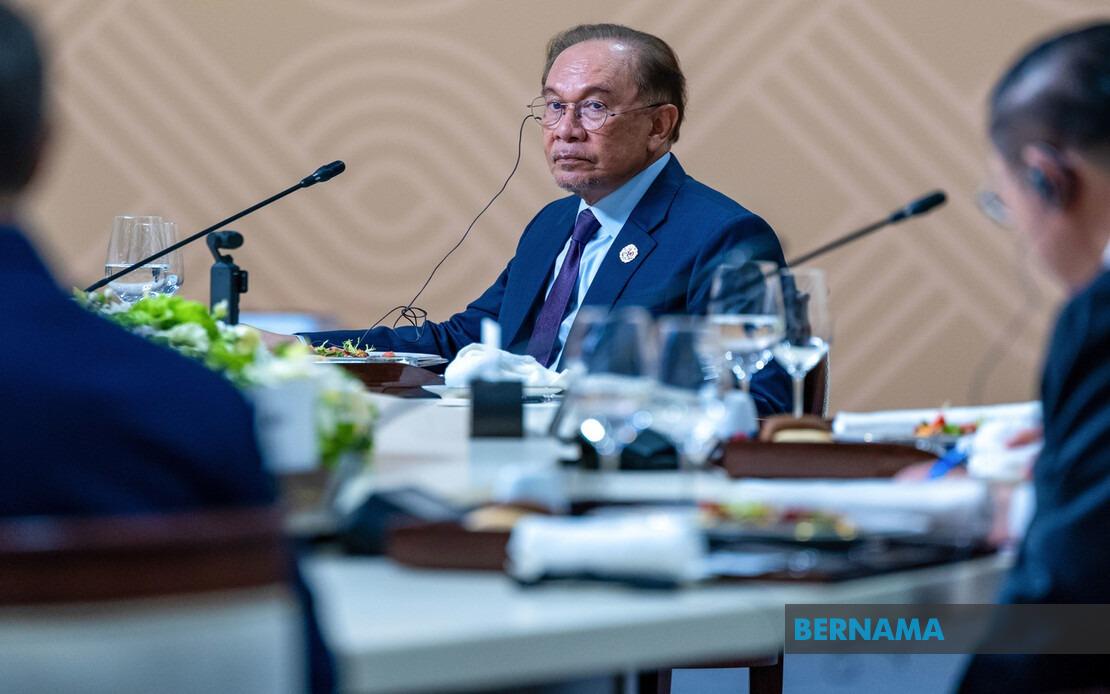
During an ASEAN-Russia working lunch in Kazan, Prime Minister Datuk Seri Anwar Ibrahim made a compelling case for deepening institutional cooperation between ASEAN and the Shanghai Cooperation Organisation, arguing that the two regional blocs possess complementary strengths that remain underutilised in addressing pressing transnational challenges. Speaking on June 18, Anwar emphasised that pooling resources and expertise across both organisations offers a pragmatic pathway to tackle issues that individual nations struggle to contain within their own borders.
The Prime Minister highlighted that ASEAN and the SCO have already established a sturdy foundation for cooperation through the 2005 memorandum of understanding, which encompasses counter-terrorism, narcotics control, money laundering prevention, and economic partnerships. Rather than proposing entirely new structures, Anwar suggested that both blocs should concentrate on building upon these existing agreements by identifying discrete, measurable objectives achievable within specific timeframes. This approach reflects a maturing understanding of multilateral diplomacy, where success depends not on grandiose frameworks but on focused implementation of shared commitments.
The cross-border dimension of contemporary crime posed a particular concern for the Malaysian leader. Online scams, illicit financial flows, and human trafficking networks operate with speed and sophistication that frequently outpace governmental response mechanisms operating independently. Anwar contended that ASEAN and SCO members stand to gain substantially from establishing more robust intelligence-sharing protocols and building mutual capacity to investigate and prosecute these offences. For Southeast Asian nations, many of which serve as transit routes for human trafficking or targets for cybercriminals, such coordination represents a direct safeguard for their citizens and economies. The urgency of this appeal reflects the reality that these crimes inflict real damage on regional stability and development.
Beyond security matters, Anwar positioned energy cooperation as a strategic frontier for the two organisations. The SCO membership encompasses some of the world's most significant energy producers and repositories of advanced energy technology expertise, particularly among its ten member states including Russia, China, Kazakhstan, and Iran. This concentration of production capacity and technical knowledge creates opportunities for Southeast Asian nations seeking to diversify energy sources and improve supply security. Malaysia, as both a developing economy with rising energy demands and an aspiring transition leader, stands to benefit from knowledge exchanges and collaborative projects within this framework.
The Prime Minister outlined a comprehensive vision for energy cooperation spanning multiple domains. Energy efficiency improvements, grid modernisation and reliability, liquefied natural gas and pipeline infrastructure, and the integration of renewable energy sources all featured in his proposal. Equally significant was his emphasis on knowledge-sharing regarding safety protocols and systemic resilience, acknowledging that energy transitions require not just technical capacity but institutional safeguards. For Malaysian policymakers and businesses, engagement with SCO energy expertise could accelerate the nation's own ambitions in clean energy and grid modernisation.
Anwar expanded his cooperative vision to include the Eurasian Economic Union, another major regional bloc with which ASEAN maintains formal frameworks. He suggested that these existing agreements remain underexploited and proposed leveraging them to strengthen commercial confidence and business activity between regions. This framing addresses a persistent challenge in ASEAN external relations: the gap between formalised diplomatic agreements and meaningful economic engagement. Private sector involvement emerges as the key to narrowing this distance.
The Prime Minister identified three specific priorities for ASEAN-EAEU commercial cooperation. First, he advocated for regular meetings between business representatives from both regions, with particular emphasis on cross-participation in trade and investment forums. Events such as the Eastern Economic Forum and the St Petersburg International Economic Forum present natural platforms for these interactions, yet ASEAN participation remains inconsistent. Second, Anwar recognised that smaller and medium-sized enterprises from Southeast Asia face structural disadvantages in accessing EAEU markets, requiring targeted assistance in market access, technology transfer, and capacity building. This acknowledgement reflects genuine constraints faced by ASEAN firms attempting to penetrate Eurasian markets.
The third priority venture into emerging domains where ASEAN and EAEU interests converge: the digital economy, artificial intelligence, cybersecurity, and food security. These areas represent frontiers where neither bloc possesses overwhelming advantage, creating conditions for genuine partnership rather than hierarchical relationships. For Malaysia specifically, cooperation in artificial intelligence and cybersecurity aligns with national aspirations to become a regional technology hub, while food security partnerships address long-term vulnerabilities in a region dependent on imports for significant portions of its protein and staple supplies.
Anwar's remarks during the ASEAN-Russia Commemorative Summit reflected broader strategic calculations within Malaysian foreign policy. The visit to Kazan, capital of the Tatarstan republic, signaled continued engagement with Russia despite geopolitical tensions affecting relationships with Moscow elsewhere. More fundamentally, the proposals demonstrated Malaysia's interest in maintaining balanced relationships across multiple regional organisations rather than concentrating exclusively on any single bloc. This multitrack approach characterises contemporary ASEAN diplomacy, where members pursue partnerships with China, India, Russia, the United States, and Europe simultaneously.
The emphasis on defined objectives and measurable progress suggests pragmatism over aspirational rhetoric. Rather than announcing sweeping new initiatives, Anwar grounded his proposals in existing legal instruments and acknowledged the necessity of realistic timeframes. This approach reduces the risk of multilateral initiatives dissolving into meaningless declarations, a persistent problem in regional diplomacy where enthusiasm frequently outpaces implementation capacity.
For Southeast Asian observers, the significance of Anwar's intervention lies in its demonstration that ASEAN possesses strategic value to multiple global powers and regional organisations. By articulating concrete areas where cooperation serves mutual interests, the Malaysian Prime Minister positioned ASEAN not as a passive recipient of Great Power competition but as an active agent capable of shaping regional outcomes. The emphasis on practical cooperation in crime prevention, energy security, and commercial engagement offers a template for bilateral and multilateral relationships that prioritises substantive results over diplomatic ceremony.


