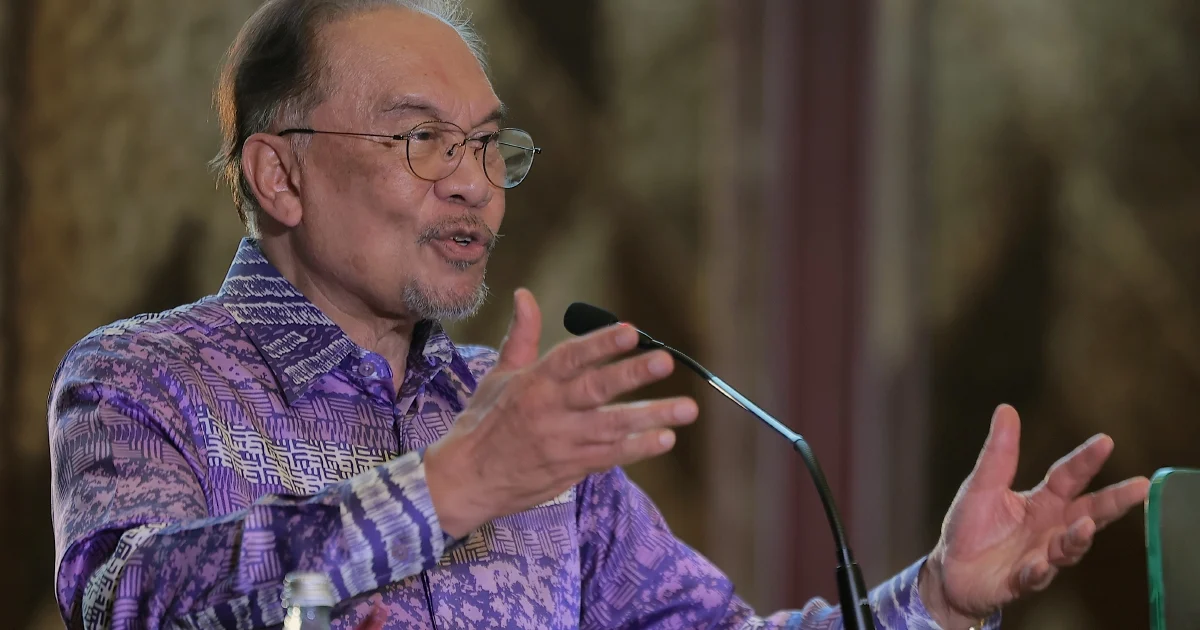
Prime Minister Datuk Seri Anwar Ibrahim is set to undertake a two-day working visit to Kazan from June 17, where he will hold bilateral discussions with Rais of the Republic of Tatarstan Rustam Minnikhanov. The engagement represents a strategic effort to enhance Malaysia's diplomatic footprint in Russia's vast Volga region and to reinforce broader Southeast Asian-Russian cooperation frameworks that have gained momentum in recent years.
The visit carries particular significance given the evolving geopolitical landscape in which Malaysia seeks to maintain balanced and productive relationships across major global powers. Kazan, as Russia's cultural and economic hub in the Tatarstan Republic, presents a valuable platform for discussing cooperation beyond traditional capital-centric diplomacy. The choice of this regional centre suggests Malaysian officials are exploring economic partnerships and people-to-people exchanges that extend beyond Moscow, potentially opening new avenues for trade, investment, and technical cooperation.
According to Malaysian diplomatic sources, the discussions will likely encompass a range of bilateral matters including trade and investment opportunities, defence and security cooperation, and cultural exchanges. Malaysia's envoy has emphasized that the visit will provide an opportunity to articulate Malaysia's vision for strengthening ties with Russia while simultaneously advancing the collective interests of Asean member states in their engagement with Moscow. This dual approach reflects Malaysia's positioning as both an independent nation with distinct priorities and a key voice within the regional bloc.
The significance of this visit cannot be divorced from the broader context of Asean's engagement with major powers. As Malaysia holds various roles within the regional grouping, including its involvement in Asean's centrality agenda, the Prime Minister's direct engagement with Russian leadership serves to strengthen the institutional channels through which Asean and Russia coordinate on regional and global matters. Economic cooperation, investment flows, and cultural initiatives all form part of this multilayered diplomatic strategy.
Matters of regional security and strategic stability are expected to feature prominently during the discussions. The South China Sea, energy security, and maritime cooperation remain critical issues for Malaysia and Asean more broadly. Russia's perspective on these matters, while not always aligned with Southeast Asian positions, offers valuable insights into how major powers view the region's geopolitical dynamics. Such exchanges, though sometimes operating behind closed doors, contribute to building understanding and reducing misperceptions among stakeholders.
The visit also underscores Malaysia's commitment to the Russian Federation's development agenda and its respect for Russia's federal structure. By meeting with regional leaders like Minnikhanov, rather than limiting engagement to the capital, Malaysia signals its understanding of Russia's complex internal dynamics and its willingness to engage with diverse interests within the country. Tatarstan, as one of Russia's most developed and economically vibrant regions, holds particular appeal for Malaysian business interests seeking Russian market entry points and partnership opportunities.
From an economic perspective, the bilateral relationship offers untapped potential. Malaysia's expertise in Islamic finance, palm oil production, and technology sectors could complement Russia's resource wealth and technical capabilities. Meanwhile, Russian advances in energy technology, aerospace, and defence systems represent areas where mutual benefit could be realized through structured partnerships. The working visit provides an opportunity to identify specific sectors where collaboration could be intensified and formalized through appropriate mechanisms.
Cultural and educational exchanges will likely constitute another element of the discussions. Malaysia's significant Muslim-majority population and Tatarstan's own Muslim communities create natural foundations for interfaith dialogue and cultural cooperation. Students exchanges, scholarly programmes, and tourism initiatives could all benefit from elevated diplomatic attention and government support structures being put in place during high-level visits such as this one.
The timing of Anwar's visit reflects Malaysia's proactive approach to its foreign policy agenda under his leadership. His government has demonstrated a preference for engaging directly with major powers across the globe, whether in North America, Europe, the Middle East, or Asia. This approach aims to position Malaysia as a reliable, independent-minded partner that contributes meaningfully to regional stability while protecting its national interests through diversified international relationships.
Looking ahead, the outcomes of this Kazan visit may set the tone for Malaysia-Russia relations in the coming years. Any agreements or understandings reached during the Prime Minister's discussions with Minnikhanov and other Russian interlocutors could catalyse new initiatives in sectors ranging from trade to technology transfer to people-to-people diplomacy. For Malaysia and Asean, deepening channels of communication with Russia serves the strategic purpose of maintaining productive dialogue with all major powers, irrespective of geopolitical divisions elsewhere in the world.
The visit also carries implications for Malaysia's broader positioning within Asean's framework for engaging Russia. As Asean continues to navigate complex relationships with major powers while maintaining the principle of non-alignment and centrality, Malaysia's bilateral initiatives contribute to the collective capability of the regional organisation to maintain meaningful dialogue across ideological and strategic divides. Through visits like this, Malaysia reinforces both its commitment to regional solidarity and its independent capacity to build mutually beneficial partnerships.