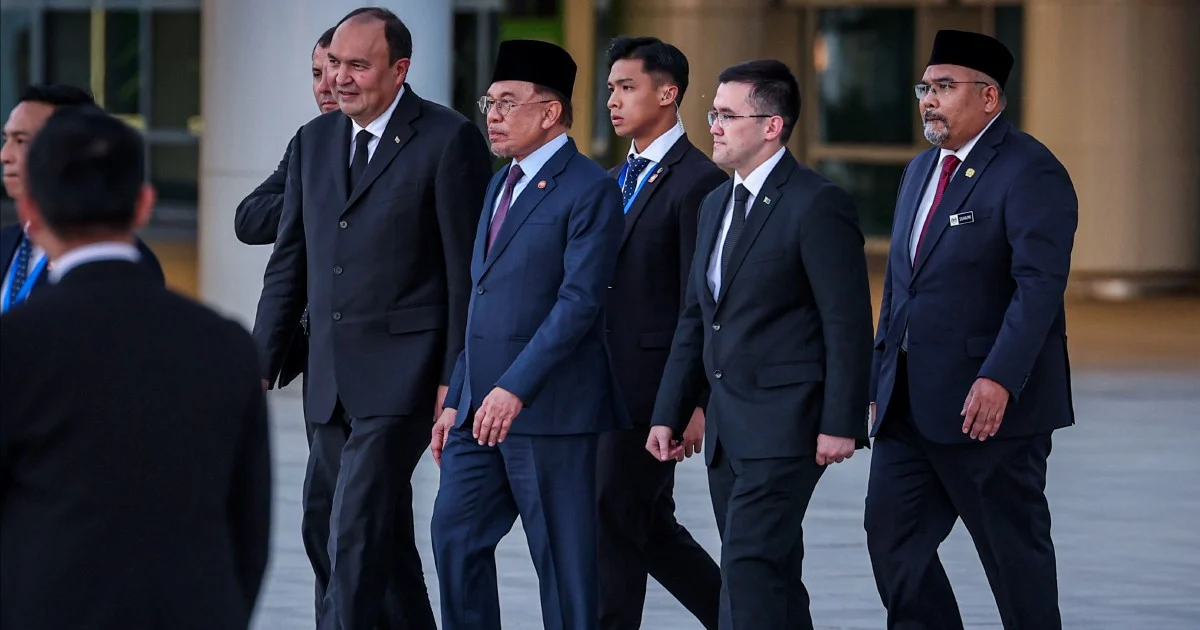
Prime Minister Datuk Seri Anwar Ibrahim is wrapping up his official visit to Turkmenistan with an intensive schedule of high-level bilateral engagements designed to unlock fresh economic opportunities for Malaysia in the Central Asian region. The final day of the diplomatic mission in the Caspian Sea nation signals Malaysia's growing strategic interest in diversifying its international trade partnerships beyond traditional markets, reflecting a broader regional shift towards deepening ties with emerging economies across Asia.
Turkmenistan's strategic location along the eastern shores of the Caspian Sea positions it as a crucial gateway for Malaysia seeking to access markets across Central Asia and beyond. The nation serves as a vital transit hub connecting South Asia with Europe, offering Malaysian businesses potential new avenues for expanding their commercial footprint. Geographically isolated yet resource-rich, Turkmenistan has increasingly sought to strengthen partnerships with Southeast Asian nations, viewing the region as a counterbalance to traditional spheres of influence and a source of diversified economic cooperation.
The timing of Anwar's visit underscores Malaysia's deliberate diplomatic strategy to cultivate relationships with nations that control critical trade routes and energy resources. Turkmenistan possesses substantial natural gas reserves and serves as a transportation corridor for goods flowing between continents. For Malaysian enterprises, particularly those in manufacturing, logistics, and services sectors, establishing formal trade frameworks with Turkmenistan could open pathways for accessing Central Asian markets more efficiently while potentially securing energy contracts at competitive rates.
Bilateral discussions scheduled for the concluding day are expected to address multiple dimensions of economic cooperation. Trade volume expansion remains a primary focus, as current bilateral commerce between Malaysia and Turkmenistan remains relatively modest compared to Malaysia's engagement with other regional partners. Officials from both nations are likely to explore mechanisms for facilitating business-to-business contacts, reducing tariff barriers, and establishing clearer regulatory frameworks that would encourage Malaysian investors to consider Turkmenistan-based opportunities.
Investment cooperation forms another critical pillar of these negotiations. Malaysian financial institutions and corporate entities have expressed interest in infrastructure development projects within Turkmenistan, from telecommunications to logistics facilities. Conversely, Turkmen sovereign wealth funds and state enterprises are keen to explore investment opportunities in Malaysia's developed financial sector and manufacturing hubs, creating a reciprocal relationship that benefits both economies.
The visit also carries implications for Malaysia's broader Central Asian strategy. By engaging directly with Turkmenistan's leadership, Anwar is signalling to other nations in the region that Malaysia views Central Asia not merely as a distant market but as an integral part of a comprehensive Asian economic ecosystem. This approach complements Malaysia's existing relationships with countries like Kazakhstan and Uzbekistan, potentially creating a coordinated regional engagement framework that enhances Malaysian influence and commercial presence across the Central Asian corridor.
Energy security considerations inevitably feature in these discussions. Malaysia's economy remains sensitive to global energy price fluctuations, and exploring diversified sources of natural resources through partnerships with energy-rich Turkmenistan could contribute to long-term economic stability. While Malaysia does not currently rely heavily on Turkmen energy exports, establishing frameworks for potential future cooperation provides valuable strategic flexibility as regional energy dynamics continue to evolve.
Cultural and diplomatic dimensions complement the economic agenda. High-level state visits serve not only as forums for signing agreements but also as opportunities to build personal relationships between leaders and strengthen mutual understanding. The respect and goodwill cultivated during such engagements frequently translate into smoother business negotiations and more favourable treatment for each nation's enterprises in the other's jurisdiction.
For Malaysia's business community, this visit carries concrete significance. The opening of official channels with Turkmenistan at the prime ministerial level typically precedes facilitation of export credit schemes, investment guarantees, and preferential market access arrangements. Malaysian companies in sectors ranging from palm oil products to electronics manufacturing stand to benefit from renewed momentum in bilateral relations, potentially gaining competitive advantages over businesses from nations without similar high-level political engagement.
The Central Asian dimension also connects to Malaysia's participation in broader geopolitical balancing efforts. As traditional great powers compete for influence in strategically significant regions, Malaysia's ability to develop independent relationships across diverse geographies enhances its diplomatic standing and provides leverage in international negotiations. Turkmenistan, similarly committed to maintaining strategic autonomy, finds value in cultivating ties with nations like Malaysia that prioritise mutual benefit over hegemonic arrangements.
Looking forward, the outcomes of these discussions will likely shape Malaysia-Turkmenistan relations for years to come. Joint commissions established during high-level visits typically meet periodically to monitor progress on agreed initiatives, ensuring sustained momentum even after political leaders transition. Framework agreements on trade, investment, and technical cooperation create institutional structures that persist beyond individual administrations.
For Malaysian policymakers, this engagement reflects recognition that economic prosperity increasingly depends on relationships extending far beyond traditional Southeast Asian partnerships. The willingness to invest diplomatic capital in Central Asian nations demonstrates strategic foresight and commitment to positioning Malaysia as a regional economic power with global reach and influence.