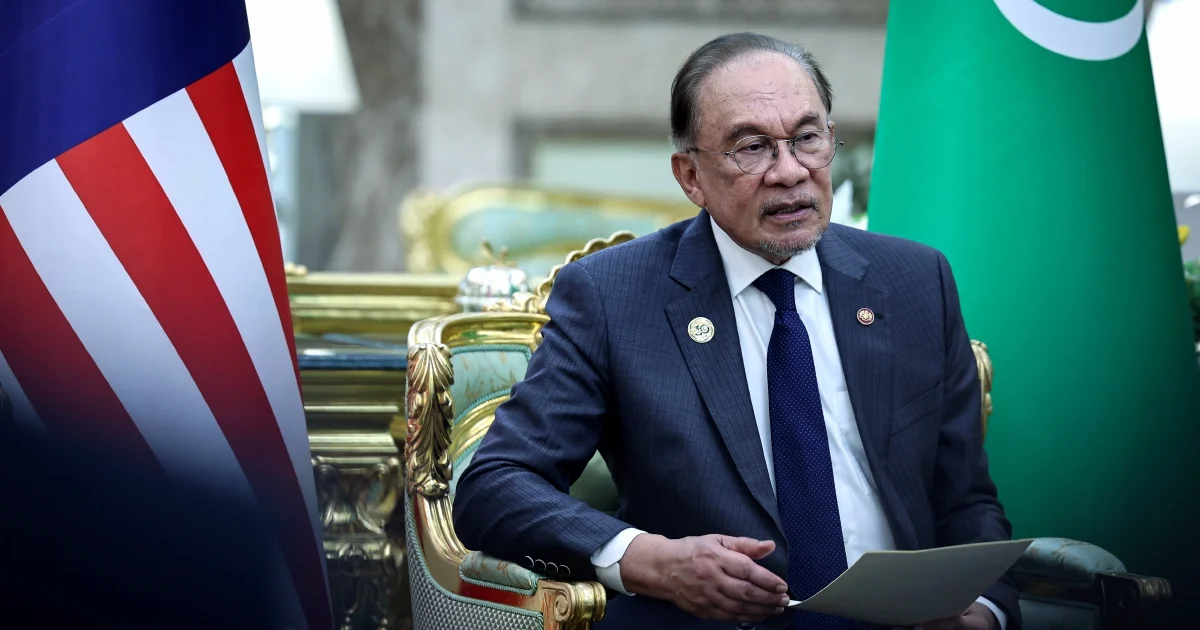
Prime Minister Datuk Seri Anwar Ibrahim has responded positively to reports of an initial understanding between the United States and Iran, viewing the development as a constructive signal for international relations and regional security. Speaking at Batu Kawan, the Malaysian leader characterised the reported breakthrough as positive news that extends beyond the two nations directly involved, suggesting the agreement carries wider implications for global affairs.
The tentative accord between Washington and Tehran represents a significant diplomatic moment in a relationship marked by decades of tension and hostility. The US-Iran standoff has profoundly shaped geopolitical dynamics across the Middle East and beyond, affecting trade patterns, security arrangements, and the broader balance of power in one of the world's most strategically important regions. Any movement toward de-escalation in this context warrants attention from global leaders seeking stable international relations.
Anwar's public endorsement reflects Malaysia's longstanding commitment to multilateral diplomacy and peaceful conflict resolution. As a moderate Muslim-majority nation with economic and strategic interests across multiple regions, Malaysia has consistently advocated for dialogue-based approaches to international disputes. The country's position as a non-aligned player in global affairs gives particular weight to such statements, signalling support for dialogue without appearing aligned to either superpower camp.
The Prime Minister's remarks underscore the interconnectedness of regional and global security concerns. Tensions between the US and Iran have historically rippled outward, affecting everything from oil markets to shipping routes to proxy conflicts across the Levant and Persian Gulf. Malaysian policymakers, cognisant of their nation's dependence on stable maritime trade routes and reasonable commodity prices, have institutional reasons to welcome moves toward rapprochement between major powers.
However, Anwar's emphasis on the hope for enduring peace signals awareness that initial agreements often face significant implementation challenges. Translating tentative accords into lasting frameworks requires sustained political will, verification mechanisms, and mutual confidence-building measures that can take years to establish. The Malaysian leader's reference to lasting rather than temporary peace suggests he understands the fragility of early diplomatic breakthroughs in such high-stakes negotiations.
The regional dimension deserves particular attention for Southeast Asian readers. Any thawing of US-Iran relations could reshape Middle Eastern dynamics in ways that affect regional powers like Saudi Arabia, Israel, and the UAE, which in turn influences their engagement with Asian economies and security arrangements. Malaysia, as a significant trading partner with nations across the Middle East and a participant in regional security initiatives, stands to benefit from reduced regional volatility.
The timing of Anwar's statement also carries domestic political resonance. Malaysia's Prime Minister has positioned himself as an advocate for balanced foreign policy that respects sovereignty while engaging pragmatically with all major powers. His welcoming stance toward US-Iran diplomatic progress reinforces this image, appealing to domestic constituencies that value both independence and responsible international conduct. The statement demonstrates Malaysia's comfort with complex geopolitical realities where historical adversaries can find common ground through negotiation.
From an institutional perspective, Malaysia's own experience with religious and sectarian tensions informs its support for US-Iran dialogue. As a multiethnic, multireligious democracy, Malaysia understands firsthand how external regional conflicts rooted in religious or sectarian divisions can import instability domestically. The prospect of reduced US-Iran antagonism carries indirect benefits for religious harmony and social stability even in Southeast Asia.
The diplomatic breakthrough also aligns with broader Malaysian efforts to promote conflict resolution mechanisms within ASEAN and beyond. Malaysia has invested considerable diplomatic capital in facilitating dialogue platforms and confidence-building measures. Anwar's support for the US-Iran agreement demonstrates consistency with these efforts and reinforces Malaysia's credentials as a mediator state comfortable with bridge-building roles.
Moving forward, the litmus test will be whether the initial agreement translates into comprehensive, durable arrangements that address the underlying interests and security concerns of all parties. Malaysia, along with other concerned nations, will likely monitor implementation progress closely. Given the profound mistrust that has accumulated between Washington and Tehran over four decades, building credible verification and enforcement mechanisms will prove essential for transforming tactical agreement into strategic peace.
For Malaysian policymakers and business leaders, a sustained US-Iran rapprochement would offer concrete benefits including potential growth in Middle Eastern trade, reduced geopolitical risk premiums affecting commodity prices, and greater scope for Malaysian diplomatic initiatives in the region. Anwar's early endorsement positions Malaysia favourably should the negotiations succeed, establishing the country as a supporter of constructive international outcomes and a voice for measured optimism about human capacity for peaceful resolution of seemingly intractable disputes.