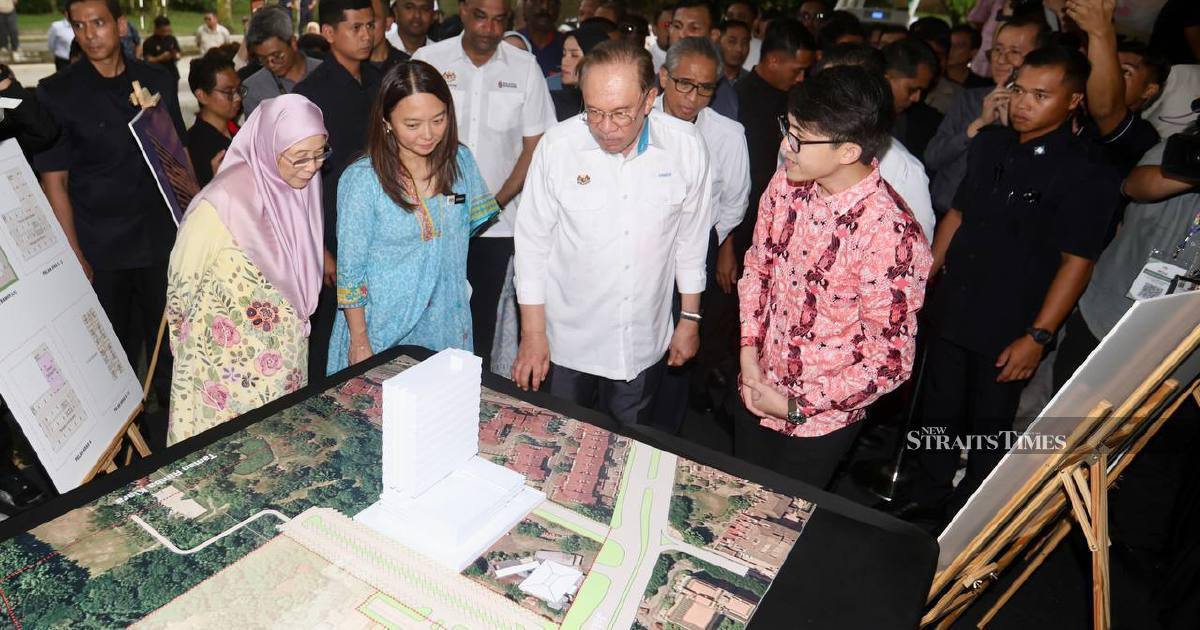
Prime Minister Datuk Seri Anwar Ibrahim has moved to counter accusations that his administration has marginalized the urban poor, declaring that the government remains committed to upholding the rights and dignity of those struggling in Malaysia's cities. The assertion comes as the government contends with ongoing scrutiny over urban development and its impact on low-income communities, particularly in the context of major infrastructure and housing projects.
Anwar's remarks represent a deliberate effort to address concerns that rapid urbanization and development projects have sidelined vulnerable populations. The assertion is significant given the heightened sensitivity surrounding urban renewal initiatives and their effects on vulnerable communities. By invoking specific projects, the Prime Minister appears intent on offering tangible examples of government commitment rather than relying on rhetorical assurances alone.
The reference to the Bukit Kiara project serves as the centerpiece of Anwar's defence, presented as concrete evidence that the administration actively considers the interests of lower-income residents during development. This framing reflects a broader strategy of pointing to on-the-ground initiatives as the ultimate measure of government sincerity on social welfare issues. The choice to highlight this particular project suggests officials view it as representative of how development can be executed while safeguarding vulnerable populations.
For Malaysia's urban poor, this question of protection during development cycles remains deeply consequential. Cities across the country continue to experience transformative growth, with new residential complexes, commercial zones, and transportation infrastructure reshaping neighbourhoods. Such changes inevitably displace existing communities or alter the character of established areas, raising fundamental questions about who benefits from development and who bears its costs.
The urban poor in Malaysia face compounding challenges that extend beyond mere displacement. Access to affordable housing remains critically constrained in major metropolitan areas, with property prices increasingly disconnected from median incomes. Public transportation, healthcare facilities, and employment opportunities often remain geographically fragmented, forcing low-income residents to navigate complex urban landscapes with limited resources. Education and skill-development access, crucial for intergenerational mobility, frequently concentrates in wealthier districts.
Government housing initiatives and affordable dwelling schemes have been variously evaluated by observers and affected communities. While programs such as public low-cost housing developments attempt to address shortages, critics argue that construction timelines frequently extend beyond official projections and that the ultimate affordability of completed units sometimes disappoints beneficiaries facing tight budgets. The Bukit Kiara initiative, whatever its specific details, presumably represents an attempt to navigate these competing demands.
Anwar's intervention reflects the political salience of urban poverty in Malaysia's electoral calculus. City constituencies represent significant voter populations, and governments ignore their material grievances at political risk. The Prime Minister's decision to publicly address the issue, rather than allowing concerns to accumulate unchecked, demonstrates awareness of this political reality. Nevertheless, the effectiveness of such statements ultimately depends on their translation into sustained policy outcomes that measurably improve living conditions.
The broader context matters considerably for understanding these claims. Malaysia has experienced significant economic challenges in recent years, including pandemic-related disruptions, inflation, and labor market fluctuations that have disproportionately affected lower-income households. Urban informal workers, gig economy participants, and those in precarious employment have faced particular hardship. Against this backdrop, government assurances about prioritizing the poor carry elevated weight, as citizens assess whether policy actually translates into improved wages, employment stability, and access to essential services.
Implementing equitable development while maintaining economic competitiveness presents genuine policy challenges. Developers require viable commercial returns to undertake projects; simultaneously, public interest demands that development benefit broader communities beyond investors. Striking this balance demands sophisticated urban planning, effective regulation, and genuine stakeholder engagement. The question for observers becomes whether the Bukit Kiara project exemplifies successful balance or represents marketing of limited protections.
Regional comparisons offer instructive context. Other Southeast Asian nations grapple with similar tensions between urban expansion and social protection. Singapore's extensive public housing system, Thailand's experience managing Bangkok's informal settlements, and Indonesia's struggles with Jakarta's urban poor each present different approaches with distinct advantages and limitations. Malaysia's approach to these questions contributes to broader regional discussions about development models and social equity.
The sustainability of Anwar's position depends substantially on continuing tangible improvements in urban living standards. Rhetoric alone, regardless of how forcefully articulated, cannot substitute for concrete advances in affordable housing supply, employment opportunities, and public service delivery. The urban poor remain acutely aware of gaps between government statements and lived reality. Future evaluation of the administration's record will ultimately rest on measurable outcomes in income levels, housing security, and access to opportunity.
Moving forward, the government's credibility on this issue will depend on demonstrating that development projects systematically incorporate mechanisms protecting vulnerable residents. This might include enforced affordable housing quotas in new developments, enhanced relocation assistance, or preferential employment provisions for displaced workers. Clear metrics measuring outcomes for affected communities, published regularly and independently audited, would strengthen public confidence that concern for the urban poor translates into actual policy.


