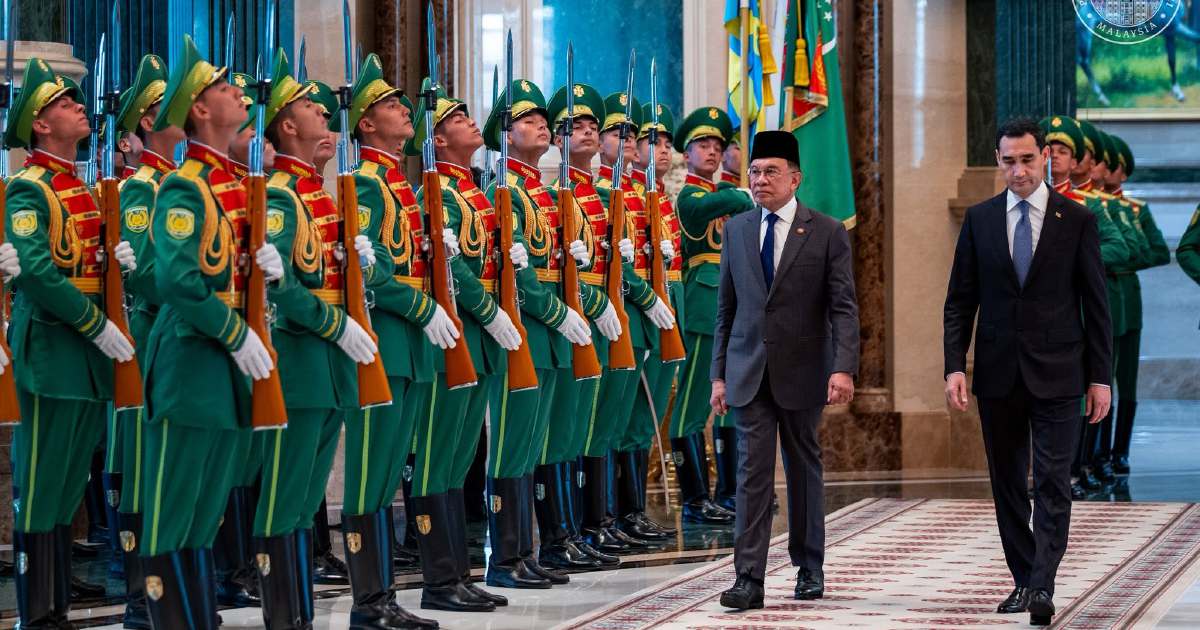
Prime Minister Datuk Seri Anwar Ibrahim arrived in Ashgabat for a ceremonial reception at the Presidential Palace, underscoring Malaysia's commitment to deepening diplomatic ties with Turkmenistan. The formal welcome marked a significant milestone in bilateral relations, representing the premier's inaugural state visit to the country since his appointment to the highest office in Malaysia's government. The pomp and ceremony of the occasion reflected the importance both nations place on strengthening their partnership across political, economic, and cultural dimensions.
Turkmenistan, a resource-rich nation strategically positioned along the historical Silk Road corridor, holds considerable importance for Malaysia's broader Central Asian engagement strategy. As a leading energy-producing country and a key player in regional connectivity initiatives, Turkmenistan offers Malaysian investors and policymakers valuable opportunities for collaboration. The visit represents an occasion for both capitals to explore avenues for cooperation that extend beyond traditional diplomatic courtesy, particularly in sectors where Malaysian expertise and Turkmenistan's resources could combine productively.
The timing of Anwar's visit reflects Malaysia's deliberate efforts to strengthen its presence across diverse regions beyond Southeast Asia. While Malaysia maintains deep institutional ties within ASEAN and the broader Indo-Pacific, the nation has increasingly recognized the strategic value of cultivating partnerships with Central Asian states. Turkmenistan's geographic location at the intersection of Europe, Asia, and the Middle East makes it a valuable diplomatic partner for regional powers seeking to expand their global influence and commercial networks.
For Malaysia, engagement with Turkmenistan carries practical implications beyond ceremonial diplomacy. The Central Asian nation possesses vast natural gas reserves and sits along critical transportation corridors linking East and West. Malaysian businesses operating in energy, manufacturing, and logistics sectors stand to benefit from enhanced government-to-government relationships that facilitate trade and investment flows. The official state visit signals to Malaysian enterprises that the government is actively working to open doors in underexplored markets.
Turkmenistan's reception of Anwar Ibrahim with full ceremonial honours also demonstrates the country's interest in cultivating relationships with diverse partners beyond its traditional spheres of influence. Central Asian nations have increasingly sought to diversify their international partnerships, recognizing that engagement with dynamic economies like Malaysia can yield mutual benefits. For Turkmenistan, closer ties with Malaysia represent an opportunity to expand economic cooperation and secure additional markets for its substantial energy production and mineral exports.
The visit carries implications for Malaysia's positioning within broader regional frameworks. As ASEAN seeks to strengthen its connectivity with Central Asia through initiatives like the East Region Cooperation framework, bilateral visits such as Anwar's to Turkmenistan contribute to laying groundwork for more comprehensive multilateral partnerships. Malaysia's proactive engagement in Central Asia complements the broader regional strategy of ensuring stable, diversified diplomatic relationships across the Asian continent.
From an economic standpoint, official visits of this caliber typically precede announcements regarding trade agreements, investment protections, or sectoral cooperation protocols. Malaysian representation in sectors ranging from palm oil and agricultural products to telecommunications and infrastructure development could find receptive partners in Turkmenistan, which is actively pursuing economic diversification beyond its traditional reliance on energy exports. The presidential reception provides an ideal platform for both governments to discuss concrete collaborative projects that serve their respective national interests.
Cultural and educational exchanges are also likely topics for discussion during high-level state visits of this nature. Malaysia's Islamic heritage and moderate interpretation of Islamic principles may hold particular appeal for Turkmenistan, which navigates its own path in balancing secular governance with Islamic identity among its population. Enhanced cooperation in Islamic education, humanitarian initiatives, and interfaith dialogue could represent valuable areas for mutual contribution and understanding.
For Malaysia's prime minister, the Turkmenistan visit forms part of a broader diplomatic strategy to reinforce Malaysia's relevance and influence across multiple regions simultaneously. By maintaining active engagement with Central Asian partners while simultaneously managing critical relationships within Southeast Asia, the Indian Ocean region, and the broader Indo-Pacific, Malaysia positions itself as a nation capable of nuanced, multidirectional diplomacy. This approach strengthens Malaysia's hand in regional and international forums where coalition-building and diverse partnerships prove increasingly valuable.
The formal reception at the Presidential Palace also serves important domestic political purposes within Malaysia. Demonstrating the government's capacity to secure high-level diplomatic courtesies and advance Malaysia's international standing helps reinforce political legitimacy at home. Citizens and businesses alike perceive prime ministerial visits that yield substantive outcomes as evidence of effective governance and strategic capability on the world stage.
As Malaysia continues its pivot towards greater engagement with Central Asian nations, this visit to Turkmenistan represents a meaningful step in that direction. The presidential reception signals mutual respect and genuine commitment from both sides to explore deeper cooperation. In the coming months, Malaysian observers should monitor announcements regarding trade missions, investment frameworks, or other concrete outcomes that translate ceremonial cordiality into tangible bilateral benefits.


