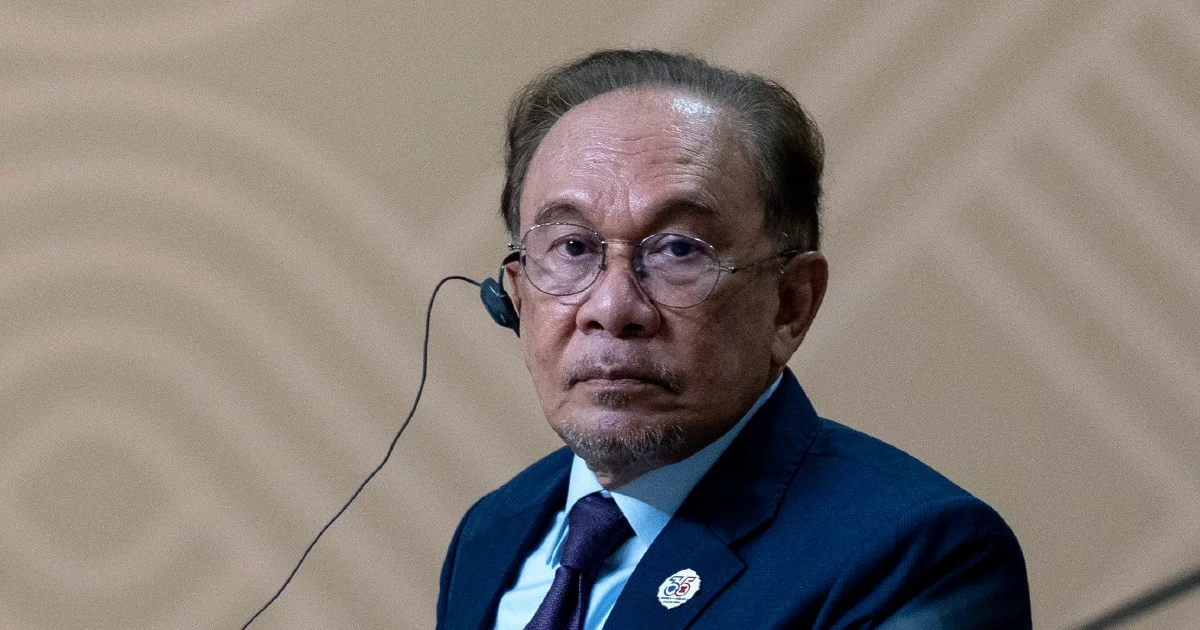
The High Court in Kuala Lumpur has granted Prime Minister Datuk Seri Anwar Ibrahim's application to be excused from appearing as a subpoenaed witness in a RM30 million civil case. The decision represents a notable victory for the Prime Minister's legal team, who had contested the requirement to appear in person before the court in connection with the substantial monetary dispute.
The suit involves allegations and claims centred around Vinod Sekhar, though the specific details of the underlying grievance and the legal positions of the contesting parties have not been made public in standard reporting channels. Civil litigation of this magnitude typically involves significant commercial or contractual matters that attract substantial financial stakes and prolonged legal proceedings. The exemption granted to Anwar Ibrahim suggests the court found merit in arguments that his continued involvement as a compelled witness would present difficulties or that alternative evidence could adequately address the matters at hand.
Subpoena requirements represent one of the most significant intrusions into the schedules of public figures, particularly those occupying the highest executive offices. By law, ordinary citizens cannot simply decline to testify when properly summoned, as doing so would undermine the judicial process and the pursuit of justice. However, courts possess discretion to grant relief in circumstances where the burden of testimony falls disproportionately on individuals with essential public duties, particularly when their absence might compromise governmental operations or when written evidence could serve equivalently.
The Prime Minister's legal representation would have needed to present compelling arguments to the court regarding why his attendance would prove problematic or unnecessary. Such arguments typically emphasize the competing demands on a sitting Prime Minister's time, the continuity of national governance, and the availability of documentary evidence or other witness testimony that could cover the substance of his potential evidence. Malaysian courts have increasingly recognised that blanket immunity should not extend to high office holders, yet proportionality in the administration of justice remains an important judicial consideration.
This decision arrives against a backdrop of sustained legal proceedings that have periodically intersected with Malaysia's political landscape over recent years. The case appears to represent a purely civil matter rather than any criminal investigation or political confrontation, which may have influenced the court's assessment of the necessity for the Prime Minister's personal participation. The distinction between civil and criminal proceedings matters considerably, as criminal trials generally place greater emphasis on the appearance of justice and the direct confrontation of witnesses.
For Malaysian legal practitioners, the ruling potentially establishes or reinforces precedent regarding the circumstances under which sitting office holders might obtain relief from witness obligations. This has implications beyond the immediate dispute, as it sets benchmarks for future cases involving senior government figures. Courts must balance the abstract principle that no one stands above the law with the practical reality that the nation's chief executive cannot indefinitely absent himself from his responsibilities.
The RM30 million figure underscores the commercial significance of the dispute at issue. Cases involving such substantial sums typically involve experienced legal counsel on both sides and often extend through multiple appeal stages before final resolution. The litigation landscape in Malaysia has become increasingly sophisticated, with parties frequently pursuing parallel strategies involving applications to exempt key witnesses, motions to compel production of documents, and preliminary jurisdictional challenges that can protract proceedings considerably.
Vinod Sekhar's name prominently features in the case caption, though his exact role—whether as plaintiff, defendant, or interested party—remains unclear from available reports. The identity of other parties and the nature of the relationship between them and the Prime Minister would provide essential context for understanding how this case arose and why Anwar Ibrahim's testimony was initially sought. Commercial disputes sometimes arise from business relationships that predate an individual's assumption of political office, creating unusual situations where sitting officials find themselves entangled in civil litigation.
The High Court's discretion in granting this application reflects judicial appreciation for the practical constraints governing high office. Forcing a Prime Minister to devote extended court time to witness testimony during critical periods of governance could theoretically prejudice the nation's interests. However, permitting blanket exemptions would create concerning precedent suggesting that access to justice might depend on an individual's political position, a principle fundamentally at odds with rule of law principles that Malaysia's courts are tasked with upholding.
For Malaysian legal observers, this decision merits consideration alongside other recent judgments addressing the intersection of high office and ordinary legal obligations. The courts have consistently maintained that no individual, regardless of rank, enjoys absolute immunity from the judicial process. Yet the application of this principle in practice often requires nuanced balancing of competing interests and practical realities, as this case illustrates. Going forward, parties in similar disputes involving sitting officials may cite this precedent when seeking relief from compulsory appearance requirements.


