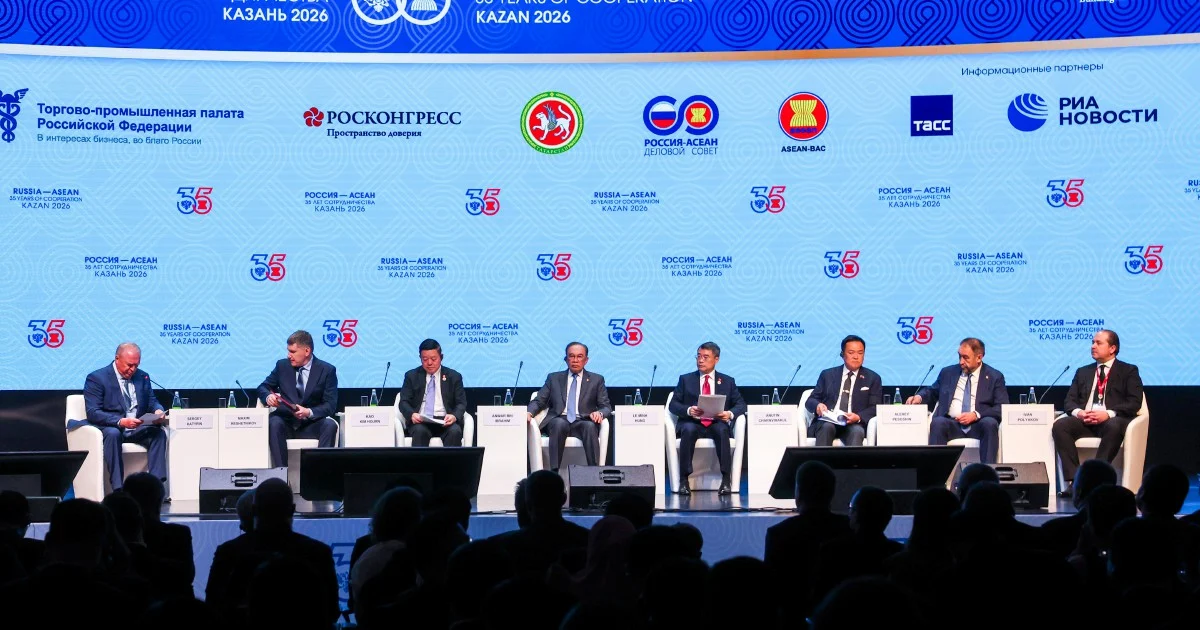
Prime Minister Datuk Seri Anwar Ibrahim has called for a significant expansion of multilateral cooperation between Asean and Russia, emphasising the mutual benefits of strengthened ties in critical economic and technological domains. Speaking in Kazan, Anwar highlighted the urgency of broadening engagement between the 10-member regional bloc and Moscow across sectors vital to both parties' development and strategic interests.
Food security has emerged as a central pillar in Anwar's vision for enhanced Asean-Russia relations. The Malaysian premier's emphasis on this sector reflects growing global concerns about supply chain vulnerabilities exposed during recent geopolitical disruptions. Russia's substantial agricultural capacity and grain exports, combined with Asean's position as a major importer and processor of food commodities, suggest complementary economic interests. For Southeast Asian nations grappling with demographic pressures and limited arable land, securing diversified agricultural sourcing from reliable partners presents a strategic imperative that transcends purely commercial considerations.
Energy cooperation stands equally prominent in the proposed agenda. Russia's vast hydrocarbon reserves and energy expertise align with Asean's rising consumption demands as economies industrialise. Traditional oil and gas partnerships could be complemented by collaboration on renewable energy transition, a domain where both regions face technological and investment challenges. Malaysia, Vietnam, and Indonesia's significant energy sectors would particularly benefit from expanded technological exchange and joint ventures that harness Russian expertise in resource management and extraction.
The inclusion of advanced manufacturing signals Anwar's recognition that Asean must graduate beyond labour-intensive production models. Russian innovation in specialised manufacturing, coupled with the region's supply chain ecosystem and competitive labour costs, could create synergies attracting investment and fostering industrial upgrading. This reflects a broader regional pivot toward higher-value-added production, essential for maintaining competitiveness as geopolitical and economic pressures reshape global manufacturing networks.
Digital technologies represent perhaps the most forward-looking dimension of Anwar's proposal. Both Asean and Russia possess substantial tech talent pools and innovative capacities. Expanded cooperation in artificial intelligence, cybersecurity, software development, and digital infrastructure could address shared vulnerabilities in the increasingly digitalised global economy. For Malaysia specifically, deeper technology partnerships could accelerate its aspirations to position Kuala Lumpur as a regional tech hub and knowledge economy centre.
Educational exchange deserves particular attention as a foundation for sustained cooperation. Anwar's inclusion of academia and research suggests understanding that lasting partnerships require human capital development and cross-cultural familiarity. Student mobility, research collaborations, and institutional twinning arrangements between Malaysian and Russian universities would create lasting networks of professionals with mutual understanding, essential for navigating future geopolitical complexities.
The timing of Anwar's appeal carries geopolitical significance. Asean maintains a carefully calibrated non-aligned posture amid great power competition, and deepened Russia engagement signals the bloc's commitment to balanced relationships beyond Western-centric frameworks. This strategic diversification reflects Asean's traditional principle of engaging all major powers while preserving autonomy. Russia's earlier pivot toward Asian partners, partly driven by Western sanctions, creates overlapping interests in strengthening alternative partnerships outside conventional Western structures.
For Malaysia particularly, expanded Asean-Russia ties offer diplomatic leverage and economic opportunities. As a regional economic anchor with significant trade networks, Malaysia could position itself as a bridge facilitating wider regional-Russian collaboration. Enhanced bilateral relationships would complement Malaysia's broader foreign policy of maintaining strategic flexibility and maximising economic returns from multiple partnerships.
However, realising Anwar's vision requires navigating considerable complexities. Geopolitical divisions within Asean regarding Russia's regional activities and international standing could complicate consensus-based decision-making. Additionally, practical cooperation demands establishing institutional frameworks, addressing regulatory harmonisation, and building trust—factors requiring sustained diplomatic effort beyond rhetorical commitment.
The economic dimensions remain compelling despite geopolitical headwinds. Trade volumes between Asean and Russia, though fluctuating, reflect untapped potential in sectors Anwar identified. Investment in physical and digital infrastructure, joint ventures in energy transition, and knowledge exchange in advanced sectors could generate mutual prosperity. Southeast Asian nations seeking alternatives to over-reliance on Chinese supply chains or Western technology ecosystems would benefit from diversified partnerships including Russia.
Anwar's articulation of cooperation priorities suggests Malaysia and Asean recognise that regional prosperity depends on pragmatic engagement with diverse partners, independent of ideological positioning. The emphasis on food security and energy reflects existential regional concerns, while technology and education investment signal forward-looking ambitions. Whether these proposals translate into concrete cooperative frameworks and measurable results will depend on follow-up diplomatic efforts and institutional development. Nevertheless, Anwar's Kazan statement reflects a significant regional interest in recalibrating Asean-Russia relations around mutual economic and strategic interests.