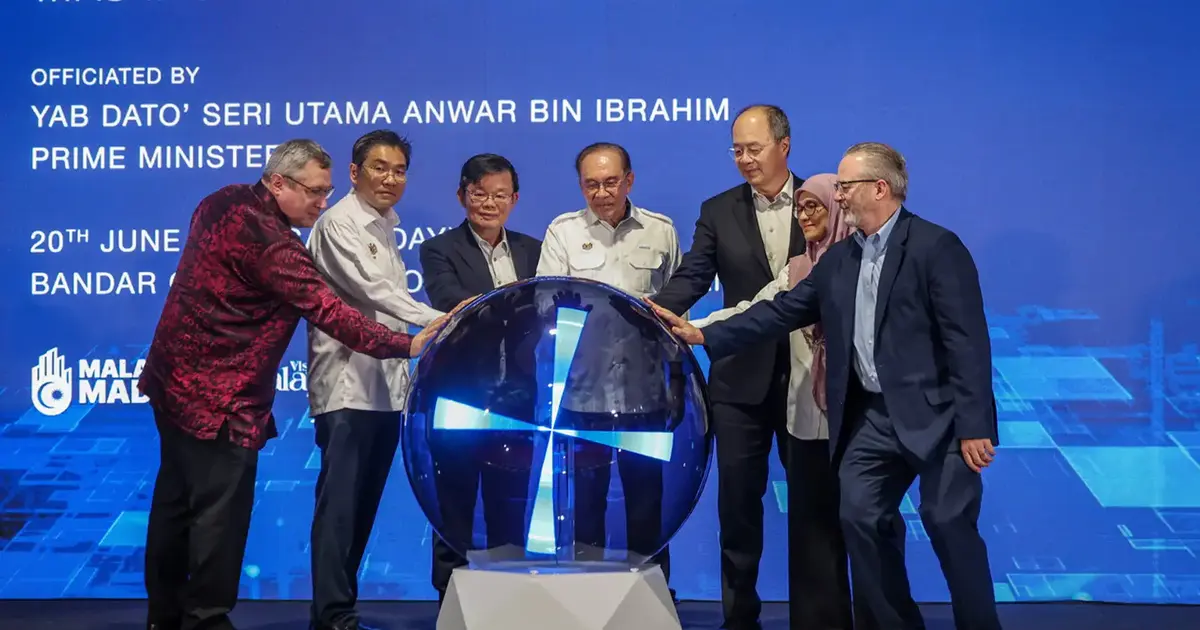
Prime Minister Anwar Ibrahim has moved to strengthen Malaysia's position in the global semiconductor sector by appointing an adviser tasked with deepening collaboration between industry leaders and universities. The appointment reflects growing recognition within government circles that closer ties between academic research and commercial semiconductor manufacturing could accelerate innovation and talent development across the nation's chip-making ecosystem.
Anwar emphasised that the decision to establish this advisory role would not place additional financial burden on the federal budget, addressing fiscal concerns that often accompany new government positions. This cost-neutral approach suggests the adviser will likely work within existing departmental structures or draw from private sector secondment arrangements, a model increasingly favoured by governments seeking to modernise without inflating public sector expenditure.
The timing of this appointment carries particular significance for Malaysia's technology sector. The country has long positioned itself as a critical node in global semiconductor supply chains, yet persistent gaps between what universities teach and what industry actually requires have hampered the development of a robust domestic innovation pipeline. By formalising an advisory channel, the government signals intent to address these structural misalignments that have historically limited Malaysia's capacity to move beyond assembly and testing operations toward higher-value design and fabrication activities.
Semiconductor industry observers note that successful collaborations elsewhere—particularly in Taiwan and South Korea—have relied on dedicated intermediaries who understand both academic incentive structures and commercial imperatives. These brokers facilitate everything from joint research agreements to internship placements and curriculum development. Malaysia's adviser would presumably undertake similar functions, helping universities align research priorities with industry roadmaps while ensuring companies can recruit adequately trained graduates.
The semiconductor sector represents one of Malaysia's most economically significant industries, contributing substantially to export revenues and manufacturing employment. However, global supply chain diversification following recent geopolitical tensions and pandemic-related disruptions has prompted major chipmakers to evaluate alternative production hubs. Strengthening the domestic talent pipeline and innovation ecosystem could position Malaysia more competitively when multinational corporations reassess their manufacturing footprints.
Universities across Malaysia have long expressed frustration with the disconnect between their research capabilities and practical industry application. Institutions hosting semiconductor research programs often struggle to commercialise findings or struggle to justify academic projects when industry partners need rapid solutions to immediate production challenges. An adviser occupying a bridging role could help negotiate these competing timescales and expectations, potentially unlocking collaborative research funding and establishing clearer pathways for translating academic discoveries into scalable technologies.
The appointment also reflects broader government ambitions to position Malaysia as a knowledge-based economy rather than solely a manufacturing hub. Semiconductor fabrication increasingly depends on sophisticated process engineering, materials science, and design expertise—domains where universities can meaningfully contribute. By facilitating stronger industry-academic ties, the government may facilitate a gradual shift toward higher-margin activities that generate greater value-added employment.
Regional competition for semiconductor sector dominance intensifies as neighbours invest heavily in upgrading their own technology capabilities and attracting foreign direct investment. Thailand, Vietnam, and the Philippines all pursue semiconductor manufacturing expansion, while Indonesia develops its electronics manufacturing base. Malaysia's ability to differentiate itself partly hinges on cultivating exceptional human capital through effective university-industry partnerships. The adviser role, however modest in structural terms, signals commitment to this differentiation strategy.
Implementation challenges will likely test the adviser's effectiveness. Universities operate under different reward systems than corporations; academic success often prioritises publication and fundamental research while industry demands rapid commercialisation and proprietary innovation. The adviser must navigate these conflicting incentive structures while building trust among sceptical stakeholders on both sides. Success requires not merely brokering occasional conversations but institutionalising mechanisms for sustained engagement.
Funding mechanisms for collaborative research present another consideration. While the adviser position itself incurs no extra cost, meaningful industry-university partnerships typically require dedicated project funding. The government may need to explore mechanisms—tax incentives for corporate research funding, matching grants for university projects, or innovation vouchers for small firms—that encourage collaboration without direct budget expansion. The adviser's role could include identifying and leveraging such indirect support mechanisms.
International experience demonstrates that adviser positions can yield significant returns when backed by genuine institutional commitment. South Korea's government-led initiatives to connect universities with semiconductor firms helped establish Samsung's research ecosystem. Taiwan's industry-academic partnerships accelerated TSMC's technological leadership. Malaysia's appointment, if adequately resourced and politically supported, could catalyse similar ecosystem development, though outcomes require patience and sustained attention beyond individual government terms.
The announcement positions Malaysia's semiconductor ambitions as more deliberate and strategically considered than purely reactive industrial policy. By addressing human capital pipelines and innovation infrastructure alongside manufacturing capacity, policymakers demonstrate understanding that competitive advantage in sophisticated technology sectors depends on cultivating comprehensive ecosystems. The adviser becomes a symbolic and practical embodiment of this more sophisticated approach to sectoral development.


