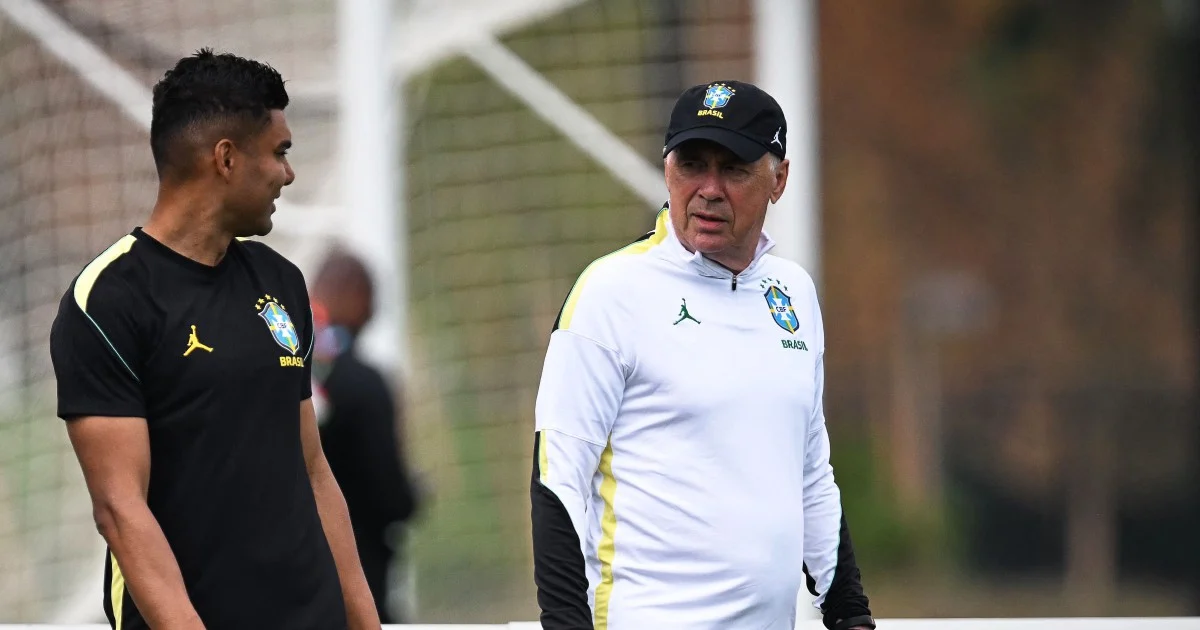
Brazil's World Cup campaign got off to a concerning start when they could only manage a 1-1 draw against Morocco, but their experienced manager Carlo Ancelotti is treating the stumble as a learning moment rather than a crisis point. The Italian tactician's measured response to the underwhelming opening performance reflects his vast experience managing elite teams across Europe's top competitions, where he has cultivated the mental fortitude to absorb setbacks without overreacting. Speaking ahead of Friday's Group C encounter with Haiti in Philadelphia, Ancelotti outlined his belief that the Haitian side presents an ideal opportunity for Brazil to rectify the tactical deficiencies that became apparent during their opening fixture.
The Morocco draw exposed vulnerabilities in Brazil's defensive structure that Ancelotti will have meticulously analysed during preparation sessions. Rather than attributing the result to bad luck or circumstantial factors, the Brazilian national team's coaching staff has identified specific areas requiring adjustment. The match against Haiti, traditionally a less technically gifted opponent compared to Morocco, provides the strategic window that top-tier teams need when recalibrating their approach midway through the group stage. This is not unusual in tournament football, where opening games often serve as diagnostic tools for elite squads seeking to establish dominant patterns before facing stronger adversaries.
Ancelotti's calm demeanour sends an important psychological message to his squad, preventing the kind of panic that can undermine team cohesion and confidence. His track record managing clubs including Real Madrid, Bayern Munich, and AC Milan demonstrates his ability to maintain composure when immediate results disappoint. The Brazilian dressing room will take reassurance from their manager's composed messaging, understanding that one opening draw, while not ideal, does not fundamentally alter their tournament prospects. This is particularly crucial for a nation accustomed to viewing themselves as World Cup favourites, where heightened expectations can sometimes translate into pressure that hinders rather than galvanises performance.
The tactical lessons from the Morocco encounter are now being translated into concrete adjustments for Friday's clash. Ancelotti will have identified whether the defensive vulnerabilities stemmed from individual positioning errors, organisational lapses, or structural weaknesses inherent to their formation. Haiti, while representing a significant step down in technical quality, offers the perfect calibration ground where Brazil can implement corrections and build the rhythm and cohesion essential for knockout football. The Haitian team's comparative lack of possession-based sophistication means Brazil should have greater control, allowing them to operate their preferred patterns of play without the constant defensive transition challenges that Morocco presented.
From a broader group dynamics perspective, the Morocco result actually works in Brazil's favour from a morale standpoint. The draw means that neither team has established an early advantage, keeping Group C wide open. Haiti's positioning as the presumed weakest team in the cluster makes Friday's encounter critical for both Brazil and Morocco—victory would place either team in a commanding position with one group game remaining. For Brazil specifically, a convincing win against Haiti would simultaneously restore internal confidence whilst simultaneously applying pressure on Morocco ahead of their respective final group matches. Ancelotti appears cognisant of this mathematical reality, viewing Haiti not as a mere warm-up but as a genuine tournament-defining fixture.
The geographic location in Philadelphia, within the United States, adds logistical and psychological dimensions to Brazil's campaign. Travel fatigue, unfamiliar conditions, and the adjustment required when operating in a different time zone can all impact performance, yet Ancelotti's experience managing international campaigns across multiple continents suggests he will have accounted for these variables in his preparation planning. Brazil's conditioning staff typically excel at managing such complications, and a coach of Ancelotti's calibre leverages these marginal gains that collectively determine tournament outcomes. The team's adjustment between the Morocco encounter and Haiti fixture will reveal whether they possess the adaptive capacity necessary for sustained success.
Haiti represents a qualitatively different proposition to Morocco in terms of technical execution, though the unpredictability inherent in knockout-stage tournaments means complacency poses a legitimate danger. Ancelotti's insistence on proper focus and preparation suggests he is unlikely to allow his squad to approach Friday's match with anything less than complete professionalism. The historical precedent of favoured teams stumbling against supposedly inferior opponents serves as a cautionary tale within the international football community, and a manager of Ancelotti's experience will ensure his players maintain appropriate respect for their opponents.
Looking forward, Brazil's trajectory through the group stage increasingly hinges on their ability to convert superior quality into consistent victories. The Morocco draw confirmed they are vulnerable despite their pedigree, a realisation that could paradoxically strengthen rather than weaken their resolve. Ancelotti's refusal to panic, combined with his evident confidence in his squad's capacity to learn and adapt, suggests Brazil retain the mental and tactical resources necessary to navigate their World Cup challenge. Friday's test against Haiti will determine whether the Brazilian coach's measured optimism translates into the kind of dominant performance that serves as both confidence-builder and statement of tournament intent.


