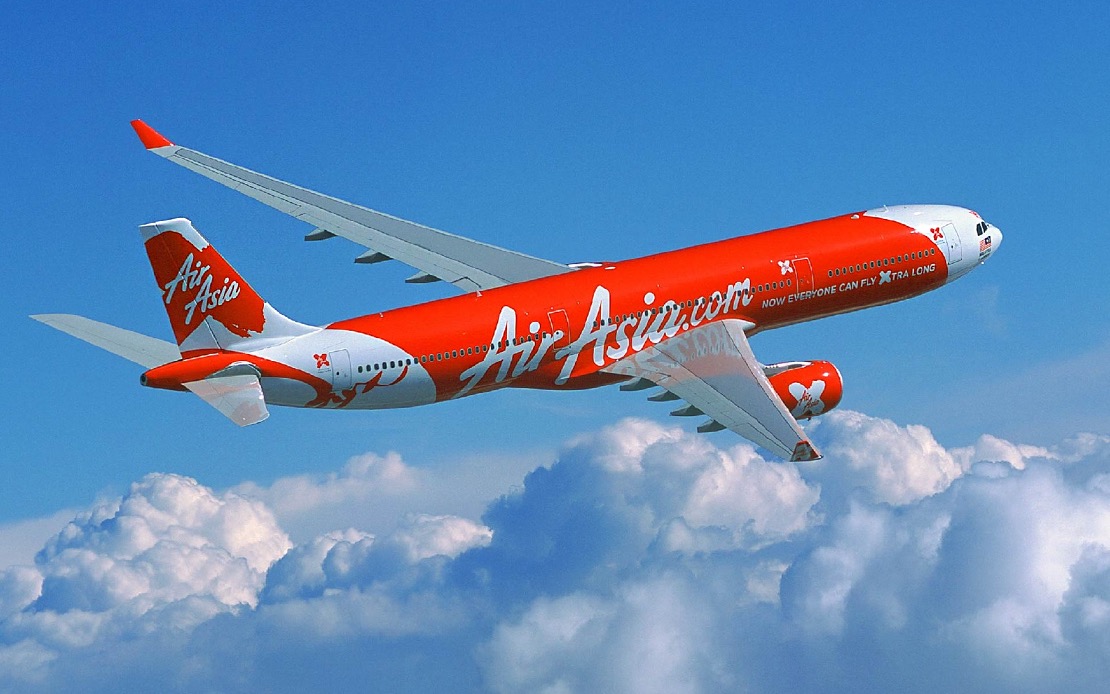
AirAsia has commenced direct flights between Jakarta, Indonesia, and Kota Bharu, marking a strategic addition to Malaysia's regional aviation network and positioning the East Coast state as a priority destination for the Visit Malaysia 2026 campaign. The inaugural flight, designated AK2354 and operating a 180-seat Airbus A320 aircraft, touched down at Sultan Ismail Petra Airport on Tuesday afternoon with 117 passengers aboard, achieving a load factor of approximately 63 per cent on its debut service.
The passenger manifest reflected the route's cross-border appeal, comprising Indonesian visitors, tourists from Thailand and the Philippines, as well as Malaysian nationals returning home. Tourism Malaysia officials have characterised the launch as a pivotal moment in expanding Malaysia's connectivity with one of its most important source markets for international arrivals. The direct connection eliminates the need for onward transfers, a friction point that had previously discouraged some travellers from venturing to Kelantan despite its significant cultural and natural attractions.
Kelantan's tourism profile stands to benefit substantially from improved accessibility. The state possesses distinctive assets that appeal to regional visitors: Pasar Siti Khadijah, a historic central market; the architecturally significant Kampung Laut Mosque; Kampung Kraftangan, a handicraft village showcasing traditional Malaysian artisanship; and Stong Geopark, a geological formation of regional significance. These assets have long attracted specialist travellers but have remained undersupported by adequate air connectivity from major neighbouring cities.
The route's strategic importance extends beyond leisure tourism. Kelantan tourism officials envision Kota Bharu serving as a gateway and distribution hub for travellers destined for southern Thailand's coastal regions and the East Coast's resort islands. This hub function could generate secondary economic benefits through accommodation upgrades, ground transportation, and food services as transit passengers spend time in the city between connections. The positioning of Kota Bharu as a regional interchange point could unlock economic activity across the broader tourism supply chain rather than merely direct visitor spending.
Health tourism represents an underexploited dimension that the new service is expected to activate. Indonesia, with a population exceeding 270 million, represents a substantial market for medical tourism, particularly for procedures available in Malaysia's specialised healthcare facilities. Patients and accompanying family members travelling for treatment require convenient airport access, and the direct service removes logistical barriers that previously channelled Indonesian medical tourists toward Kuala Lumpur exclusively.
Tourism Malaysia's April 2026 statistics illustrate the scale of existing traffic between Malaysia and Indonesia, with 634 weekly flights operating across the bilateral network, offering total weekly capacity exceeding 114,806 seats. The Jakarta-Kota Bharu addition, whilst representing a modest increment to aggregate capacity, establishes critical frequency to a previously underserved market pair. The significance lies not in volume alone but in directness: eliminating transfers reduces journey time and increases attractiveness to leisure travellers with limited time windows.
AirAsia's decision to introduce this service reflects the airline's broader commercial strategy of connecting secondary cities to major regional hubs, a model that drives traffic to underutilised airports and distributes tourism revenues to communities beyond Kuala Lumpur. Datuk Captain Fareh Mazputra's commitment to serving neglected destinations articulates a business philosophy that aligns commercial interest with regional development objectives, though sustainability of the service depends on load factors improving beyond the inaugural flight's 63 per cent achieved level.
The Visit Malaysia 2026 campaign provides the temporal context driving promotional intensity around this route launch. Government tourism initiatives establish target markets and coordinate messaging across aviation, hospitality, and destination marketing functions. Indonesia's classification as a priority market reflects both geographic proximity and substantial outbound travel capacity. The campaign's success depends partly on infrastructure like direct connectivity, which reduces travel friction and positions Malaysia competitively against alternative regional destinations.
People-to-people connectivity, emphasised by Tourism Malaysia's director-general Mohd Amirul Rizal Abdul Rahim, extends beyond transactional tourism economics. Direct flights strengthen social and cultural ties between Malaysian and Indonesian communities, facilitating family visits, business networking, and cultural exchange. These less-quantifiable dimensions of aviation connectivity often generate lasting relationships that sustain tourism flows independent of specific promotional campaigns and create goodwill that transcends commercial transactions.
The route's success trajectory remains contingent on several factors. Load factors must stabilise at commercially viable levels, likely requiring coordinated marketing efforts targeting Indonesian travel agents and online distribution platforms. Kelantan's hospitality sector, including accommodation and food service providers, must scale capacity to accommodate increased arrivals, an investment dependent on confidence that the service will persist beyond initial launch enthusiasm. Ground transportation and attraction management similarly require infrastructure upgrades to accommodate higher visitor volumes.
Regionally, the Jakarta-Kota Bharu service exemplifies how secondary route development can rebalance tourism distribution within Malaysia. The East Coast has historically received modest international visitation relative to its cultural richness, with Kuala Lumpur, Penang, and resort destinations absorbing disproportionate visitor volumes and associated spending. Dedicated connectivity from major regional cities creates competitive alternatives to established circuits, potentially driving tourism sector employment and investment eastward.
For Indonesian visitors, the direct service removes a significant barrier to experiencing Malaysia's cultural diversity. Many potential travellers perceive Malaysia as synonymous with Kuala Lumpur and Penang, remaining unaware of Kelantan's distinctive heritage. Direct flights serve as a marketing mechanism in themselves, signalling to potential passengers that these destinations are accessible and worthy of dedicated air service. The psychological impact of directness on destination consideration often exceeds the practical time savings involved.
Looking forward, the route's viability will shape aviation development across Malaysia's secondary airports. If the Jakarta-Kota Bharu service sustains adequate passenger volumes and generates meaningful economic benefit to Kelantan, international carriers will view similar connections from other regional cities to secondary Malaysian destinations as commercially justified. Conversely, if the service struggles, it may dampen airline appetite for comparable routes, potentially limiting alternative cities' connectivity aspirations. The launch thus carries significance extending well beyond Kelantan's immediate tourism sector.