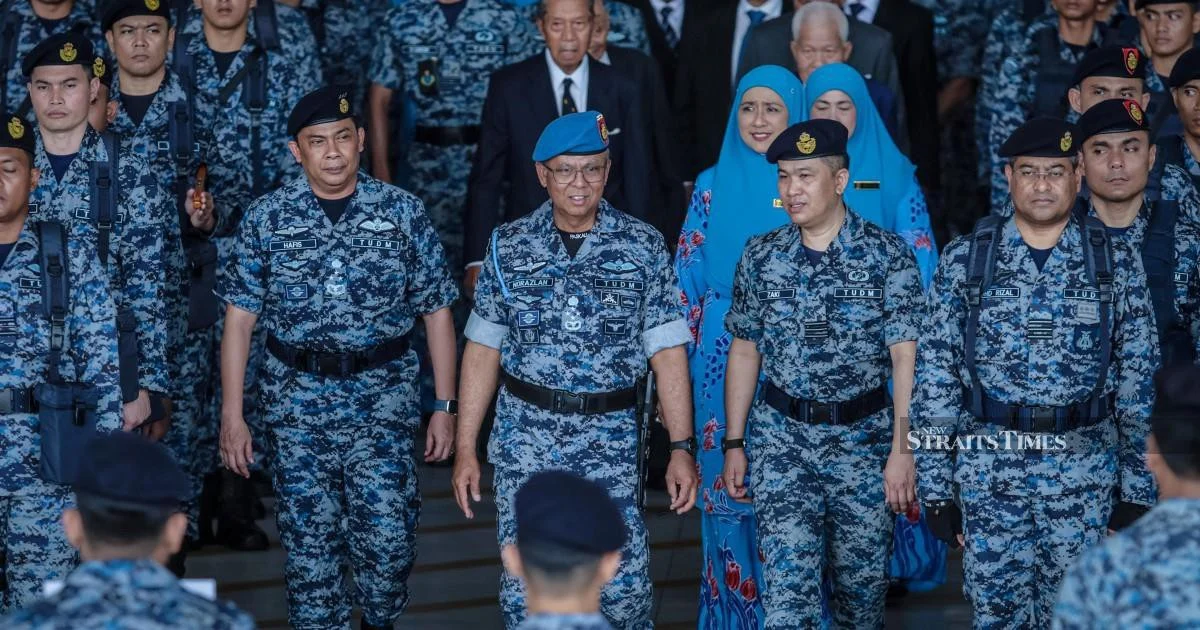
Protecting Malaysia's vast maritime domain through robust air power capabilities has become increasingly vital as geopolitical tensions reshape Southeast Asia's security landscape, according to General Tan Sri Muhamad Norazlan Aris, the chief of the Royal Malaysian Air Force. Speaking in Subang, the commander underscored how evolving regional dynamics demand enhanced aerial coverage and surveillance capacity to safeguard the country's strategic sea lanes, which are essential conduits for international trade and national economic prosperity.
The RMAF chief's statement reflects broader concerns within Malaysian defence circles about the nation's capacity to monitor and protect one of the world's busiest shipping corridors. Malaysia's coastlines and exclusive economic zones encompass critical waterways through which trillions of dollars in annual global commerce flow, making their security a matter of national significance. The emphasis on air power comes as the country faces mounting pressure to demonstrate military presence across its territorial waters and expand its surveillance capabilities in contested maritime regions.
Geopolitical shifts across the Indo-Pacific have created new imperatives for Southeast Asian nations to strengthen their naval and aerial defences. Rising tensions involving major powers, competing maritime claims, and increased military activity in the region have prompted renewed focus on maritime security strategies. For Malaysia, which lies at the intersection of crucial shipping routes and regional flashpoints, investing in air capabilities represents a pragmatic response to these evolving security circumstances. The RMAF's assessment aligns with regional trends where air forces have become central to maritime surveillance and rapid response operations.
The strategic importance of Malaysia's maritime zones extends beyond immediate security concerns. The country's waters serve as critical passage routes for international shipping, including energy supplies destined for regional economies and beyond. Any disruption to these corridors would carry significant economic consequences not only for Malaysia but for the broader region. The ability to monitor, patrol, and defend these routes requires sophisticated aerial reconnaissance systems, fighter aircraft, and command-and-control infrastructure that can operate continuously across Malaysia's expansive maritime domain.
Air power offers distinct operational advantages compared to exclusively surface-based maritime defence. Aircraft can cover vast distances rapidly, provide real-time intelligence through advanced sensor systems, and respond quickly to emerging threats. Modern surveillance aircraft equipped with sophisticated radar and communications technology can monitor maritime activity across extensive areas, offering situational awareness that enhances response capabilities. This surveillance dimension proves particularly valuable for Malaysia, whose maritime zones encompass areas requiring coverage of thousands of square kilometres with limited surface assets.
The RMAF chief's emphasis also reflects Malaysia's historical experience navigating complex maritime security challenges. The country has grappled with piracy, smuggling, and unauthorised maritime incursions that require sustained aerial patrol and monitoring capacity. Beyond these traditional maritime security concerns, the current geopolitical environment introduces additional layers of complexity, from territorial disputes to freedom of navigation issues that demand continuous aerial presence and capability demonstration. Enhanced air force capabilities enable Malaysia to project authority across its maritime domain and respond swiftly to potential security incidents.
Investment in air capabilities carries significant budgetary implications for a nation balancing multiple defence priorities. Malaysia must weigh expenditures on combat aircraft, surveillance platforms, and supporting infrastructure against other military needs and broader fiscal constraints. The defence procurement decisions made by Malaysian policymakers will shape the country's capacity to fulfil the security requirements outlined by the RMAF chief. Strategic choices regarding aircraft acquisitions, maintenance systems, and personnel training will determine whether Malaysia can sustain effective air-based maritime protection over the coming decades.
The regional context surrounding the RMAF chief's remarks extends beyond Malaysia's bilateral security concerns. Southeast Asia's collective maritime security challenges demand coordinated responses that leverage each nation's particular strengths. Increased air force cooperation between ASEAN members, combined with partnerships with external security partners, could enhance overall regional maritime security. Information sharing regarding maritime incidents, coordinated surveillance operations, and joint exercises represent avenues through which aerial capabilities can contribute to broader regional stability and confidence-building measures.
Technological advancement plays an increasingly central role in determining effective air power capabilities. Modern surveillance systems, advanced fighter aircraft, and sophisticated command infrastructure require ongoing investment and technical expertise. Malaysia's defence establishment must remain abreast of evolving aviation technology to maintain credible deterrence and operational effectiveness. This technological dimension extends beyond hardware acquisition to encompass pilot training, maintenance capabilities, and integration with allied defence systems, all critical factors determining whether air power investments translate into genuine protective capacity.
The RMAF chief's statement ultimately reflects a fundamental reality about modern maritime security: nations cannot adequately protect expansive coastal zones and offshore areas through surface forces alone. Air power provides the speed, range, and flexibility necessary for effective maritime surveillance and defence. For Malaysia, whose geographic position and economic dependence on maritime trade create pronounced vulnerabilities, developing and maintaining robust air force capabilities represents a strategic imperative. The coming years will reveal whether Malaysian policymakers translate this recognised importance into sufficient investment and institutional commitment to support the RMAF's operational requirements.


