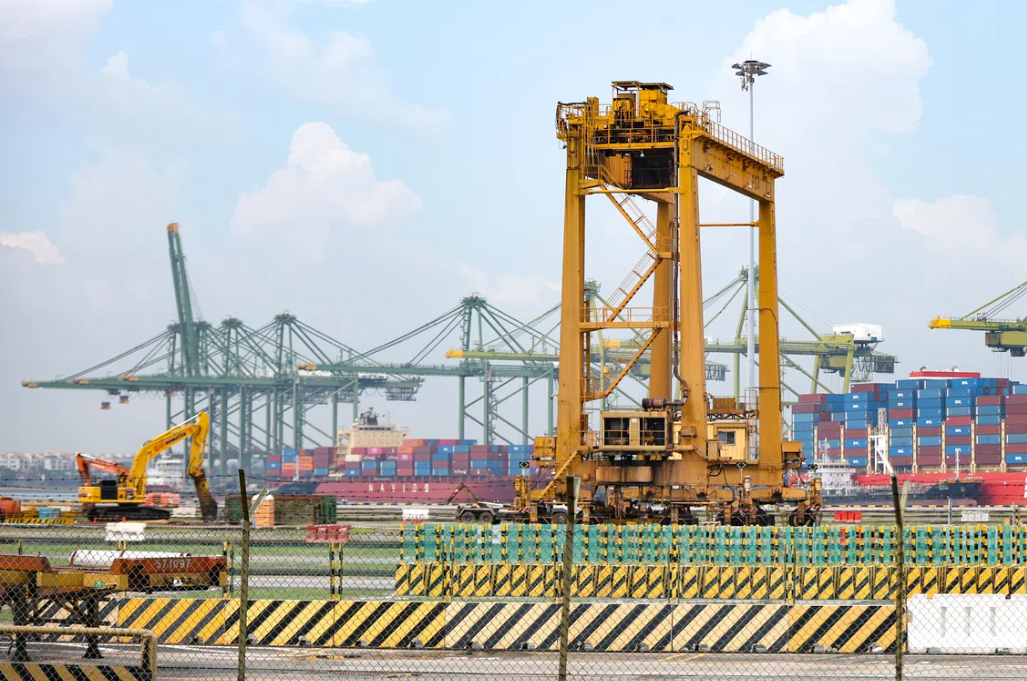
The Trump administration has singled out Singapore alongside 39 other nations as vulnerable points in what it describes as a coordinated scheme by Chinese exporters to evade American tariffs through strategic rerouting. In a report released in mid-August titled "The Great Transshipment Scam", the White House documented how goods manufactured in China are being sent through intermediary countries with lower tariff rates, their origins concealed, before reaching the United States market under falsified national identities.
The transshipment strategy represents a significant erosion of Washington's tariff architecture, which has been a cornerstone of Trump's trade policy since 2018. By channelling products through jurisdictions with more favourable trade terms, exporters effectively neutralise the protective duties imposed on direct Chinese imports. The administration argues this systematic avoidance has fundamentally undermined the intended impact of tariffs meant to protect American manufacturers and reshape global supply chains. What makes this practice particularly vexing for US officials is its apparent scale and sophistication—suggesting coordination rather than isolated instances of regulatory non-compliance.
According to the White House assessment, tariff-evading transshipments may have deprived the United States Treasury of between $40 billion and $303 billion in customs revenue. These figures, drawn from government and private-sector analytical work, represent an enormous range reflecting genuine uncertainty about the practice's true extent. The disparity underscores how difficult it has proven to measure clandestine trade flows, even with advanced monitoring tools. This revenue loss translates into foregone funds that might have supported American workers or reduced the federal deficit, making the issue simultaneously a trade policy matter and a fiscal concern for Washington policymakers.
The White House report reveals a clear pattern of supply-chain reorganisation following the imposition of 2018 tariffs on Chinese goods. As China's direct share of American imports contracted visibly, exports from a specific cluster of third countries surged proportionally. Whilst the administration acknowledges that some trade reallocation reflects legitimate business decisions—new factories, shifted sourcing, genuine diversification—the timing and magnitude of these shifts warrant investigation into whether rerouting became systematic. The report argues that the evidence, though not conclusive, suggests deliberate transshipment rather than organic economic adjustment.
The 40 flagged economies have been stratified into three risk tiers reflecting their roles and vulnerabilities within the alleged evasion architecture. Tier 1 comprises wealthy, developed nations including Canada, the European Union, India, Israel, Japan and Taiwan, where transshipment risks are woven into broader, legitimate trade flows making detection inherently difficult. Tier 2 encompasses countries with substantial economic ties to China such as Brazil, Indonesia, Malaysia, Thailand, Turkey and Vietnam, where Chinese investment and supply chains create natural conduits for goods movement. Singapore occupies Tier 3, grouped with Cambodia, Laos, Myanmar and the Philippines—smaller economies described as "opportunistic targets" possessing particular advantages that make them attractive to illicit rerouting schemes.
The White House characterised Tier 3 nations as possessing specific structural weaknesses that render them susceptible to Chinese exploitation: minimal labour costs, free economic zones, accessible ports and border facilities, bonded warehousing capacity, niche manufacturing capabilities, and crucially, limited customs enforcement capacity. Singapore, despite its renowned regulatory sophistication, was nevertheless included, presumably reflecting its role as a major transshipment hub and financial centre. The report suggests that China-linked exporters may establish both limited production activity and logistics operations in these jurisdictions, creating an appearance of value-added activity whilst primarily functioning as rebranding centres.
Beyond immediate trade concerns, the White House identified a geopolitical dimension to the transshipment phenomenon. As smaller economies increasingly depend on Chinese inputs, logistics infrastructure and capital investment, Beijing accumulates commercial leverage and potential geopolitical influence. This dynamic raises stakes beyond tariff evasion, suggesting that Chinese firms' integration into third-country supply chains represents a form of economic penetration with longer-term strategic implications. For Southeast Asian nations particularly, this dependency could eventually translate into political pressure or constrained policy autonomy in disputes with China.
The Trump administration announced deployment of artificial intelligence-powered systems branded the "Detective Border" to identify and intercept illegally transshipped goods. Additionally, in August 2025, the US imposed a supplementary 40 per cent tariff on merchandise determined to have evaded duties through transshipment. These enforcement mechanisms signal Washington's commitment to closing loopholes, though their effectiveness remains uncertain given the opacity of global logistics networks and the adaptability of smuggling operations. The administration's framing—"the age of untraceable illegal transshipment is over"—represents aspirational rhetoric rather than accomplished fact.
Singapore's response, articulated through its Ministry of Trade and Industry and Singapore Customs, emphasised the Republic's alignment with international best practices. Singaporean authorities noted that transshipped goods retain their original country designation and cannot be relabelled as Singapore-origin products, a critical point distinguishing legitimate transshipment from fraud. Singapore Customs insisted that companies operating in the jurisdiction must comply fully with all regulations and that the agency collaborates with international partners to detect illicit activity. This stance reflects Singapore's historical positioning as a rules-based trading hub with strong regulatory infrastructure, contrasting sharply with the American depiction of smaller economies as vulnerable enforcement gaps.
The White House report forms part of a broader strategy to reconstruct American tariff authority following a mid-2026 court decision that undermined portions of the administration's tariff regime. In July, Washington imposed an additional 12.5 per cent levy affecting approximately one-third of Singapore's domestic exports, justified on grounds that Singapore and other nations allegedly failed to effectively prohibit trade in goods manufactured through forced labour. This successive imposition demonstrates the multiplying impact of tariff measures on trading partners, layering transshipment concerns atop labour compliance allegations. For Singapore and other identified economies, the accumulating duties and regulatory scrutiny present escalating challenges to maintaining trade relationships with the US whilst avoiding potential retaliation or further restrictions.
For Malaysian businesses and policymakers, the transshipment report carries particular significance given Malaysia's classification in Tier 2—indicating moderate but measurable transshipment risk. The report's findings suggest that Malaysian ports, manufacturing capacity and geographic position make the country an intermediate staging point for Chinese exports. Malaysian companies engaged in import-export operations should expect heightened American customs scrutiny and potentially more demanding documentation requirements. Similarly, the broader Southeast Asian region faces a complex negotiation: maintaining beneficial trade terms and investment relationships with China whilst avoiding designation as a transshipment hub exploited by Beijing for tariff evasion.
The transshipment dispute ultimately reflects the fundamental tension within contemporary global trade: the difficulty of enforcing national trade policies when supply chains are globally fragmented and goods movement is technically borderless. The White House report names China's strategy but in doing so, exposes how tariffs imposed on one nation readily migrate to others, spreading costs and complications throughout interconnected economies. Southeast Asian nations, positioned geographically and economically between China and Western markets, find themselves caught between competing pressures—the commercial attractions of serving as logistics hubs and the regulatory risks of being perceived as complicit in tariff evasion. Resolving this tension will require coordinated international approaches rather than unilateral American enforcement, a framework that currently appears distant.

