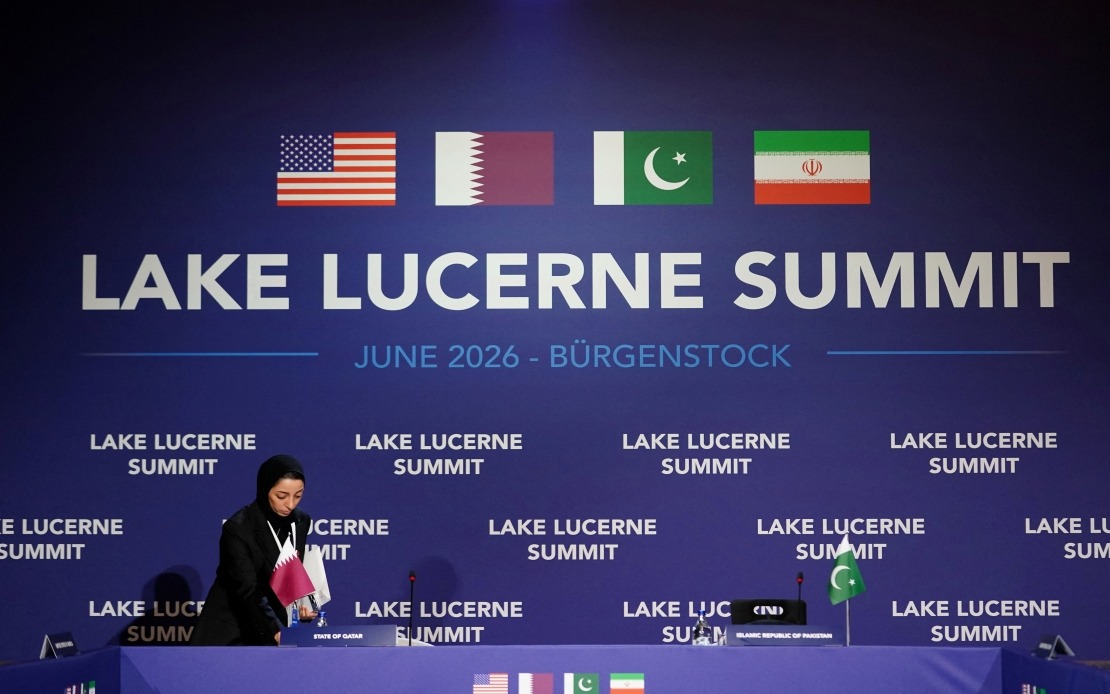
The foreign ministers of Türkiye, Egypt, Pakistan and Saudi Arabia have jointly endorsed a bilateral memorandum between the United States and Iran, signalling that major regional powers view the agreement as a meaningful contribution toward reducing tensions in West Asia. Announced following ministerial talks in Cairo, the statement reflects broad support among influential Islamic and Arab nations for diplomatic resolution of long-standing US-Iranian hostilities that have destabilised the region for decades.
The four nations characterised the Islamabad Memorandum of Understanding as a constructive development marking progress on de-escalation efforts. Their public backing carries weight given their collective influence across the Middle East and South Asia, encompassing NATO member Türkiye, the Arab world's most populous nation Egypt, nuclear-armed Pakistan, and oil-rich Saudi Arabia. The joint position suggests that regional stakeholders recognise the agreement's potential to reduce risks emanating from US-Iran confrontation, which has previously triggered military strikes and escalated regional proxy conflicts.
The statement emphasises how prolonged US-Iranian antagonism extends far beyond bilateral relations, creating ripple effects across multiple domains critical to global stability. Energy markets have historically experienced volatility during periods of heightened US-Iran tensions, particularly given Iran's oil production capacity and its geographic proximity to major shipping lanes. International maritime routes through the Persian Gulf and Strait of Hormuz, through which vast quantities of global energy supplies pass daily, remain vulnerable to disruption should tensions resurge. The agreement thus addresses not merely regional security but interconnected vulnerabilities affecting global supply chains and international commerce that touch all nations, including Malaysia.
The four foreign ministers explicitly recognised the diplomatic machinery that enabled the memorandum, with particular attention paid to Pakistan's organisational role in facilitating negotiations within its capital Islamabad. This acknowledgment underscores Pakistan's positioning as a credible regional mediator capable of hosting sensitive diplomatic processes. Qatar's supporting efforts also received commendation, reflecting the Gulf state's diplomatic infrastructure and its relationships with multiple regional actors. Such recognition of mediator contributions demonstrates the collaborative approach required to advance contentious negotiations where direct bilateral engagement faces historical obstacles.
Looking beyond the initial agreement, the ministers stressed urgency in advancing subsequent negotiation stages aimed at securing comprehensive, verifiable and mutually acceptable settlements addressing outstanding disagreements between Washington and Tehran. This language indicates that the memorandum represents an opening move rather than a definitive resolution, requiring sustained momentum and goodwill to produce enduring arrangements. The emphasis on binding verification mechanisms suggests signatories understand that trust between long-time adversaries requires transparent, measurable compliance frameworks rather than rhetorical commitments.
A critical dimension of the joint statement addresses security guarantees for neighbouring states, particularly Gulf nations whose interests have been directly affected by US-Iranian competition. The ministers insisted that future agreements incorporate explicit recognition of Gulf state security concerns, preventing any comprehensive settlement from marginalising smaller regional players. Similarly, they extended this principle to Levantine countries, ensuring that Israeli-Palestinian and broader Eastern Mediterranean dynamics receive consideration within broader regional stabilisation efforts. This insistence reflects awareness that lasting regional peace cannot emerge from arrangements perceived as imposed by external powers or benefiting dominant actors at the expense of smaller neighbours.
The Palestinian question emerged as a significant concern within the ministerial discussion, underscoring the interconnectedness of Middle Eastern security challenges in the eyes of regional leaders. The four nations reaffirmed their commitment to an independent Palestinian state within 1967 borders with East Jerusalem as capital, consistent with established United Nations resolutions. This positioning reflects broader Arab consensus on Palestine while acknowledging that comprehensive regional stability requires addressing the Israeli-Palestinian conflict alongside other sources of tension. For Malaysian policymakers observing regional developments, the statement illustrates how multiple crises remain intertwined within Middle Eastern politics, resisting compartmentalised resolution approaches.
The joint statement carries implications for Southeast Asian nations navigating great power competition in their own region. Malaysia and ASEAN neighbours observe how major powers and regional stakeholders pursue diplomatic solutions when confrontation threatens broader international interests. The emphasis on inclusive negotiation processes, third-party mediation, and verification mechanisms offers lessons applicable to various regional disputes. Additionally, the statement's focus on protecting energy security and maritime trade affects Southeast Asia directly, given regional dependence on Middle Eastern oil and reliance on unimpeded shipping routes through waters that depend on Middle Eastern stability.
For Malaysia specifically, reduced US-Iran tensions benefit Malaysian commercial interests dependent on stable energy prices and uninterrupted maritime commerce. The country's significant trade relationships with both American and Iranian entities, combined with substantial energy imports, mean that escalating Middle Eastern hostilities create indirect economic costs through supply chain disruptions and price volatility. The foreign ministers' backing for continued diplomatic progress therefore aligns with Malaysian interests in global stability.
The convergence of Türkiye, Egypt, Pakistan and Saudi Arabia around this diplomatic initiative suggests that regional powers possess sufficient common ground to influence broader Middle Eastern trajectories. Their collective support for de-escalation indicates recognition that military confrontation serves no regional actor's fundamental interests and that sustained tensions impose cascading economic and security costs. Whether this joint position translates into sufficient pressure on Washington and Tehran to maintain negotiating momentum remains uncertain, but the ministerial statement demonstrates that influential regional voices are actively encouraging persistence in diplomatic channels rather than accepting confrontational dynamics as inevitable.
Moving forward, the success of the Islamabad agreement and subsequent negotiations depends substantially on whether key regional stakeholders can maintain unified messaging supporting de-escalation. The willingness of four major regional nations to publicly endorse these efforts, despite their sometimes-divergent bilateral relationships, suggests recognition of mutual benefits from reduced US-Iran hostility. For Malaysia and other nations with regional and global interests in Middle Eastern stability, the diplomatic progress represented by this agreement and the supporting statements from major regional powers offer a tentative but genuine foundation for hoping that sustained de-escalation can eventually reduce the economic and security costs that prolonged US-Iranian antagonism imposes on the international community.
%22%2F%3E%3C%2Fpattern%3E%3C%2Fdefs%3E%3Crect%20width%3D%22100%25%22%20height%3D%22100%25%22%20fill%3D%22url(%23phbnsqg)%22%2F%3E%3Crect%20width%3D%22100%25%22%20height%3D%22100%25%22%20fill%3D%22url(%23phbnsqp)%22%2F%3E%3Ctext%20x%3D%2250%25%22%20y%3D%2250%25%22%20text-anchor%3D%22middle%22%20dominant-baseline%3D%22central%22%20fill%3D%22rgba(255%2C255%2C255%2C0.95)%22%20font-family%3D%22Georgia%2C%20'Times%20New%20Roman'%2C%20serif%22%20font-weight%3D%22700%22%20font-size%3D%22320%22%20letter-spacing%3D%22-0.02em%22%3EMUDA%3C%2Ftext%3E%3C%2Fsvg%3E)
