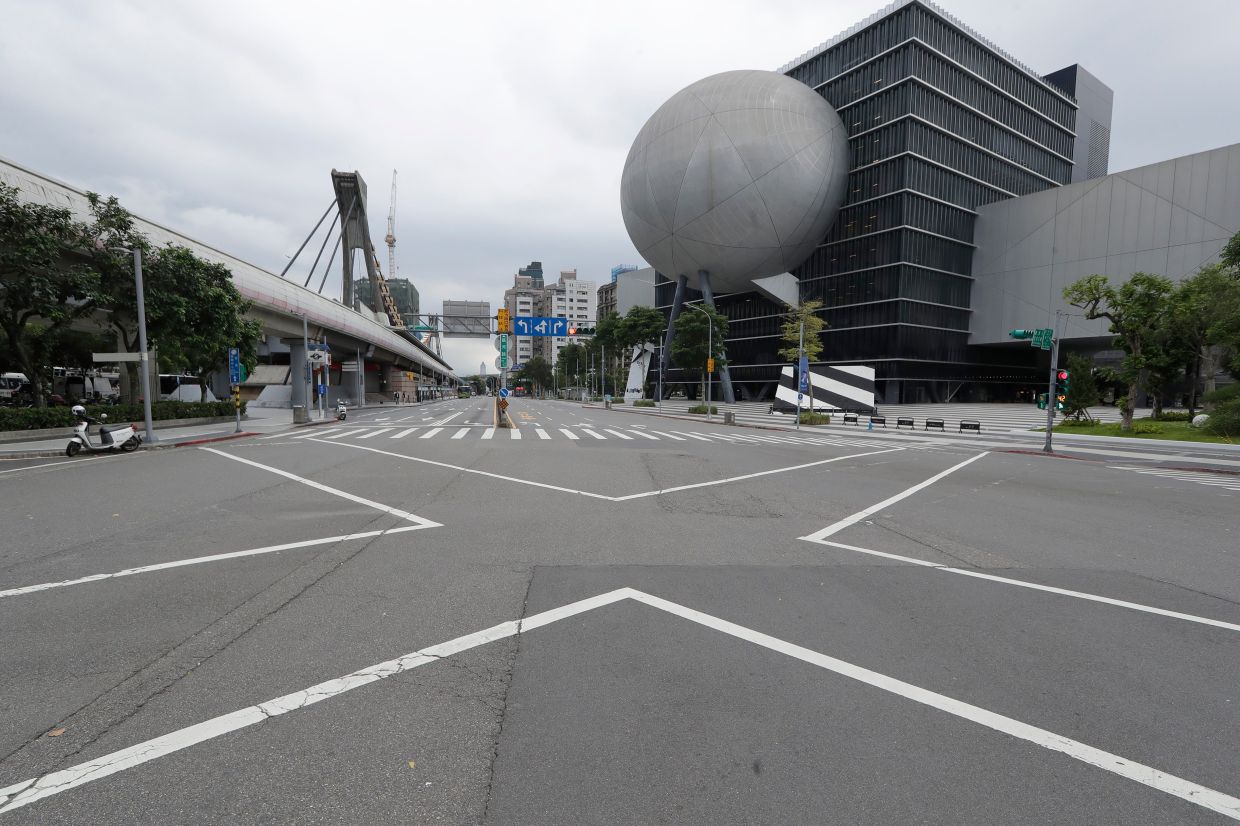
Taiwan's government deliberately crippled mobile internet speeds across Taipei and six other major urban centres on August 13, reducing connectivity to a crawl that allowed only basic text messaging. The disruption marked the culmination of Han Kuang, the island's most intensive annual military exercise, which had ramped up across the previous week with expanded focus on integrating civilian populations into war readiness scenarios. Telecommunications operators imposed the 256 Kbps speed cap deliberately—a striking contrast to the 5G speeds residents typically enjoy in metropolitan zones—in order to simulate conditions that might prevail during a military contingency.
The exercise reflected Taiwan's evolving approach to civil defence, moving beyond the traditional military-only drills that characterised previous years. Rather than confining operations to barracks or conducting air raid simulations that left city life largely undisturbed, this year's Han Kuang iteration embedded reservists alongside civilians and coordinated directly with local government authorities. The scaled-up format meant that ordinary citizens experienced tangible disruption to their daily routines, transforming abstract defence concepts into concrete practice. President Lai Ching-te publicly acknowledged the inconvenience, appealing for public understanding. "We ask for your understanding and support, as this is a necessary drill," he stated, implicitly recognising that asking people to endure internet slowdowns and transport delays was an uncomfortable but essential element of preparedness.
Previous years of urban resilience drills in Taipei had largely passed without notice because they imposed minimal friction on civilian life. Metro system air raid simulations, for instance, did not significantly disrupt passenger flows or daily commuting patterns. Such exercises, while technically fulfilling civil defence mandates, failed to stress-test the actual systems and behaviours that would matter in a genuine emergency. This year's approach represented a deliberate pivot toward creating realistic conditions, forcing residents, businesses, and critical infrastructure operators to respond to genuine constraints rather than simulate them symbolically.
The internet throttling posed particular challenges in a hyper-connected society where digital infrastructure underpins everything from banking to emergency communications. The 256 Kbps ceiling rendered most modern web applications unusable, forcing reliance on plain text. For visitors unfamiliar with Taiwan's vulnerability profile, the exercise proved unexpectedly persuasive. Allen Hsieh, a tourist from Hong Kong caught in a metro station lockdown lasting thirty minutes, initially expected only to receive text alerts. Instead, he witnessed a full-scale simulation that treated the infrastructure as genuinely compromised. "The exercise did not cause me any inconvenience. I know that Taiwan needs to conduct exercises, given the current situation," Hsieh reflected, adding that the realism exceeded his expectations.
The drills extended beyond communications into critical infrastructure continuity planning. President Lai visited a hospital participating in the exercise, observing how medical facilities were rehearsing the relocation of essential operations—equipment, staff, patient data—to underground or hardened facilities. Such contingency planning assumes that surface-level infrastructure could become inoperable, and that organisations must be prepared to maintain core functions from alternative locations. For a healthcare system already stretched by demographic challenges and chronic capacity constraints, practising emergency relocations of intensive care units, operating theatres, and diagnostic equipment represents a complex and necessary undertaking.
Taiwan's intensified focus on civil defence drills reflects the island's precarious security environment. Across the Taiwan Strait, China's military capabilities have expanded dramatically, whilst cross-strait political tensions have remained elevated. From Taiwan's perspective, civilian preparedness and morale represent force multipliers that complement military capabilities. If a contingency were to occur, populations that have practised resilience measures and understand what to expect psychologically are less likely to panic and more likely to follow civil protection directives. Conversely, a population shocked by the sudden absence of normal services might prove unpredictable and potentially harder to manage.
The Han Kuang exercises also serve an important signalling function, both domestically and internationally. Internally, conducting visible, disruptive drills demonstrates that the government takes defence seriously and expects citizens to do likewise. For regional observers—particularly in Japan, South Korea, and the Philippines—Taiwan's capacity to mobilise civilian populations suggests a society genuinely prepared to resist coercion. Such signals matter in the calculations of potential adversaries, who factor civilian morale and organisational coherence into their own strategic assessments. Conversely, the international community, especially democratic allies, interprets Taiwan's efforts to strengthen defence posture as reflecting genuine commitment to self-preservation rather than complacency.
The incorporation of reservists into Han Kuang exercises holds particular significance. Taiwan maintains a substantial reserve force comprising individuals who completed compulsory military service years or decades earlier. Exercising these reserves regularly tests whether mobilisation protocols function effectively and whether reservists retain skills and recall procedures despite long civilian employment. A conflict scenario would require rapid activation of reserves to augment active-duty forces, making periodic integrated exercises essential. This year's expanded scope allowed the military to identify gaps in reserve readiness whilst providing civilians with visible confirmation that defence capacity extends beyond uniformed active personnel.
For Malaysia and other Southeast Asian nations, Taiwan's defence preparedness exercises offer instructive lessons, albeit in a different context. Malaysia maintains substantial defence forces but faces distinct challenges including maritime security across vast ocean expanses and internal stability concerns. Watching Taiwan stress-test civilian resilience and infrastructure continuity raises questions about equivalent preparedness in regional economies that might face natural disasters or other contingencies requiring similar mobilisation of civilian sectors. The integration of civil and military planning, and the acceptance of temporary disruption to normal economic activity in pursuit of strategic preparedness, represents a model with broader relevance across Southeast Asia.
Looking forward, Taiwan faces the challenge of sustaining civilian engagement with defence drills without exhausting public tolerance for disruption. The government's gamble in 2024 was that a more realistic, more disruptive exercise would generate better preparedness outcomes than previous symbolic drills. Whether this approach becomes the new standard depends partly on how frequently such exercises recur and how considerably they disrupt economic activity. A balance must be struck between meaningful stress-testing and the tolerance thresholds of a democratic population. Taiwan's success in maintaining that balance will itself become a measure of whether civilian defence preparedness can be compatible with open, prosperous societies navigating intensifying geopolitical pressures.

