Singapore's medical community is sounding an increasingly urgent alarm about the dangers posed by drug-impaired drivers on the city-state's roads, following a troubling cluster of accidents and a dramatic surge in fatalities during 2025. Emergency medicine specialists point to mounting evidence that various substances—from methamphetamine to anaesthetic drugs contained in vaporisers—are impairing drivers' abilities with sometimes catastrophic consequences for themselves and innocent road users.
Jonathan Tang, a clinical toxicologist at the National University Hospital's Emergency Medicine Department, has treated a significant number of traumatic injury patients resulting from road accidents involving one particular substance: etomidate, an anaesthetic that has been repurposed in drug-laced vaporiser pods known as Kpods. Tang's clinical observations highlight a critical public health gap, as these incidents reveal how newer forms of substance abuse are creating dangers that existing road safety protocols may not fully address. He emphasises that the impairment caused by etomidate-laced vapes mirrors alcohol intoxication in its effects on driving ability, degrading coordination and judgment while elevating risks for the driver and everyone sharing the road.
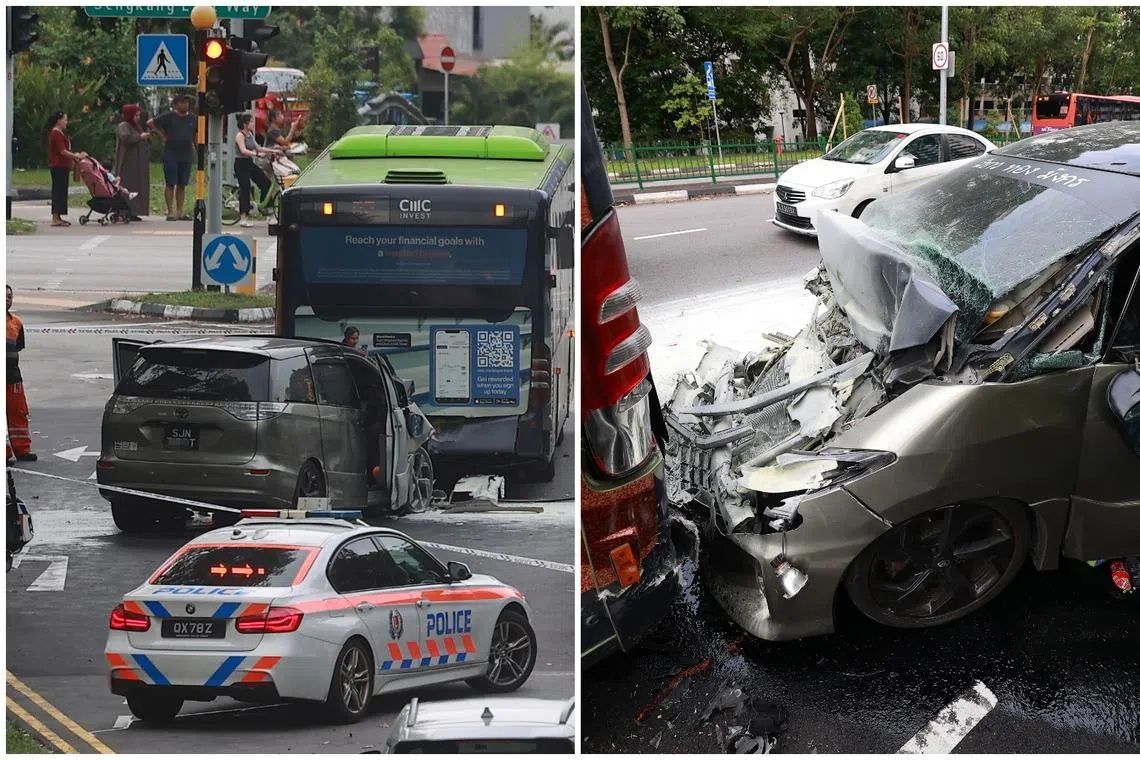
The concrete risks materialised tragically in May when a car collided with a bus in Punggol, killing a 28-year-old female passenger. Police investigations uncovered 42 vaporisers and more than 1,200 pods in the vehicle, several containing etomidate. Both the driver and the deceased woman tested positive for the substance. This incident exemplifies how quickly etomidate use can escalate from a personal consumption issue into a mass casualty event. Tang notes that impairment from etomidate produces multiple driving-impairing effects simultaneously: delayed reaction times, poor hazard perception, and loss of vehicle control—a combination that dramatically increases harm not only to the driver but to passengers, pedestrians, and other motorists.
The scope of the problem extends far beyond individual cases. Government data revealed in Parliament in February showed that between 2023 and 2025, there were 38 traffic accidents linked to drug and etomidate use, resulting in 19 deaths. Most alarming is the acceleration throughout 2025, when 29 of those 38 accidents occurred—with 18 involving etomidate and seven involving both drugs and etomidate in combination. These statistics suggest either increased use of these substances or greater detection by traffic authorities, but either interpretation points to a deteriorating road safety situation that demands urgent intervention.
June witnessed three separate prosecutions of drivers charged following drug-related accidents, underscoring both the prevalence of the problem and law enforcement's response. Mohamed Firdouz Mohamed Akram, 36, was charged with dangerous driving and causing injuries after his vehicle collided with a taxi in Kallang; police found drugs and vaporisers in his car, with testing confirming ice (methamphetamine) consumption. Separately, Puah Zhe Cong, 34, faces charges including dangerous driving causing death after allegedly driving under etomidate's influence, resulting in one fatality and two injuries. A third defendant, Sivakandesh, 32, crashed his Mercedes-Benz into infrastructure while allegedly impaired by methamphetamine. In one case, the driver abandoned his vehicle at the scene and fled, compounding the recklessness of his actions.
Tang's clinical expertise reveals additional complications beyond simple impairment. He points out that etomidate Kpod use produces psychiatric side effects including depressed mood, heightened aggression, and impulsivity—symptoms that independently compromise safe driving and can even trigger suicidal behaviour. This psychological dimension transforms drug-impaired driving from a merely physical safety issue into a mental health crisis with road fatality consequences. The compounding effects mean that users are not simply slower to react; they may be experiencing mood destabilisation and impulse control problems that make dangerous decisions behind the wheel more likely.
Singapore's overall traffic death toll has reached crisis levels in 2025, with 149 fatalities—the highest in a decade and representing a sharp increase from 142 deaths in 2024 and 141 in 2016. Injury figures have correspondingly climbed from 9,342 in 2024 to 9,955 in 2025. These trends underscore that drug-impaired driving contributes to a broader deterioration in road safety that affects the entire motoring population. The question facing authorities is whether existing detection and prosecution mechanisms are adequate for an evolving substance abuse landscape.
Parliamentary scrutiny has begun to address gaps in current protocols. When Valerie Lee from Pasir Ris-Changi GRC raised concerns in February about whether Traffic Police systematically screen accident-involved drivers for drug use, Coordinating Minister for National Security K. Shanmugam confirmed that impaired driving assessments occur following accidents and that blood tests are required if drug or etomidate use is suspected. Drivers found culpable face charges under the law, with first-time offenders subject to up to one year's imprisonment and S$10,000 in fines, escalating to two years and S$20,000 for repeat offenders. However, the gap between these enforcement tools and the apparent prevalence of drug-impaired driving incidents suggests that detection, prosecution, and deterrence remain inadequate.
The emergence of etomidate in vaporisers represents a particular challenge because the substance exists in a legal grey zone and evolves faster than regulatory frameworks. Traditional screening protocols may not have anticipated this specific threat vector. The substance's use in e-vaporisers disguises an anaesthetic as a recreational vape, lowering users' guards and potentially normalising consumption practices. Furthermore, the psychiatric effects that Tang identifies—aggression and impulsivity—may make users more likely to drive despite impairment, unlike alcohol users who might recognise impairment and seek alternatives.
For Malaysian readers and the broader Southeast Asian context, Singapore's experience offers a cautionary case study. The emergence of drug-impaired driving as a significant cause of fatal accidents signals that the region faces similar threats as synthetic drugs and novel consumption methods proliferate. Malaysia's own road fatality statistics have long troubled public health authorities, and adding drug-impaired driving to the existing catalogue of risk factors—speeding, inadequate seatbelt use, dangerous overtaking—compounds the challenge. The sophistication of etomidate's packaging as consumer vape products means that detection at the point of use or distribution requires both law enforcement sophistication and public awareness campaigns.
Medical professionals across the region are increasingly vocal about substance-related driving dangers, but public understanding remains limited. Tang's warnings about the specific cognitive and psychiatric impairments from etomidate, distinct from traditional drug categories, highlight the need for targeted education. Road users and policymakers must recognise that vaping devices may contain anaesthetics, not merely nicotine or flavouring compounds. Healthcare systems need protocols to identify and manage drug-impaired driving injuries, while traffic enforcement requires updated training on emerging substance detection methods.
The human cost of these accidents extends beyond fatalities and injuries to the psychological trauma experienced by families, witnesses, and emergency responders. The Straits Times' ongoing coverage reflects a broader recognition that road safety requires sustained social attention. Tang's clinical perspective reminds society that each accident statistic represents preventable suffering—passengers like the 28-year-old who died in Punggol, taxi drivers and pedestrians exposed to others' impaired decisions. Addressing drug-impaired driving demands integrated action spanning public health messaging, enforcement intensity, treatment accessibility for substance users, and regulatory innovation to address novel delivery methods that outpace traditional legal categories.


%22%2F%3E%3C%2Fpattern%3E%3C%2Fdefs%3E%3Crect%20width%3D%22100%25%22%20height%3D%22100%25%22%20fill%3D%22url(%23ph4rvt6g)%22%2F%3E%3Crect%20width%3D%22100%25%22%20height%3D%22100%25%22%20fill%3D%22url(%23ph4rvt6p)%22%2F%3E%3Ctext%20x%3D%2250%25%22%20y%3D%2250%25%22%20text-anchor%3D%22middle%22%20dominant-baseline%3D%22central%22%20fill%3D%22rgba(255%2C255%2C255%2C0.95)%22%20font-family%3D%22Georgia%2C%20'Times%20New%20Roman'%2C%20serif%22%20font-weight%3D%22700%22%20font-size%3D%22320%22%20letter-spacing%3D%22-0.02em%22%3ERare%3C%2Ftext%3E%3C%2Fsvg%3E)